
Action & 360 cameras
360 camera or action camera: which one to rent?
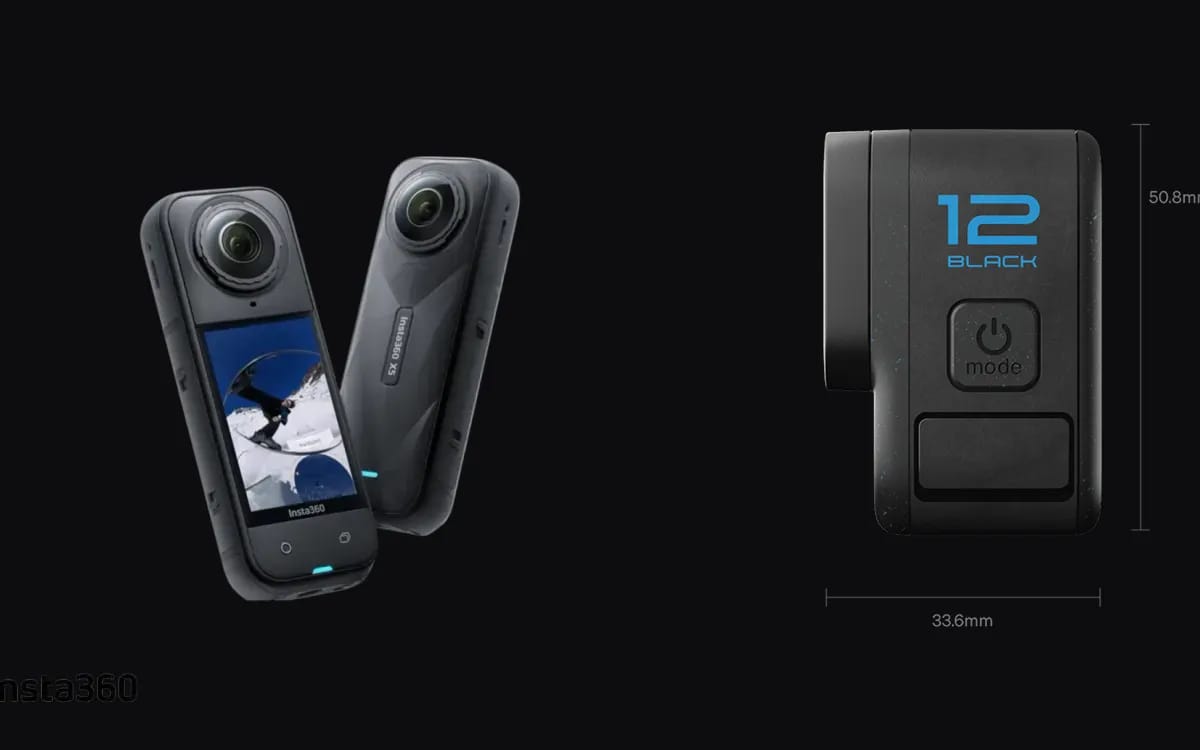
The question comes up every time you book a vacation: a 360 camera or an action camera? These aren't two levels of range, they're two ways of filming — and one of them will give you work after filming.
Two ways to frame
An action camera frames as you film. You choose the angle, it records what it sees – at its widest, 156° diagonally in 8:7 format – and you have digital lenses to change the rendering: HyperView, SuperView, Wide, Linear, Linear + lock or horizon leveling. The downside is known: if you miss the angle, nothing will make up for it in editing. This is the price of simplicity.
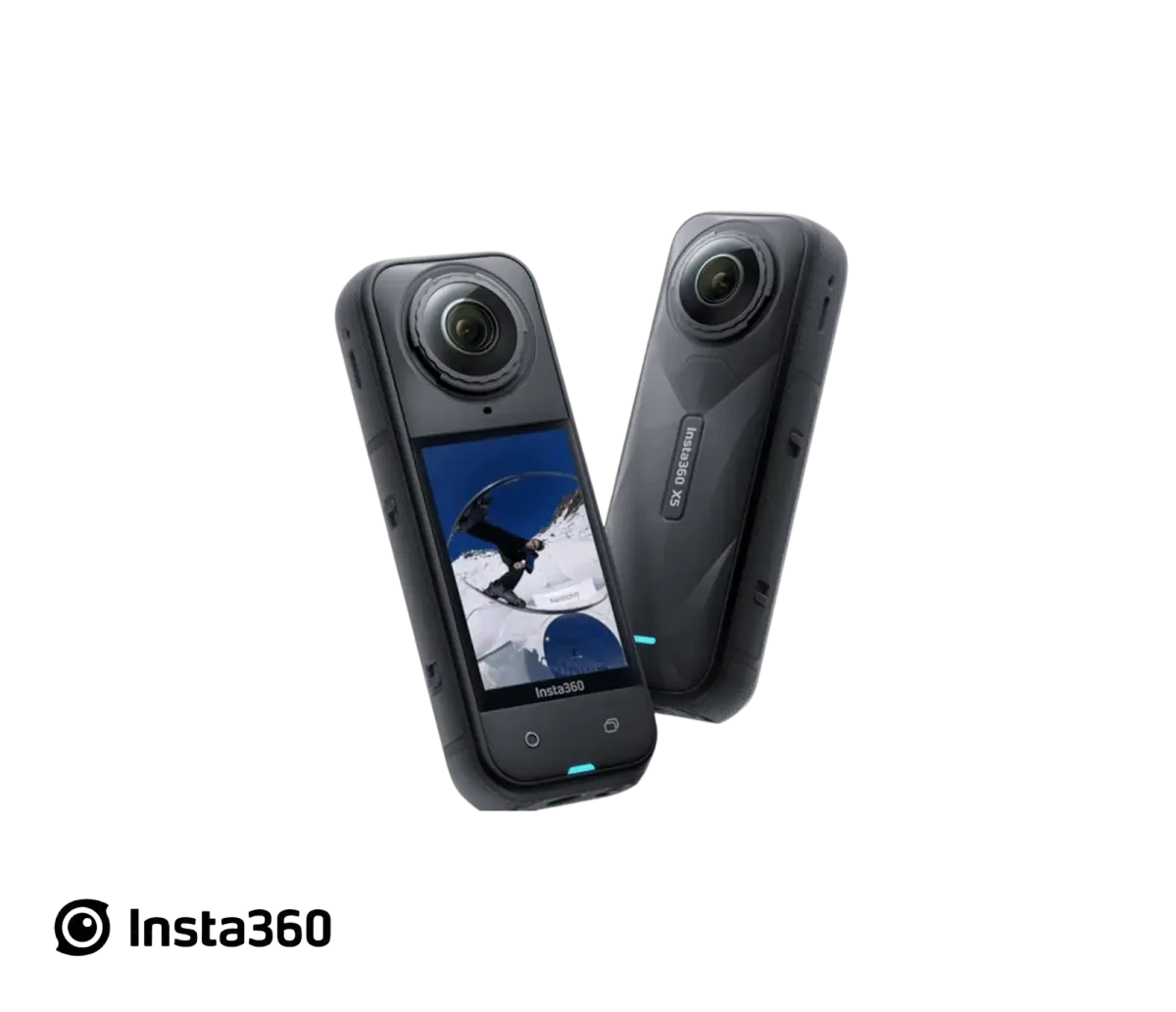
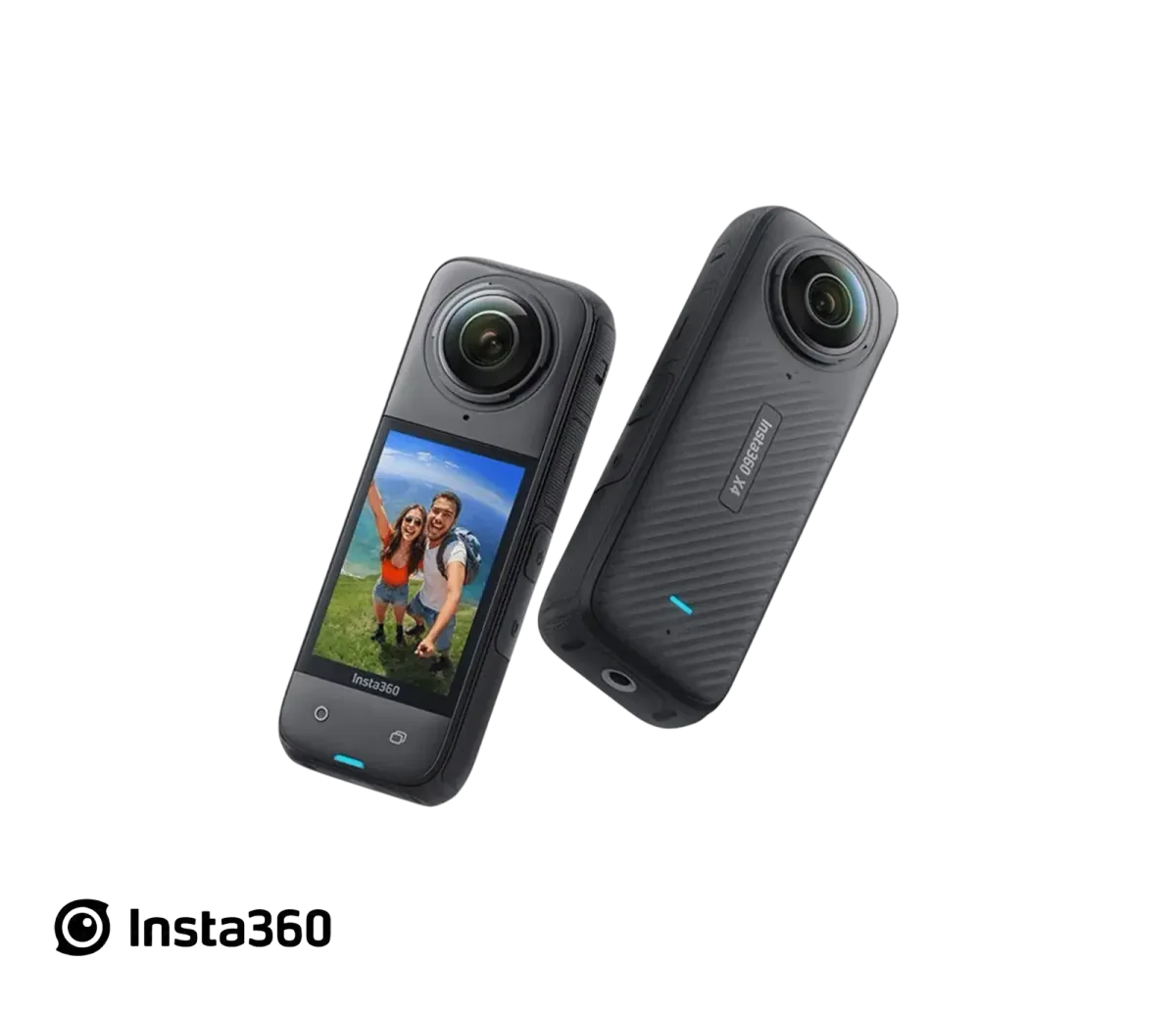
A 360 doesn't fit anything. She films the entire sphere, and you then frame, during editing, choosing where to look. On the X5: Two 1/1.28 inch CMOS sensors — f/2.0. On the X4: Two 1/2-inch CMOS sensors — f/1.9. It’s a safety net — you no longer miss the plan — but it’s also a postponed decision.
It opens up shots that no action camera will produce: the boom disappears from the image, so that we film ourselves alone as if someone was holding the camera, or a shot seems to have been taken by a drone. Added to this is the “small planet” view and bullet time, this freeze frame revolving around the subject.
What you really get back
Both 360s film in 8K in 360° (7680 × 3840) at 30 fps. This figure describes the complete sphere, not the image you will publish: this is an extract. And when you film directly flat, with a single lens – both the X4 and the X5 know how to behave like a classic camera – they go down to 4K (3840 × 2160) at 60 fps.
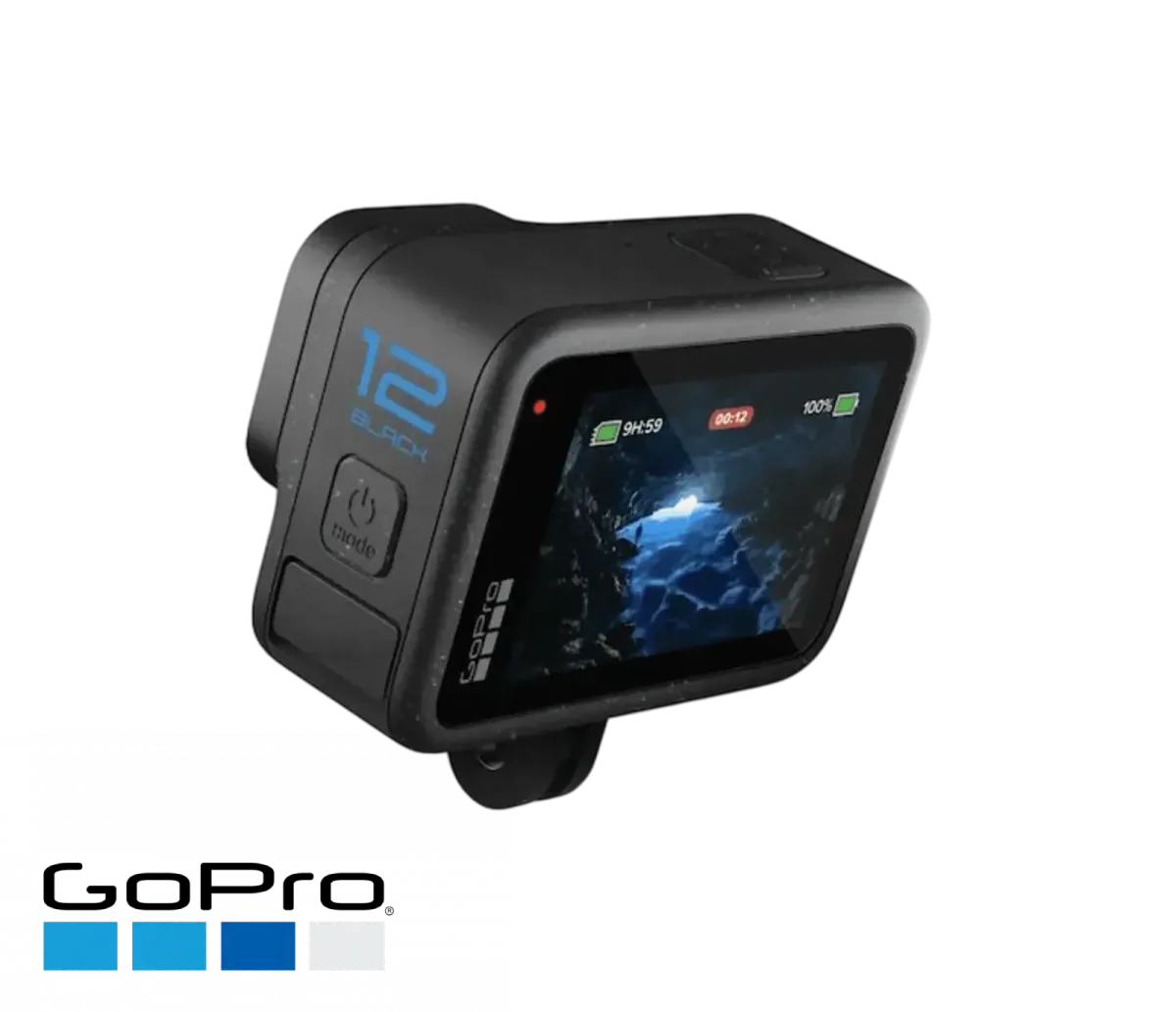
An action camera devotes all its definition to the frame you have chosen: 5.3K 8:7 (5312 × 4648) at 30 fps; 5.3K 16:9 (5312 × 2988) at 60 fps — without 5.3K at 4:3, but with 4K and Full HD at 9:16. On arrival, on a shot that you would have framed well anyway, it gives a more defined image; on a shot that you would have missed, the 360 saves the sequence. The whole choice lies in this sentence.
On stabilization, on the other hand, there is nothing to arbitrate: HyperSmooth 6.0 with 360° horizon locking and leveling on GoPro side, FlowState with 360° horizon locking on Insta360 side. In both camps, the mechanical stabilizer has become useless.
Get through the day
Autonomy overturns intuition. The durations announced by the manufacturers:
- Insta360 X4 — 135 min in 5.7K at 30 fps, 75 min in 8K at 30 fps
- Insta360 X5 — 135 min in 5.7K at 30 fps, 93 min in 8K at 30 fps, up to 208 min in Endurance mode
- GoPro HERO 12 Black — 70 min in 5.3K at 60 fps, 1 hr 30 min in 5.3K at 30 fps, over 2 hr 30 min in Full HD at 30 fps (GoPro measurements at 25°C, 0.6 m/s wind)
Filming continuously is therefore more comfortable with a 360, provided you accept the volume of files it produces. The weight goes in the other direction. X5: 200 g. X4: 203 g. HERO 12: 154 g with battery and mounting brackets, 121 g without battery. On a helmet or at the end of a pole, this gap is not felt. On recharging, on the other hand, the 360 goes quickly — 80% in 20 mins, 100% in 35 mins with a 30 W PD charger on the X5.
Water and shocks
The three enter the water without a box. GoPro HERO 12: Waterproof up to 10 m without housing, 60 m with the protective housing. X4: Waterproof up to 10 m without housing, 50 m with the diving housing. X5: Waterproof up to 15 m without housing, 60 m with the diving housing.
The real fragility lies elsewhere. On a 360, the lenses are curved and protrude from the body: this is the primary cause of breakage on this type of camera. X5 directly addresses the problem. Its lenses: User replaceable — official replacement lens kit. Those of the X4: Removable lens covers; the lenses themselves are not user replaceable. An action camera only exposes one side, and its lens does not protrude in the same way.
The time you will spend editing
It’s the criterion that no one talks about and which decides everything. A 360 gives you a spherical file: you have to take it back, choose where to look at each moment, then export a flat image. This is done well, but it takes time — and that time is part of the choice, especially if you have to submit a film during the week.
An action camera gives you editable shots as is. If you publish quickly, or if you don't want to edit at all, this is decisive. The difference also lies in the tools: the Insta360 application is made to take the sphere shot by shot, while GoPro Quik releases a watchable montage in a few minutes.
Sport by sport
- MTB, motorcycle, ski: the 360. On the helmet or chest, it records the entire environment and lets you choose the angle afterwards — including the one you didn't see coming.
- Surfing, kayaking, sea sports: the action camera, smaller, easier to attach to a board or pole, and without convex lenses to be exposed to sand and shock.
- Dive: the X5, the only one to descend to 15 m without a housing, and the best equipped when the light decreases with depth.
- Running and hiking: the action camera, lighter over time, and perfect for accelerated sequences of a long journey.
- Vertical content for networks: the 360, which provides inexhaustible material to reframe in 9:16.
So, which one to rent?
- Embedded sport, when the action arrives without warning: the 360, because it doesn't miss anything.
- Vlog facing the camera, tutorial, prepared plan: the action camera, more defined on the useful frame.
- Solo travel, city trip: the 360, which replaces the person who would have held the camera and captures the atmosphere of an entire street, to be reframed on the way back.
- Group trip: the 360 again, the only one that puts everyone in the frame without anyone filming.
- Low light — twilight, interior, below the surface: the X5, only of the three to have a dedicated mode: PureVideo — up to 8K at 30 fps in 360°, up to 4K at 30 fps in single lens.
- Deliver quickly after filming: the action camera, without hesitation.
There remains the budget. Renting allows you to adjust the model to your stay instead of tying up several hundred euros in a device that will sleep in a drawer: the X4, easier on the budget, for a road trip with friends; the HERO 12 for a week of surfing.
Reflexes that apply to both
The hardware is not everything, and these few habits change the result more than the choice of case.
- Compose: activate the grid in the settings and place your subject on the intersections rather than in the center.
- Vary the angles: at ground level, from a low angle, on the helmet, on a chest harness.
- Film at the right time: sunrise and sunset flatter everything, high noon flattens everything.
- Film short: shots of 3 to 5 seconds, and think about the sound while you're shooting, not afterward.
During editing, a slight calibration is enough to unify shots shot at different times.
To choose between the two 360s, see Insta360 X4 or X5: which 360 camera to rent?; between GoPro, GoPro HERO 11 or HERO 12. Rental sheets: Insta360 X5 , Insta360 X4 and GoPro HERO 12 Black .
There is no need to decide: renting both for the same stay is common, one on the helmet and the other by hand.
More in this section
 Action & 360 cameras
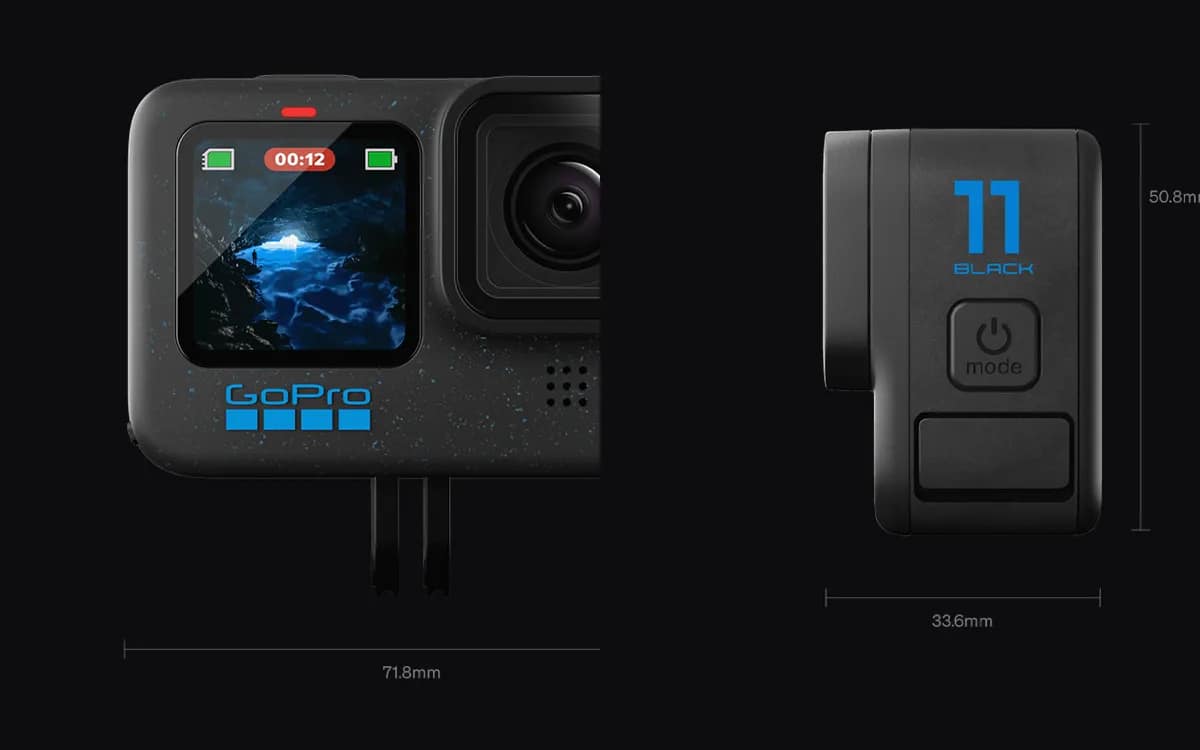
Which GoPro to rent depending on what you are filming
Same sensor, same housing, same waterproofing: these two GoPro cannot be distinguished in the image. They are decided on what you are going to film.
5 min read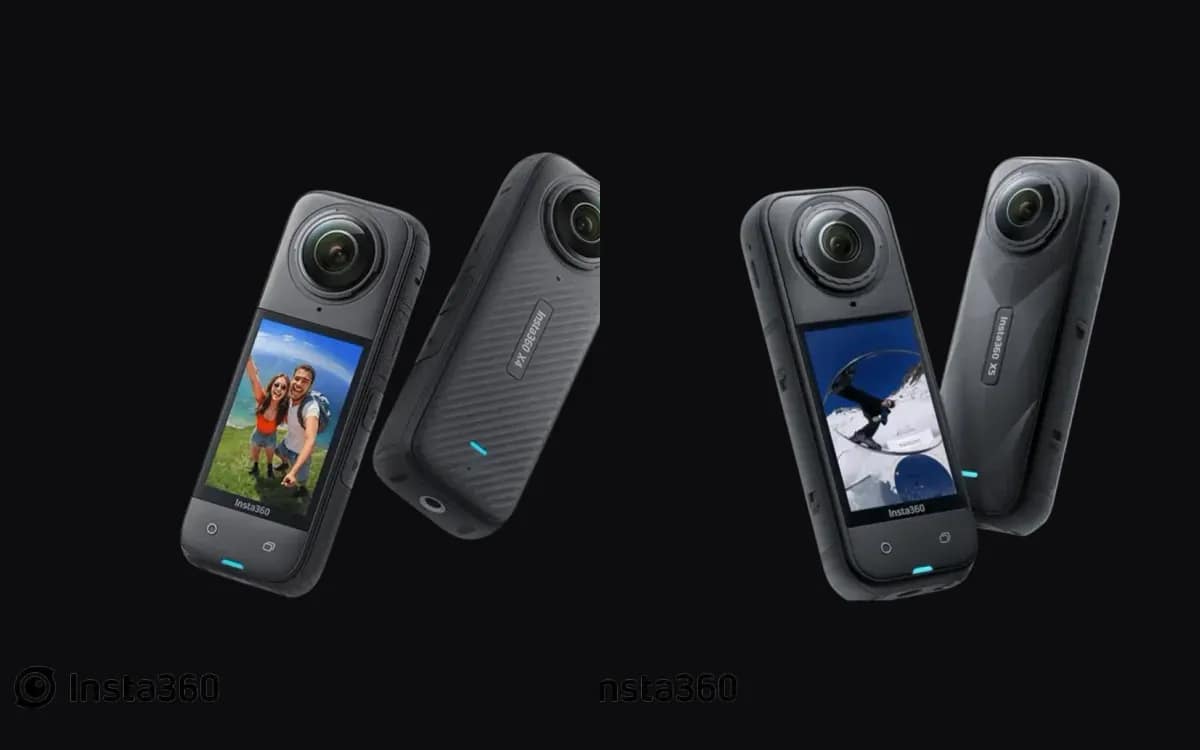 Action & 360 cameras
Insta360 X4 or X5: which 360 to rent, and for which shoot
Same maximum resolution, two very different cameras as soon as the light drops or a lens takes a knock. What moving from the X4 to the X5 actually changes.
5 min read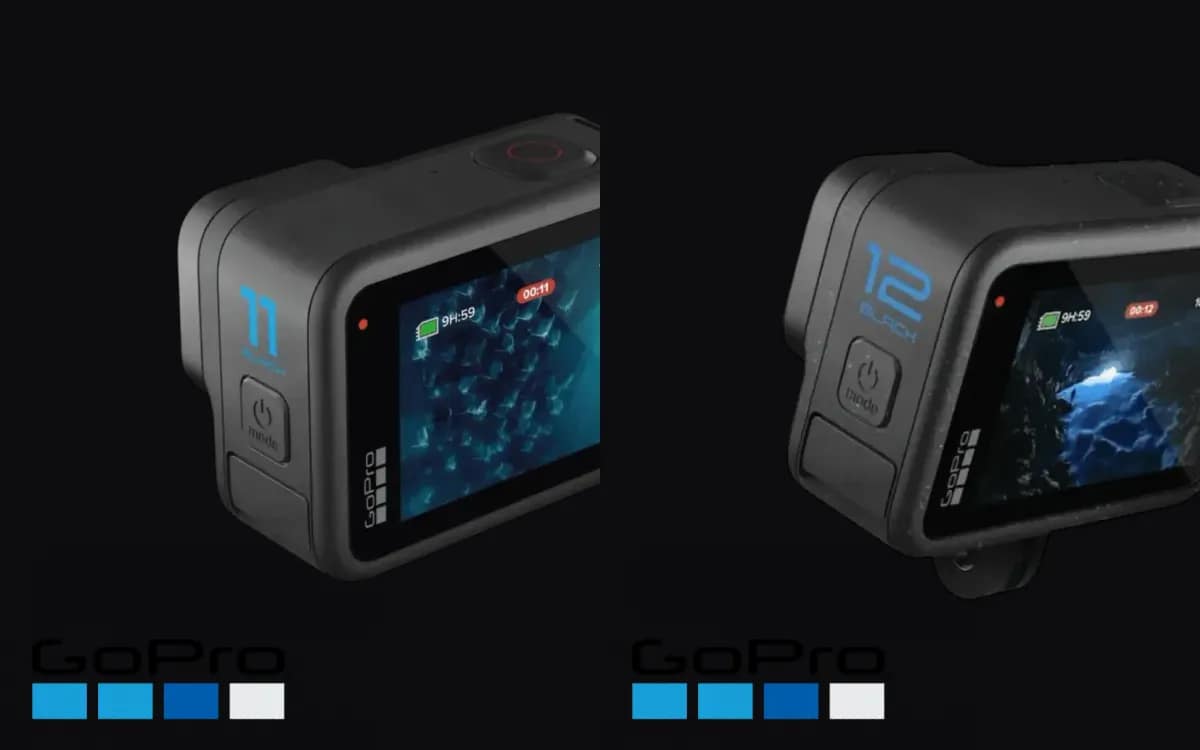 Action & 360 cameras
GoPro HERO 11 or HERO 12: same sensor, ten differences
Two generations that share the sensor, the processor and the maximum resolution. Ten lines actually separate them: here is which ones matter, and the case where the HERO 11 still wins.
7 min read