
Action & 360 cameras
Filming at night with an action camera
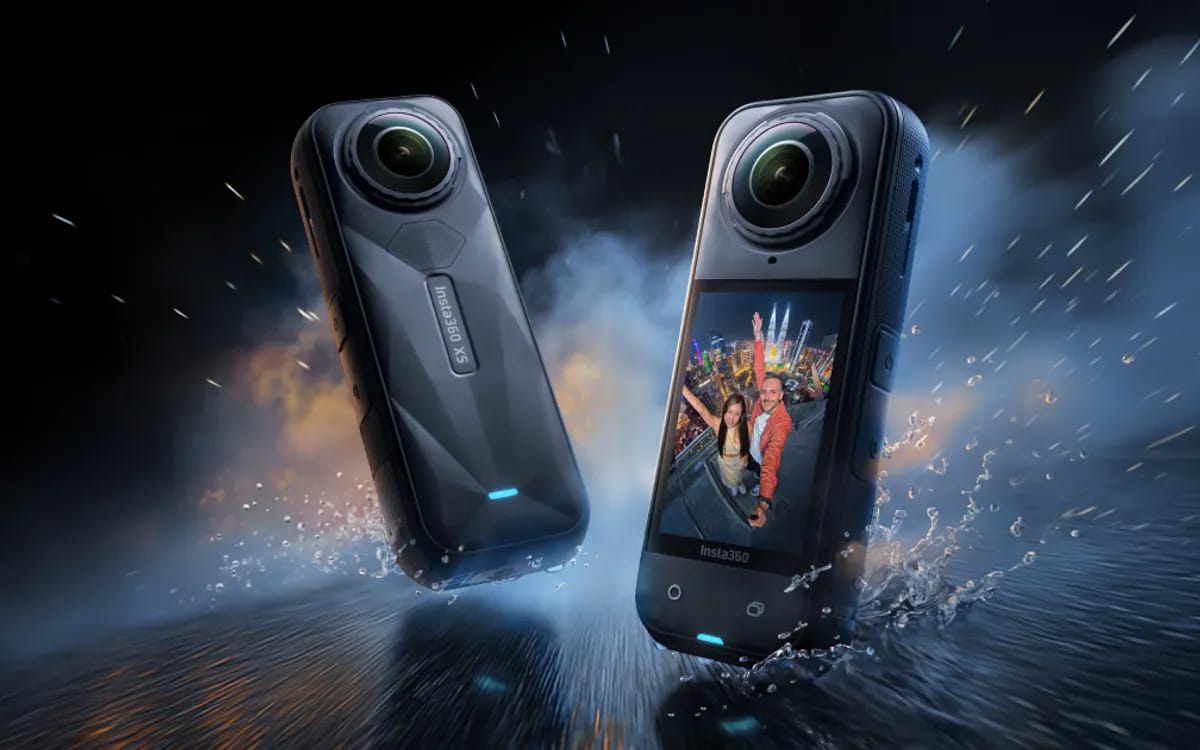
You come back from a fireworks display, an evening on the quays or a session at dusk, you open the rushes, and it's the same disappointment: a gray, grainy image, where the faces are nothing more than spots. This is not a handling error. It's physics, and it's better to understand it before renting than after.
Why an action camera suffers when the light falls
An action camera fits in one hand: its sensor measures a few millimeters on each side. Less surface area means less light collected in each image. To compensate, the device increases its sensitivity, and this amplification brings up the electronic noise at the same time as the signal. Add digital stabilization, which crops the image and imposes a short shutter to freeze the movement, and you have the exact recipe for grain.
Only two levers allow you to get out of it: enlarge the sensor, or treat the noise afterwards using the software. Manufacturers play on both, and this is precisely what separates the models from each other.
The size of the sensor, the only data that cannot be simulated
The official Insta360 technical data sheets are unambiguous on this point.
| Model | Sensor size | Opening |
|---|---|---|
| Insta360 X5 | 1/1.28 inch | F2.0 |
| Insta360 X4 | 1/2 inch | F1.9 |
Note the counter-intuitive detail: the lens of the X5 opens at F2.0, which is less than the F1.9 of the X4. Nocturnal progress therefore does not come from the optics, but from the sensor, which is frankly larger. This is the only advantage that no algorithm can manufacture after the fact.
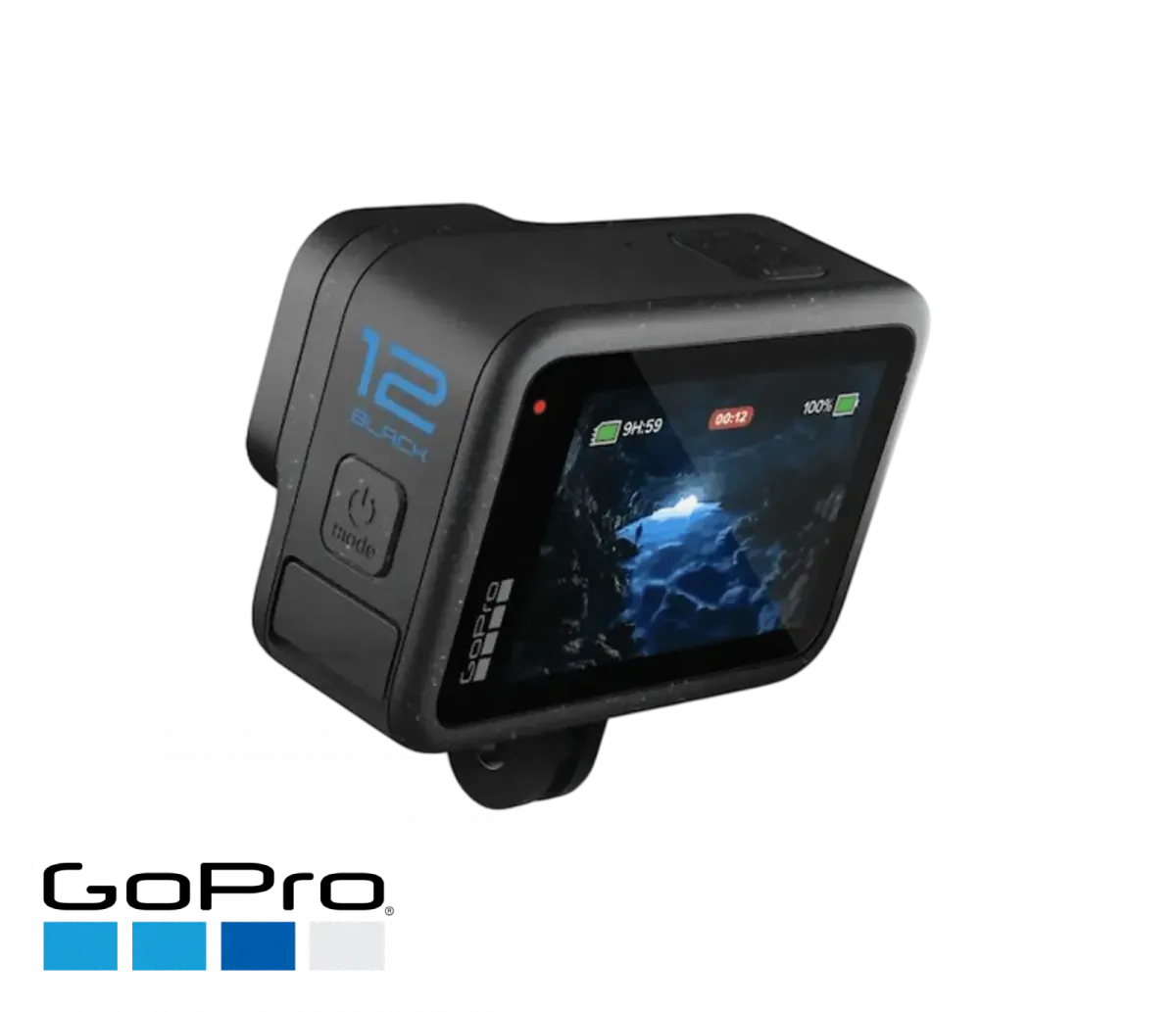
On the GoPro side, the HERO 12 Black has a 1/1.9 inch and 27 megapixel sensor, exactly like the HERO 11 before it: from one generation to the next, the sensitive base has not changed. The specialized press is constant on the subject: low light video remains its weak point compared to the competition.
PureVideo: what the mode brings, and what it takes away
The X5 has a dedicated mode, PureVideo, which Insta360 describes as a function intended to optimize shooting in low-light environments, typically a night scene or a dark interior. The official manual warns that this mode offers a narrower frame per second range than regular video mode. This is no coincidence: extending the exposure time is precisely what allows us to recover light, and this is paid for in time.
This mode therefore requires flexibility, and the official manual says so clearly.
- Fewer frame rates available than in classic video: nighttime slow motion becomes difficult.
- No manual shutter speed adjustment.
- Digital zoom only, for simple framing adjustments.
- Insta360 recommends switching back to classic video mode as soon as the scene is properly lit.
Concrete translation: PureVideo is made for a lit street, a bar, a campfire, an end of the day in the mountains. It is not made for fast sports in complete darkness.
The GoPro at night: excellent in photos, cautious in video
GoPro has no equivalent to PureVideo, but the device keeps very solid night modes, provided you accept that they are photographic. Night mode relies on long exposure; Added to this are nocturnal time lapse, light painting and headlight trails.
The sorting rule is simple. If your evening project is a starry sky, a light painting or an urban time lapse, the HERO 12 does exactly the job. If it's a smooth video in dim light, turn to 360.
What no rented camera will do for you
Two honesties are worth more than one argument. The first: the action camera most comfortable in the dark today is not in our catalog. The DJI Osmo Action 6 features a 1/1.1 inch sensor, a variable aperture from f/2.0 to f/4.0 and a SuperNight mode which alone allows ISO 51,200. We're not renting it, and telling you that is more helpful than selling you something else.
The second: no sensor replaces a light source. A headlamp placed out of frame, a street lamp behind which you stand, a candle closer to the subject will transform your images much more surely than a change of model. The camera just picks up the light you give it.
The five actions to take before leaving
- Decide on your scene before choosing your camera: night photography or low-light video, they are not the same machines.
- Always look for an existing light and place your subject facing it, not in front.
- Slow down your camera movements: in long exposure, a quick pan turns into mush.
- Clean the lenses. A film of grease invisible in broad daylight becomes a halo around each street lamp.
- Plan for autonomy: the X5 has a 2,400 mAh battery, the X4 2,290 mAh, and an entire evening will consume more than one.
For an evening, a concert, a night stroll or a wedding that ends late, the Insta360 X5 is the most tolerant box in our fleet. For a starry sky or a city time lapse, the GoPro HERO 12 Black remains the right tool. If you're unsure, just tell us what you plan to film: it's the scene that decides, not the technical sheet.
More in this section
 Action & 360 cameras
Battery life and overheating: the truth in 4K
The autonomy displayed by manufacturers is true, but measured in the laboratory. Here's what's left of a real day, and how not to break down.
5 min read Action & 360 cameras
360 camera or action camera: which one to rent?
A 360 doesn't frame anything: it films everything and you frame it afterwards. An action camera does the opposite. The real test is how much time you have after filming.
7 min read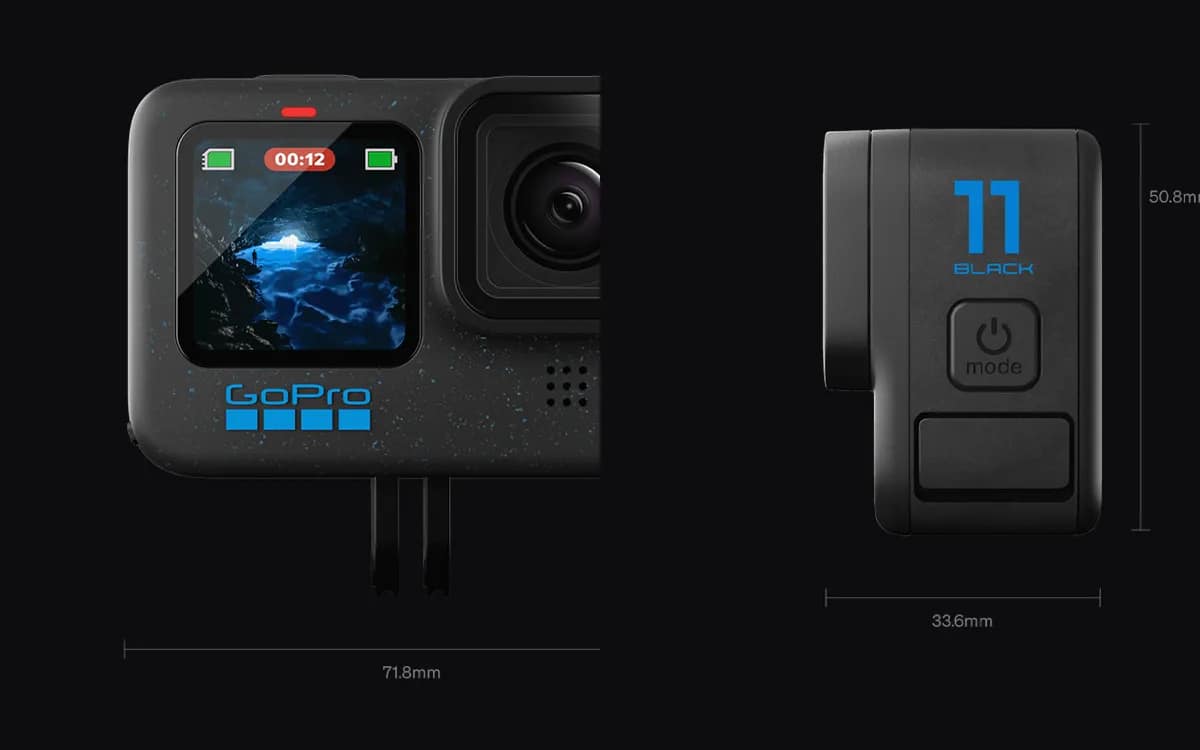 Action & 360 cameras
Which GoPro to rent depending on what you are filming
Same sensor, same housing, same waterproofing: these two GoPro cannot be distinguished in the image. They are decided on what you are going to film.
5 min read