
Services
Requesting a service: how it works

Since this year I no longer only rent gear out: I also travel with it, and I do the filming myself. A service request therefore looks nothing like a rental booking. There is no basket, no bank card, and no slot that locks the moment you click. There is a request, then a quote — and between the two, me opening my diary.
Five questions, in this order
The form starts from what you are organising, never from my gear. Nobody wakes up thinking they need a 360 capture: they are preparing a wedding, a viewing, a seminar. Translating that into cameras, a drone or an installation is my job. Hence the order of the five stages:
- What you are organising — a party, a property, a company project, or something else.
- The place — the exact address, picked from the list, so I locate the spot and not just the town.
- The time — the day, the start time, the duration. An evening that ends after midnight is catered for; so is a multi-day event.
- What you want — twelve tick boxes, none compulsory, none ticked in advance. They prepare the quote, they do not calculate it.
- Your budget and your words — the budget is optional; the account of your project is the one piece of text I genuinely need.

Two commercial stages, not one
This is the biggest difference from renting, and the one people misread when they arrive from the catalogue. Renting is a purchase: you choose, you pay, it is booked. Requesting a service is requesting a quote. The page charges nothing and asks for no bank card. If I cannot take the job, you have nothing to claim back, because you paid nothing.
The quote comes next, written by hand. It separates labour from travel costs, and it does not fire off on its own: I first look at whether the job is feasible. You accept it by return message, and only then do I hold the slot. The invoice comes after the job — never before.
What actually decides my answer
Three things, and not the figure you entered. My schedule first: I work alone, and two events on the same Saturday evening simply do not exist. Feasibility next — access, imposed timings, permission to be sought from the venue, and for aerial shots the rules applying to that place on that day, which I check before pricing. Finally the venue’s constraints, the ones only you know: a fourth floor with no lift, a hall that only opens at six, neighbours to spare.
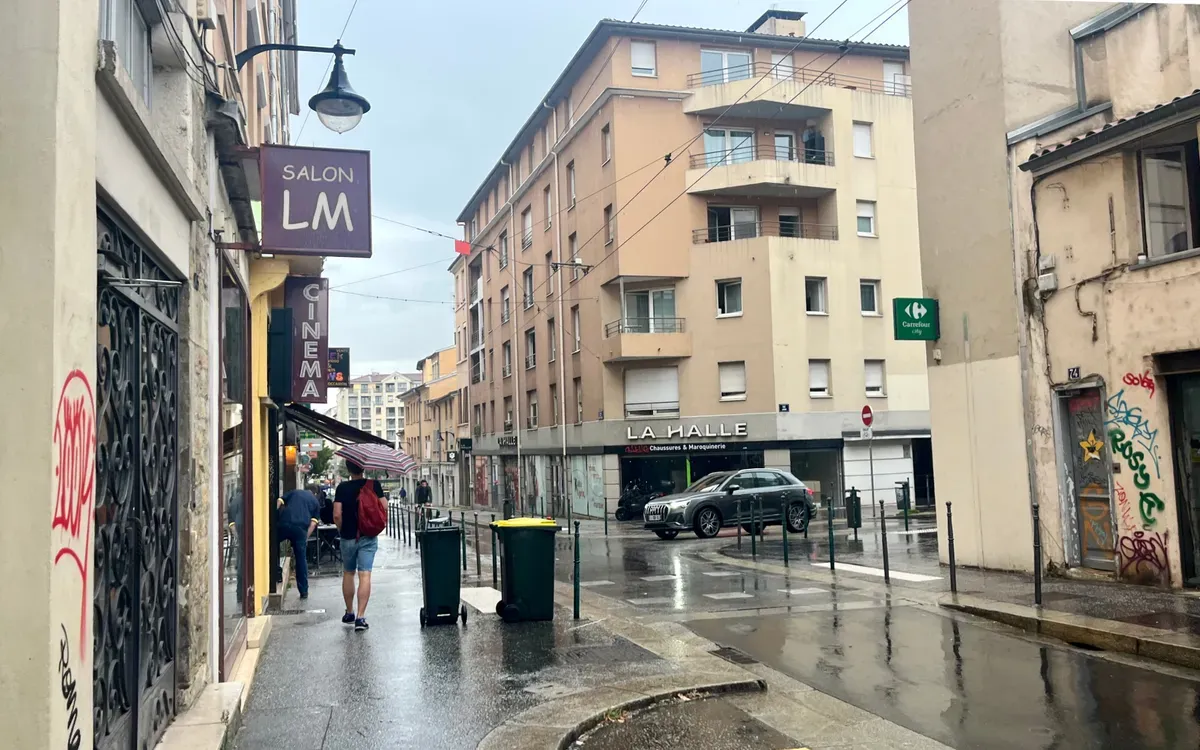
I come to you, you send nothing back
No parcel travels on this route. I go anywhere in France; within Lyon the travel is included, elsewhere I price it by hand in the quote, with no automatic mileage scale. And there is no minimum notice: even for this weekend, I would rather open my diary and answer you honestly than close the door in advance. If the place worries you more than the date, the starting point is the same — collection in Lyon only concerns rentals.
And if you would rather film it yourself
Then the rental catalogue is still the right door, and it is often the better choice: for many events, a well-prepared camera in the hands of someone who knows the place beats an operator discovering it. The guide to gear to rent for an event says what to plan for. If, while reading it, you realise you will have neither the time nor the wish to hold a camera that night, that is exactly when to send me a request. And if you rent in a company’s name, invoicing and VAT follow the same rules on both sides.
More in this section
 Services
Wedding video: questions to ask before booking
A list of useful questions to ask any wedding videographer, with our answers when we can answer them directly.
5 min read Services
Paper prints: what remains when the screen goes dark
A file is lost without a sound. A print ends up in a drawer ten years later. What prints well, what prints badly, and why selection matters more than paper.
5 min read Services
Orbit, reveal, top-down: three flight paths
Three drone moves, three different questions about a property for sale. Where each one starts, where it stops, how long it lasts and what makes it unreadable.
6 min read