
Events
An opening, an open day
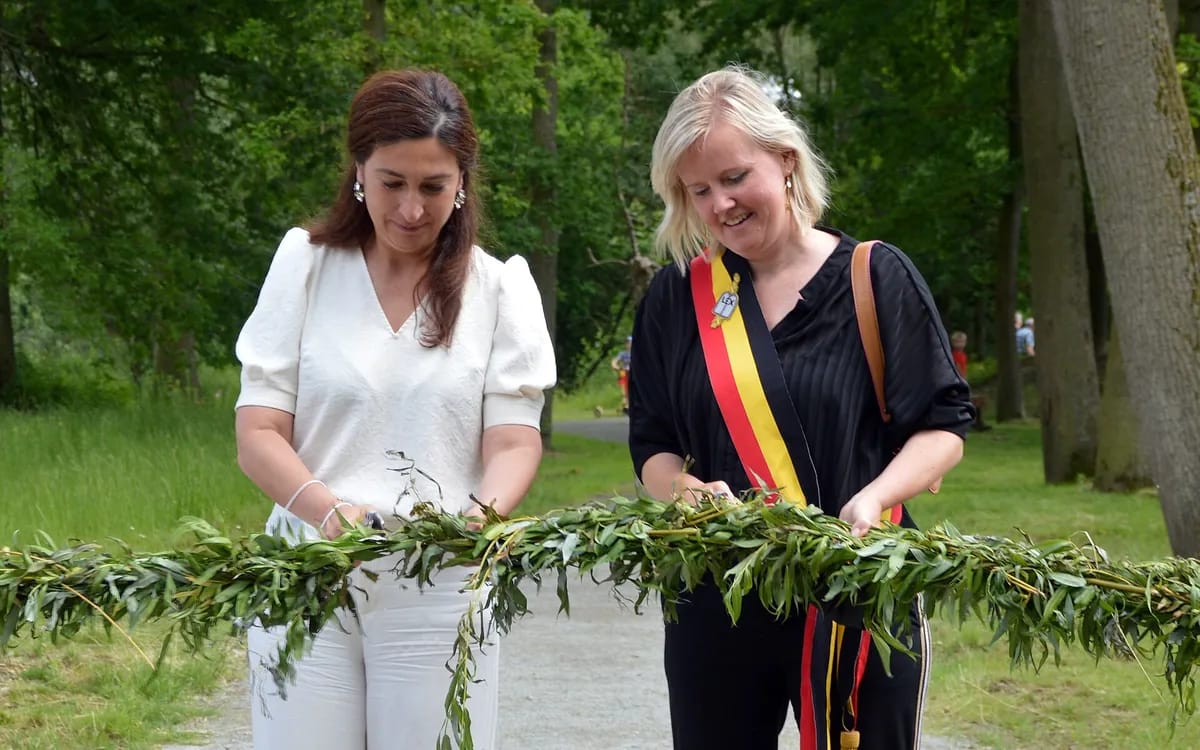
An opening or an open day is nothing like a wedding or a seminar. It is a short format, often three hours, in a place that fills up all at once and empties just as fast. There is no detailed running order, no stage, and rarely anyone to tell you where to stand. On the other hand there is one constraint the other two formats do not have: a good part of what needs filming must be filmed before anyone arrives.
Thirty seconds that are never repeated
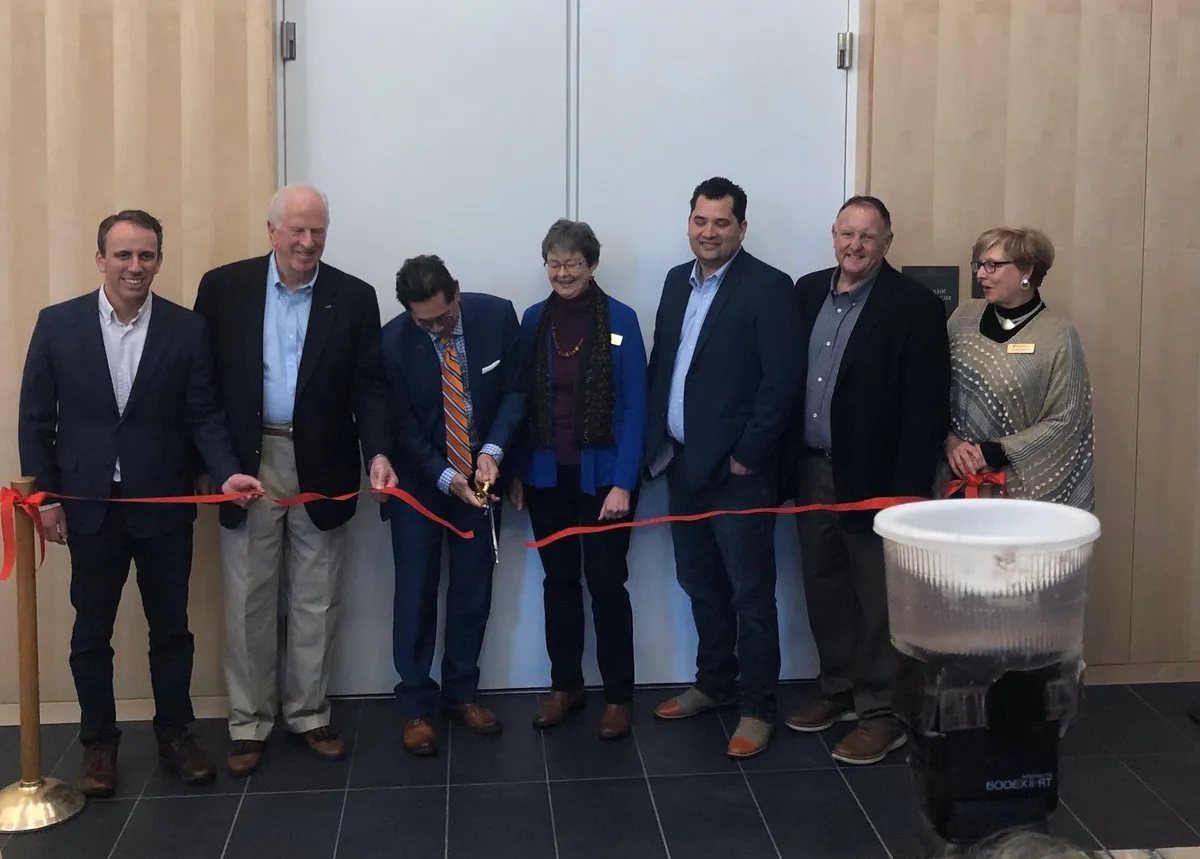
The ribbon cut lasts less than a minute, it is surrounded by twenty people taking the same phone picture, and nobody will do it again for you. Three things save it: being in place five minutes early, knowing which way the scissors will go, and having accepted that phones will be in frame. Wanting a clean shot with no phones means wanting a shot that does not exist.
The flow decides everything else
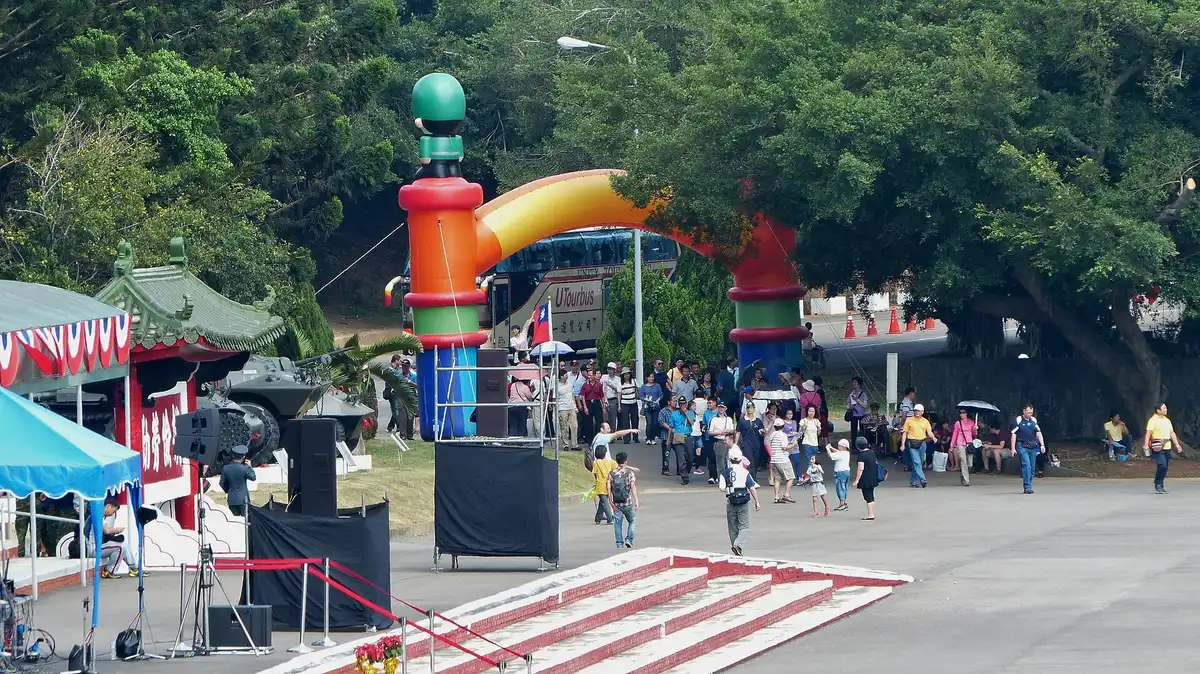
A place open to the public does not fill up steadily. There is a wave at opening, a lull, then a second wave in the middle, and everybody leaves at once at the end. Crowd images are taken during the waves, detail images during the lull — and you have to have decided which you want beforehand, because the lull does not last.
That rhythm has a direct consequence on the edit: an opening film almost always shows a place fuller than it was on average, simply because you filmed at the peaks. It is not dishonest, it is what everyone does — you just need to know it when you watch the result and wonder why you do not remember such a crowd.
An opening and an open day look alike, but not on this point. An opening has a centre — the ribbon, the speeches, the few people everyone came to see. An open day has none: nothing in particular happens, except that people walk around and look. Filming the second like the first gives a film in which you wait for an event that never comes.
The place before the public
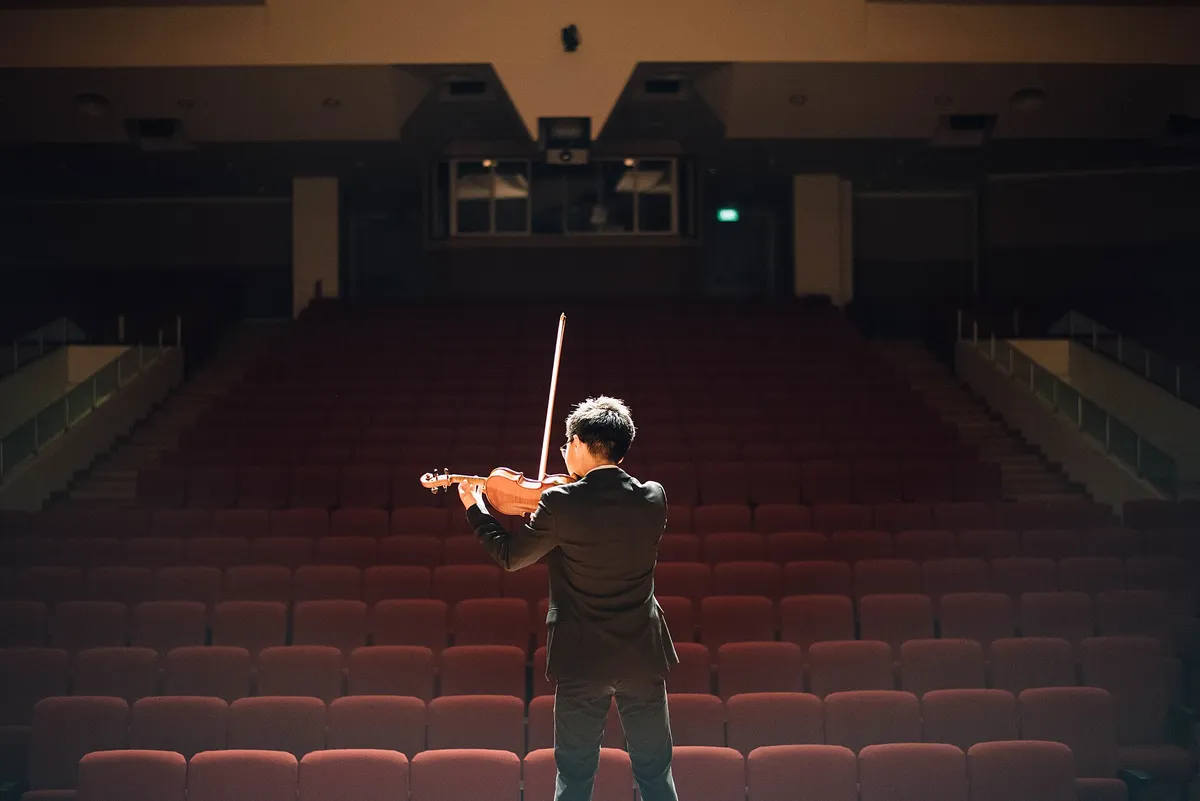
That is the peculiarity of this format: the place being opened is, almost always, the real subject of the film. And you will not see it again once two hundred people are inside. Shots of the new building, the tidy workshop, the room ready and empty are therefore taken beforehand — half an hour is enough, but it cannot be recovered later.
It is also the only moment when you can shoot with somebody: the director in front of the new machine, the craftsman in the workshop, the team lined up. Once the public is in, those shots become impossible to get without pinning down people who have other things to do.
Outdoors, the light is not adjustable
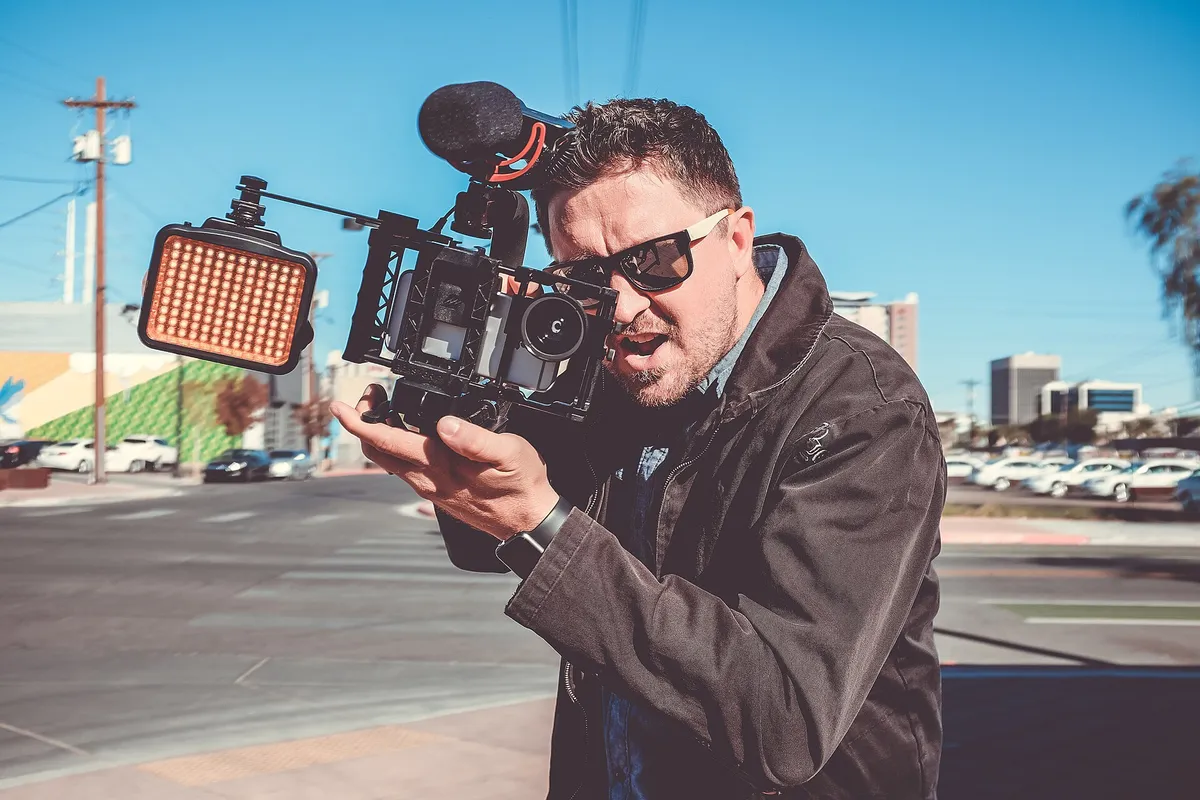
Many openings take place outdoors in the early afternoon, that is to say at the worst moment of the day: high sun, hard shadows under the eyes, contrast the sensor cannot hold. You cannot change the hour, but you can choose the orientation: placing the group so the sun comes from the side rather than from behind or head-on changes the result completely, and it is a sentence to say to the organiser before they line everybody up.
The wind, on the other hand, is not negotiable at all: it attacks the sound before the picture. A windshield on the microphone takes three seconds to fit and saves every outdoor speech. An aerial shot is often requested for this kind of event: whether it is feasible is checked site by site, before being promised to anyone.
Three hours, five sequences
Broken down in advance, an opening morning falls into five very unequal blocks. Writing them out avoids the format’s most common failing: spending three quarters of the time on the official part, which lasts a quarter of an hour, and leaving without a single image of the visitors.
| Sequence | Typical length | What you take there |
|---|---|---|
| Before opening | Half an hour | The empty place, the details, a shot with the hosts |
| Ribbon and speeches | A quarter of an hour | A frame that does not move, and the sound |
| The first wave | Three quarters of an hour | The crowd, the faces, the hands |
| The lull | Half an hour | The demonstrations, the conversations, the missing shots |
| The end | A quarter of an hour | The place emptying, and what is left on it |
What I ask the organiser for
- The exact time of the ribbon, and the names of those who will cut it.
- Half an hour of access before opening, to film the empty spaces.
- What is new and must absolutely be shown: a machine, a room, a sign.
- Who speaks, and whether the speeches go through a PA or are delivered unamplified.
Those four lines fit in a message, and they decide nearly the whole shoot. The rest — how many lenses, how long the film, the photographs — is settled afterwards, once you know what is going to happen. The guide to event gear covers the equipment if you film it yourself, and events around Lyon give you neighbouring formats to practise on.
If you are opening premises, a workshop or a shop and want to keep something other than phone pictures, describe the date and the run of events in the service form. And for the place itself, filmed calmly on another day, half a day is often enough.
More in this section
 Events
Wedding photos: the moments not to miss
From waking up to the first slow dance, here are the moments of a wedding that count in photos, with the classic pitfalls of each and how to anticipate them.
4 min read Events
Filming a corporate day without disrupting the programme
A seminar is not a shoot: it is an expensive programme that does not stop. How to place yourself, move around and be forgotten.
4 min read Events
Wedding photobooth: kiosk or instax, which to choose?
Turnkey photo booth or self-service photo corner: two different entertainment options, compared without claiming that one replaces the other.
5 min read