
Guides
GoPro at sea: what salt really damages
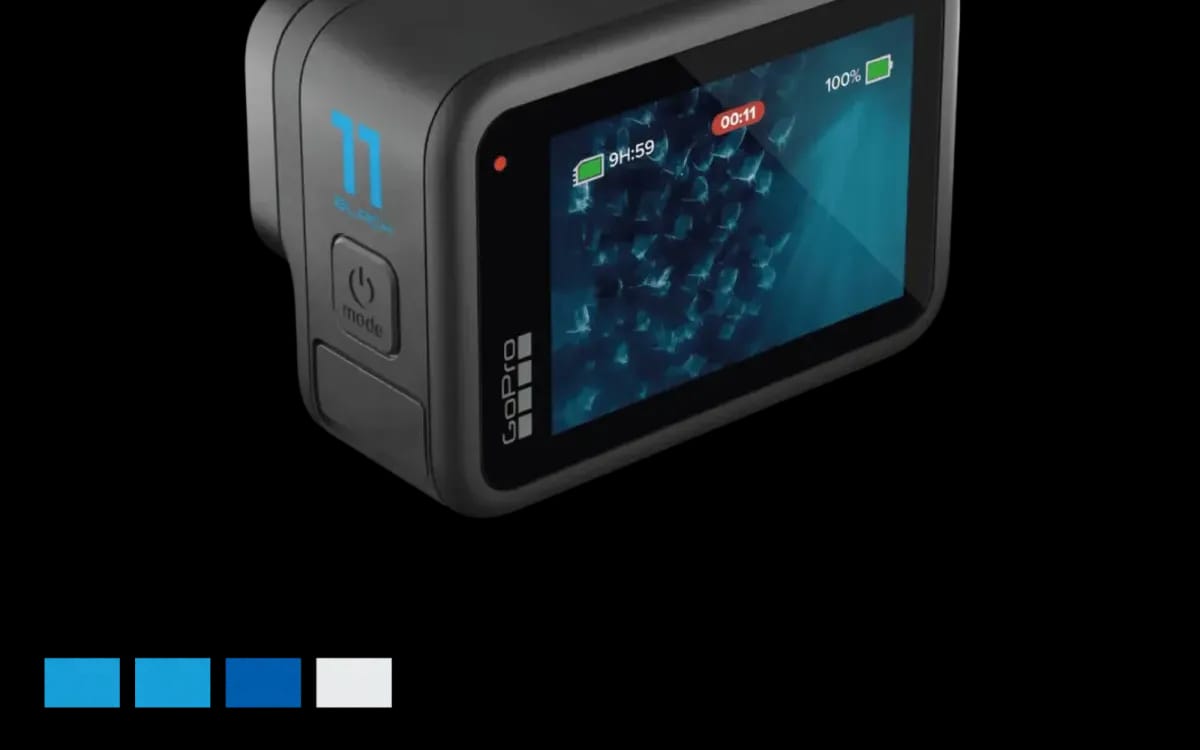
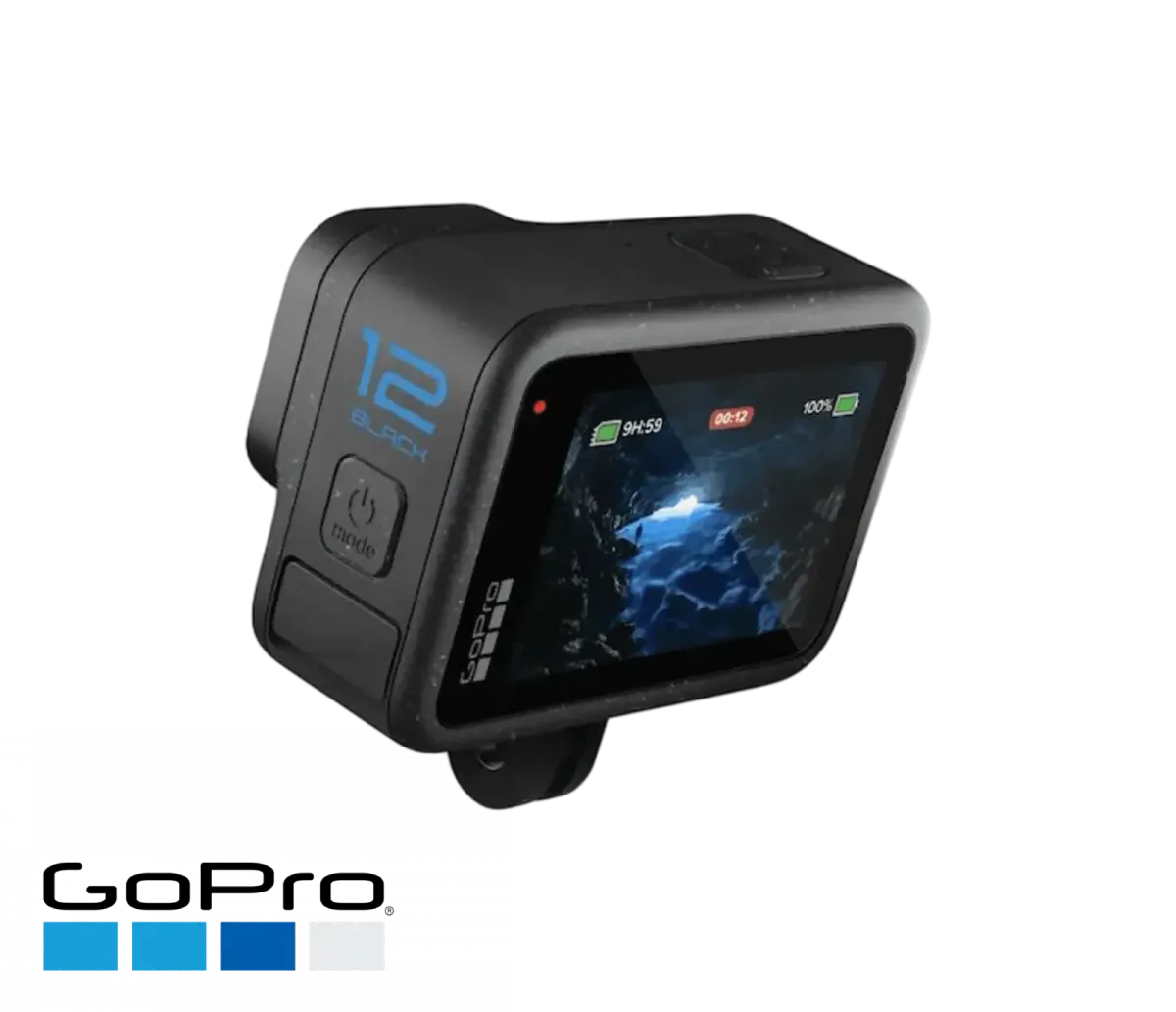
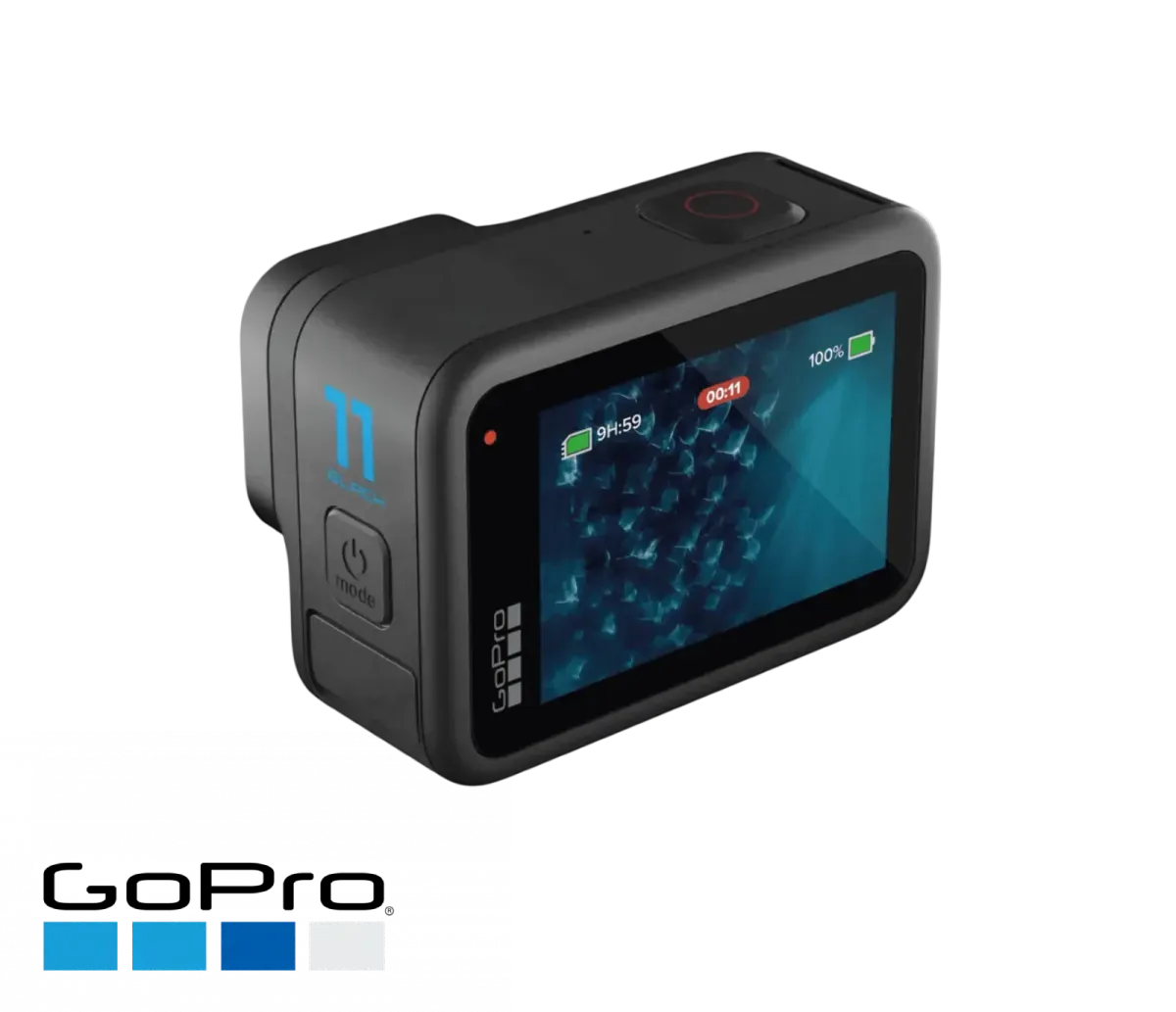
A HERO 11 Black or a HERO 12 Black leaves our workshop waterproof up to 10 m without a housing: this is the value announced by GoPro on its product sheet, and this is exactly what you receive, since the diving housing is not part of the pack. For snorkeling and swimming, no one misses it. The real risk at the seaside isn't the depth: it's what the salt leaves behind when the water evaporates.
What salt attacks, in order
Seawater contains about 35 grams of salt per liter. When it dries, the water leaves and the salt remains, in the form of crystals, exactly where there is a gap. An action camera has four or five, and they're the problem—never the body itself.
- The buttons. The crystal is housed under the key and hardens the stroke: soft click, button that catches, sometimes button that remains pressed. This is the most common fault after a week at the beach, and the easiest to avoid.
- The hatch seal. The tightness announced by the manufacturer assumes a clean seal. A grain of sand or a deposit of salt around its edge, and the seal no longer compresses uniformly: the camera remains waterproof on paper, not necessarily in water.
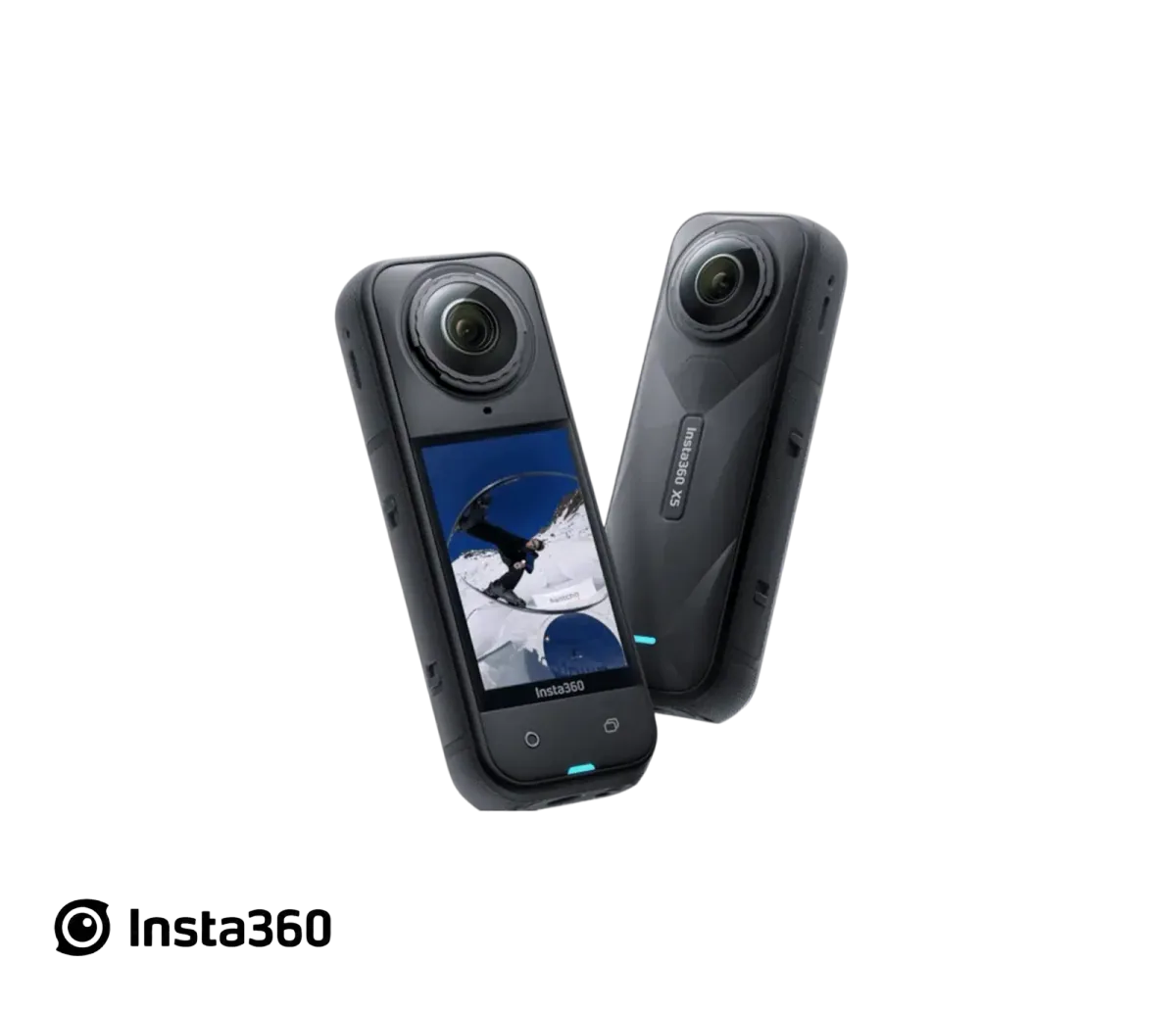
- The objective. The salt dries in a whitish veil on the glass. We don't see it on the screen, we see it in the editing: halo around the sun, contrasts washed out in backlight. On a 360 camera, there are two protruding curved lenses instead of one flat glass—twice the exposed surface area.
- Threads and fixings. A pole, pliers or fixing rinsed in fresh water can still be unscrewed a year later. Not rinsed, it seizes.
Rinsing which avoids excess
This protocol takes five minutes in the evening and addresses all of the points above. It applies to a GoPro as well as to a Insta360 X5 , and it also applies to a swimming pool: chlorine is also corrosive.
- When you get out of the water, rinse with fresh water, without a powerful jet: a pressurized jet pushes the salt into the gaps instead of taking it out.
- In the evening, soak the camera for a quarter of an hour in a container of lukewarm fresh water, with all the hatches closed, and press each button around ten times during the soak. This is the only gesture that dislodges the salt under the fingerboard.
- Rinse again, shake to remove water from the corners, then dry with a soft cloth, trapdoor side down.
- Only open the hatch when the camera is dry, with dry hands. This is the precise moment when the water enters.
- Never a hot hairdryer, never a cleaning product, and never a piece of a t-shirt on the lens: the sand left in the fabric turns cleaning into sanding.
- Also rinse wet accessories—pole, handle, attachments—before putting them back in the carrying case.
What insurance covers, and what it doesn’t cover
Breakage and theft insurance is included in the rental price of all our cameras, without any action or supplement. Our general conditions, however, exclude three things which directly concern the sea: loss of equipment, damage resulting from gross negligence - immersion is cited as an example - and consumables (memory cards, filters, screen protectors). In short: stay within the 10 m announced and rinse, this is normal use; go down to 25 m without a box with a device given for 10, no.
The excess (security deposit) is displayed on the sheet of each device, next to the price: €100 on the HERO 11 Black and on the X4 , €150 on the HERO 12 Black and on the X5. It is collected when ordering, then returned within five working days after receipt and verification of the equipment.
Which device to choose for the sea
| Device | Waterproof without housing | Security deposit |
|---|---|---|
| GoPro HERO 11 Black | 10m | €100 |
| GoPro HERO 12 Black | 10m | €150 |
| Insta360 X4 | 10m | €100 |
| Insta360 X5 | 15m | €150 |
Between the two 360 cameras, the decisive difference at the water's edge is not depth but repairability: on the X5, the lenses can be replaced, Insta360 sells the kit; on the X4, they cannot be dismantled. If your week is spent between sand, rocks and paddle, this is the argument that matters the most. And if you're still hesitant, the HERO has a flat front protected by a dedicated glass, much less exposed to sand than two protruding lenses.
The three accessories that change something
These three options are added to the booking from the camera product page, where their current price is shown.
- The floating handle. The camera rises to the surface instead of sinking. As loss is never covered by insurance, it is the only one of the three that stops you from losing the camera.
- The diving filter kit. Beyond three or four meters, the red disappears and everything turns blue-green. A filter renders the colors on the spot, which no editing correction can completely make up for.
- The 60 m diving housing on the GoPro side, the 360 protection on the Insta360 side. Useful if you descend beyond the announced depth, or if you film among rocks and coral: it absorbs shocks and scratches instead of the housing.
What we see when the camera returns
Each time you return, the workshop reviews three points: batteries and charger, accessories included, cosmetic condition. A rinsed and dry case goes on in two minutes. If an incident has happened - falling on the rocks, trap opened at the wrong time, camera falling into the water - report it on the way back rather than trying to catch it yourself: a camera opened and dried out in any way always costs more than a reported incident.
Let's summarize: 10 m without a box, a quarter of an hour of soaking in fresh water in the evening by pressing the buttons, no trap door open on a damp box. Three reflexes, and the salt will not have damaged anything at all.
More in this section
 Guides
Rent in the name of your company: invoice and VAT
The prices displayed are inclusive of tax. For a company, what matters is the VAT and the recoverable VAT: here is what the invoice covers and how to have it established in the name of the structure.
4 min read Guides
360 camera lens: how to protect it
The lenses of a 360 camera protrude from the housing: this is the number one fear of tenants. Here's how to protect them, and what to fix if it happens.
4 min read Guides
Buy or rent a drone for a one-off shoot?
Frequency of use, model turnover, insurance, batteries: the comparison by criteria, and the pack you would have to buy new to match it.
6 min read