
Services
Rent the gear, or bring in an operator
Since I started offering on-site services, people often ask the question the wrong way round: “which is better?” Neither is better. Renting and bringing someone in do not solve the same problem. Renting gives you a tool; a service takes a task off you. The rest — image quality, pixel count, brand — almost never enters the decision, because the gear is the same on both sides.
Four questions, and you have your answer
- Will you be a guest at your own event? If you are the groom, the speaker or the host, you will not be filming. It is not a question of skill: you will be elsewhere, and rightly so.
- Can the scene be played again? A property waits; you can go back. A bride’s entrance cannot. The more unique the scene, the smaller the margin for error.
- Who will edit the footage? That is the job everyone forgets. A filmed day means several hours of sorting, cutting and exporting. If nobody will do it, filming is pointless.
- Is there a viewpoint you cannot hold alone? Two angles at once, a booth and a room, an aerial shot while filming on the ground: at some point you need two pairs of hands.
Three yes out of four, and I come
This is not a scale, it is an honest rule of thumb. If you answer yes to only one question, renting is plenty, and it will cost you less. At two, it is up for debate, and often the right answer is a mix: you rent a camera for your guests and I come for the two hours that matter. At three, the question no longer arises.
The real hidden cost is the edit
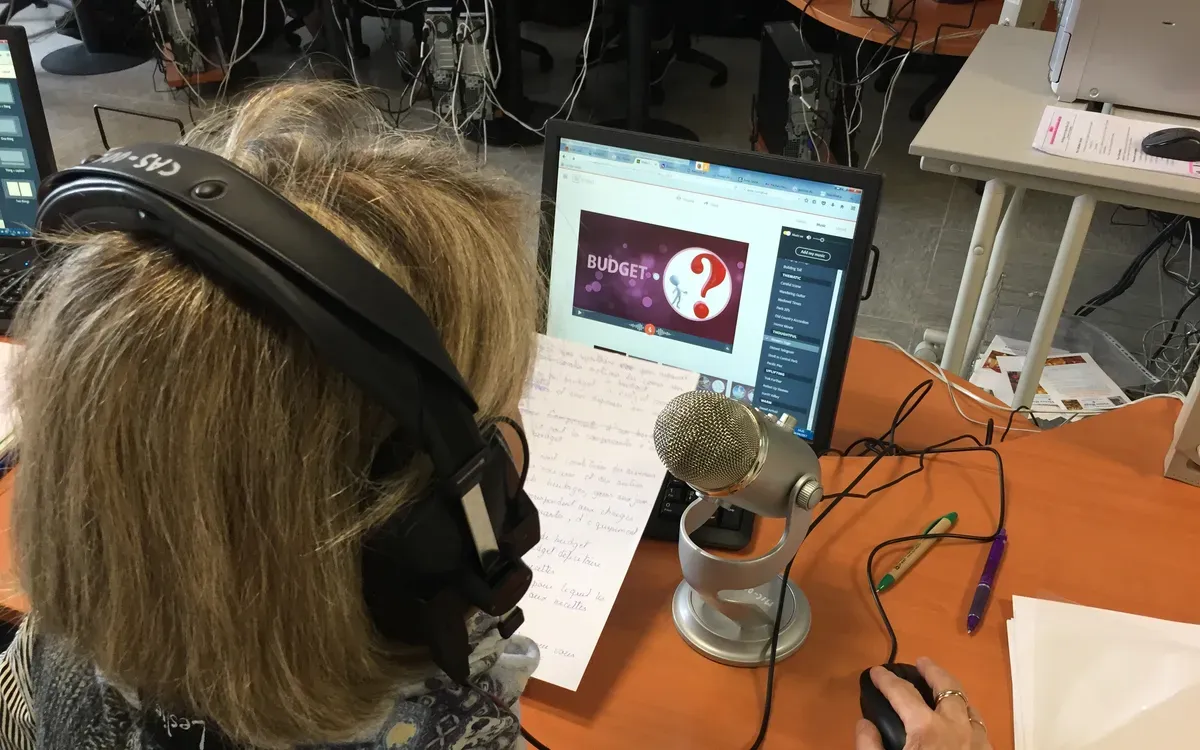
That is the third question, and the one that does the most damage when it is glossed over. I have seen full memory cards sit in a drawer for two years — not for lack of will, but because nobody had blocked out the evenings needed. Renting costs less than bringing someone in; renting and never editing costs everything, for nothing. Sorting and sharing your videos after filming spells out the real work behind the word “editing”.
The right answer is often a mix
That is the arrangement I suggest most often, and almost nobody arrives thinking of it. You rent one or two cameras, handed to guests or set on a tripod, and I come for the slot that cannot be replayed: the ceremony, the doors opening, the speech, the viewing with the buyer. The rest of the day keeps running without me. You do not pay an operator to film the drinks, and you do not miss the moment that matters.
This arrangement has one flaw worth knowing: it produces two sets of footage that do not look alike, one shot by guests, one by me. If you want a film that holds together end to end, say so in the request — it is an editing constraint, and it is prepared during filming, not afterwards.
What a service does not replace
It does not replace what you know about the place and the people. I do not know that your grandmother will only stay an hour, or that the light drops suddenly in that room at seven. That is why I ask so many questions beforehand, and why the wedding gear checklist stays useful even when I am the one filming: it makes you write down what I cannot guess. Nor does it replace the wish to do it yourself — if you have it, keep it, renting exists for exactly that.
More in this section
 Services
How many cameras to film an event
One camera only sees one side of the room. Two is not twice the same job. How I count viewpoints before counting gear.
3 min read Services
Requesting a service: how it works
You describe what you are organising, I check my schedule, I price it by hand and I send you a quote. Nothing is charged and nothing is booked until you say yes.
3 min read Services
Wedding video: questions to ask before booking
A list of useful questions to ask any wedding videographer, with our answers when we can answer them directly.
5 min read