
DJ & sound system
Two speakers on stands: where to place them and how high
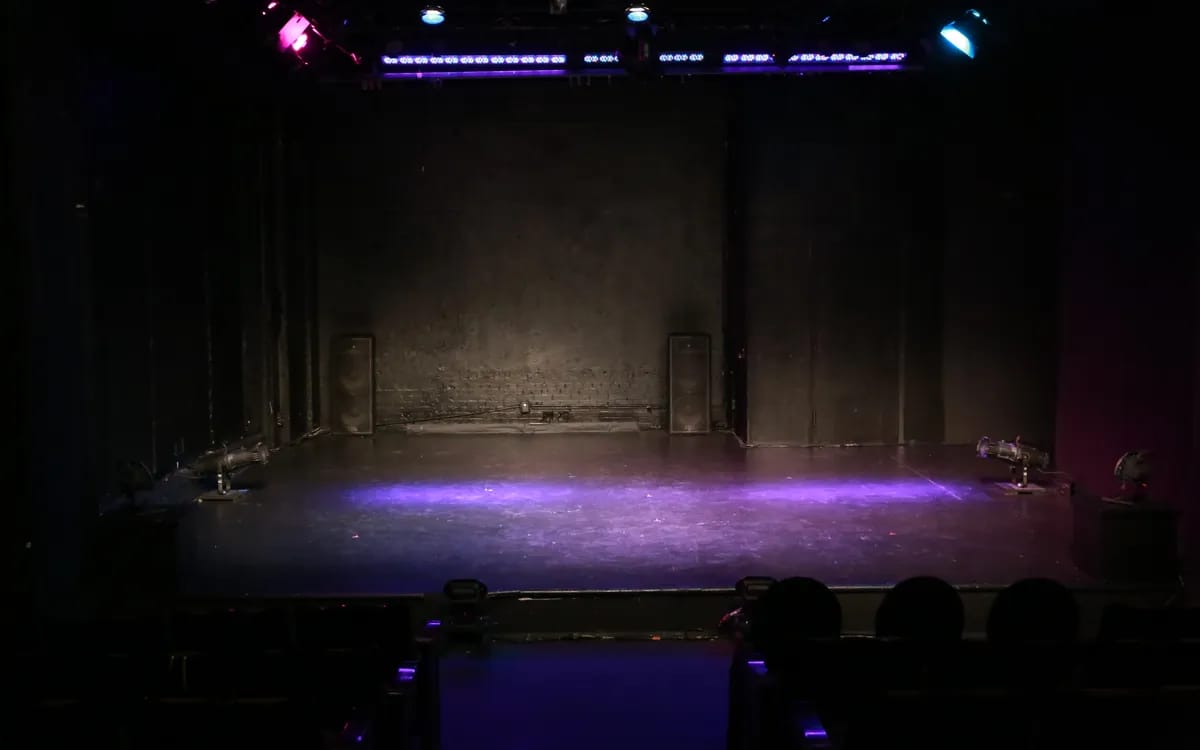
To place two speakers on stands, set them up in front of the dance floor, on either side of the area where your guests dance or listen. The tweeter must sit above head height, and each speaker must be turned slightly towards the centre of the room. The whole setup comes down to three things: height, spacing, angle.
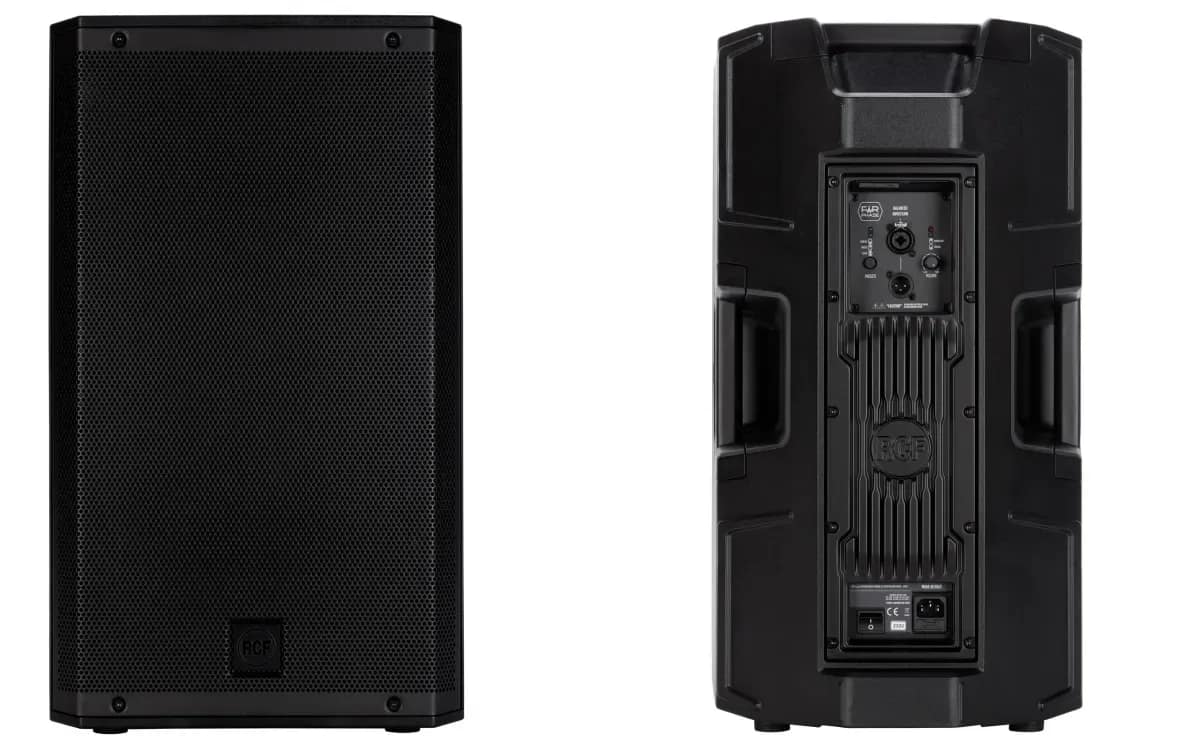
This guide is for anyone putting together their own party without being a technician: a birthday, a wedding, a village hall or a garden. It is based on the RCF ART 912-A pair of speakers that Fox Rider rents in Lyon, described on the speaker rental in Lyon page. The pair is rented on its own, with its stands: no subwoofer, no mixing desk, and a microphone does not plug into it directly; it goes through the Pioneer XDJ-RX3 console, with which you can add a Shure SM58 as an option, €5 per microphone per rental (two at most), XLR cable supplied and microphone stand free of charge. It is picked up in Lyon 3, with no shipping. Stand and cable safety is covered in another article; here, we only talk about placement.
In front of the dance floor, not among the guests
Speakers go in front of the audience, on the same line, to the left and right of the useful area. There are two reasons. First, the sound must not reach the back of whoever is adjusting it: they would misjudge what the guests actually hear. Second, if someone speaks into a microphone, a speaker placed behind them sends the sound back into the microphone, and the whistling, the feedback, appears very quickly.
In a long room, set the pair up on one short side and let it play along the length. The sound travels through the whole room in the same direction, which prevents the back from receiving mostly echoes. In a garden, place the stands at the edge of the listening area, facing it, never in the middle of the lawn.
Height: tweeters above head height
RCF states a dispersion of 100° horizontally and 60° vertically. In practice: the sound spreads widely to the sides, but stays narrower from top to bottom. That is why height matters more than spacing.
A speaker placed on the floor sends its high frequencies into the legs and backs of the front rows. Those at the back then mostly hear muffled bass. On a stand, the top of the speaker clears the heads and the sound reaches the back more clearly. Aim for roughly the ear height of a standing guest. A good test: stand at the back of the room and look at the speaker. If you can see it with nothing in the way, its high frequencies reach you. Higher is not necessarily better: the stand must stay stable.
People standing right under a speaker get the loudest level and the worst sound. Leave a clear space in front of each stand, even if you have to mark it on the floor with adhesive tape.
Spacing and angle between the two
The further apart the speakers are, the wider the stereo image becomes, but a gap appears in the middle. Too close together, they behave like a single source. The right spacing is the one where the two coverage zones meet a little before the middle of the room.
For the angle, turn each speaker towards the centre of the audience, not towards each other: this is called toe-in. Aim at a point towards the back of the room, between the two speakers. That way, each one covers its own side and the central area receives both.
To check, play a track you know well and walk around the room, from the back to the sides. A dip in the middle: move the stands closer together or toe in more. One side louder than the other: move the speaker that is too prominent further back or lower its volume. Do this walk-through before the guests arrive, not during the party.
Away from walls and out of corners
A speaker pressed against a wall, and worse, wedged into a corner, boosts the bass. The sound becomes heavy, it lingers, and lyrics are harder to understand. Move each stand away from the wall by at least one step and avoid the corners of the room. Also avoid aiming at a large glass window: it reflects the sound back into the room.
In a room with bare or tiled walls, the sound bounces around and blurs the message. Curtains, set tables and guests absorb some of these echoes: a full room sounds better than an empty one. So adjust with that in mind, and do not turn the volume up to compensate for the echo of a room that is still empty.
Mono, stereo and where to put the mixer
At a party, people move around. Someone staying near the left speaker only hears one side of the track. The stereo effect only really exists at an equal distance from both speakers. If your source offers a mono setting, it suits a dance floor well: both speakers play the same thing and everyone hears the whole track.
The mixing desk, console or computer goes behind the line of the speakers or beside it, never in front. You hear what the audience receives and you prevent the sound from feeding back into a microphone. If you mix on Technics SL-1210 MK2 turntables, keep them away from the speakers: the bass makes the table vibrate and the needle skips. The connection is explained in the article on the vinyl turntable.
Linear, Boost or Stage: which mode to choose
The speaker offers three modes. RCF describes them like this: Linear for clarity, Boost for more “loudness”, Stage for use as a stage monitor. A stage monitor is a speaker placed on the floor and pointed at the musicians. That is not your case on a stand.
Start in Linear. Switch to Boost if the sound seems flat in a large room, and compare at equal volume, otherwise the louder one always wins. The mode does not replace height or spacing: those two settings matter more. To balance the bass, mids and highs of your source, read the DJ sound settings guide.
More in this section
 DJ & sound system
Active or passive speaker: what really changes
An active speaker has its amplifier built in, a passive one does not. What that changes for cabling, power and choosing a pair for a party.
5 min read DJ & sound system
Plugging a phone into speakers without Bluetooth
No Bluetooth or mini-jack on these speakers: the cable to bring, the single-connection variant and the phone settings for a party.
5 min read DJ & sound system
Speakers at a party: stands, cables and volume without incident
Flat ground, cables taped to the floor, one socket per speaker, no rain, protected ears, neighbours warned: safety rules for a pair of speakers at a party.
5 min read