
Drones
Drone autonomy: how many batteries?
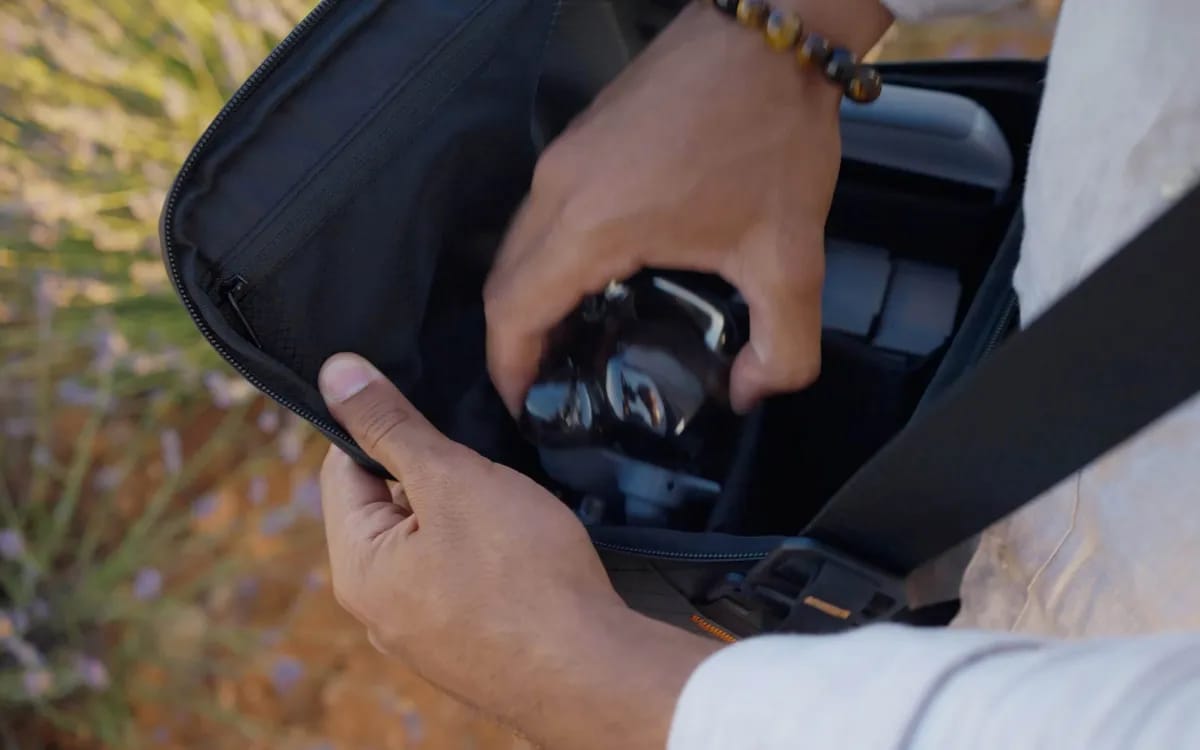
This is the question that comes up most often when booking: is one battery enough? The technical sheet announces 34 minutes on the DJI Mini 4 Pro and 36 minutes on the DJI Mini 5 Pro. These numbers are accurate, but they describe a situation you will never encounter. Understanding how they are measured is the only way to translate a spec sheet into a day of filming.
Where do the 34 and 36 minutes actually come from?
DJI publishes its measurement conditions, and they are instructive. Maximum autonomy is obtained in the wind tunnel, in conditions equivalent to a windless flight at sea level, with the aircraft moving at constant speed of 21.6 km/h, obstacle avoidance set to braking and the camera in photo mode — all until forced landing due to empty battery.
The manufacturer publishes a second value, even more telling: the hovering autonomy of the Mini 4 Pro is 30 minutes, measured this time in a laboratory without wind, at twenty meters altitude, in photo mode, obstacle avoidance disabled, from 100% to 0% battery.
Hold both ends of the chain. First, the difference between 34 and 30 minutes comes only from the test protocol, for an identical battery. Then and above all, both measurements stop at 0%. But no sane pilot flies down to 0%: the automatic return is triggered well before, and that's fortunate. The box figure is a lab cap, not a flight budget.
What remains once on the ground
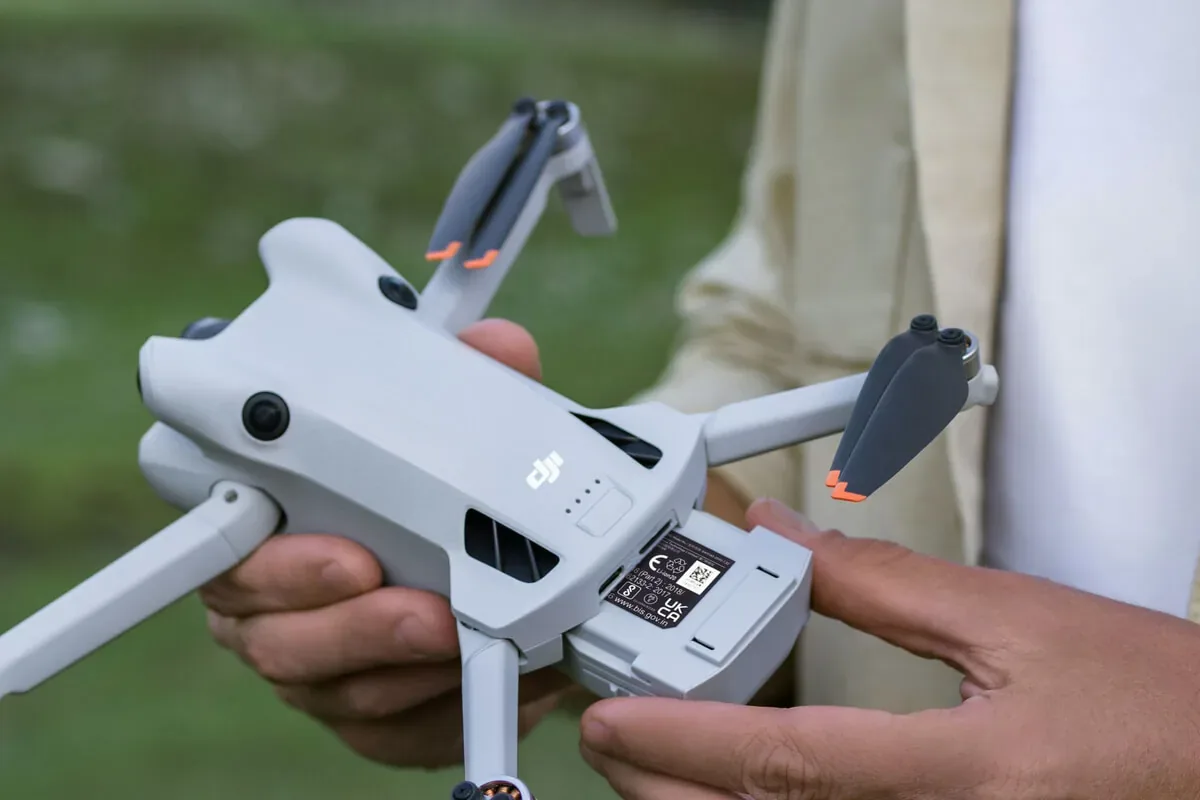
Between the theoretical ceiling and your flight, several positions take their share, and none are optional:
- The return margin. The automatic low battery return is triggered as soon as the device judges that it can no longer return safely. This reserve is not useful theft, it is insurance.
- The wind. The manufacturer's measurement assumes perfectly calm air. Fighting against the wind on the way back is consuming, and it is always on the way back that it falls.
- Cold. DJI indicates that below 15°C, the discharge capacity and voltage stability are significantly affected.
- Dead time. Positioning, search for the frame, hesitations: the drone is in the air without anything usable being recorded.
The good reflex is therefore not to count in minutes but in flights. One battery equals one flight: you take off, you do one or two sequences, you return with room to spare, you change. This reasoning is robust because it absorbs all of the above variables without you having to calculate them.
How many batteries depending on your day
| Output type | Targeted sequences | Recommended batteries |
|---|---|---|
| Discovery, first flight | 2 to 3 | 2 |
| Vacation souvenir, half day | 4 to 6 | 3 |
| Full day, several spots | 8 and up | 4 or more |
| Filming to be rendered, without room for error | variable | 4 minimum, plus one in reserve |
These benchmarks are intentionally conservative. One extra battery weighs nothing in the bag; one less battery means you come home without the plan you drove two hours for.
The long-lasting battery trap
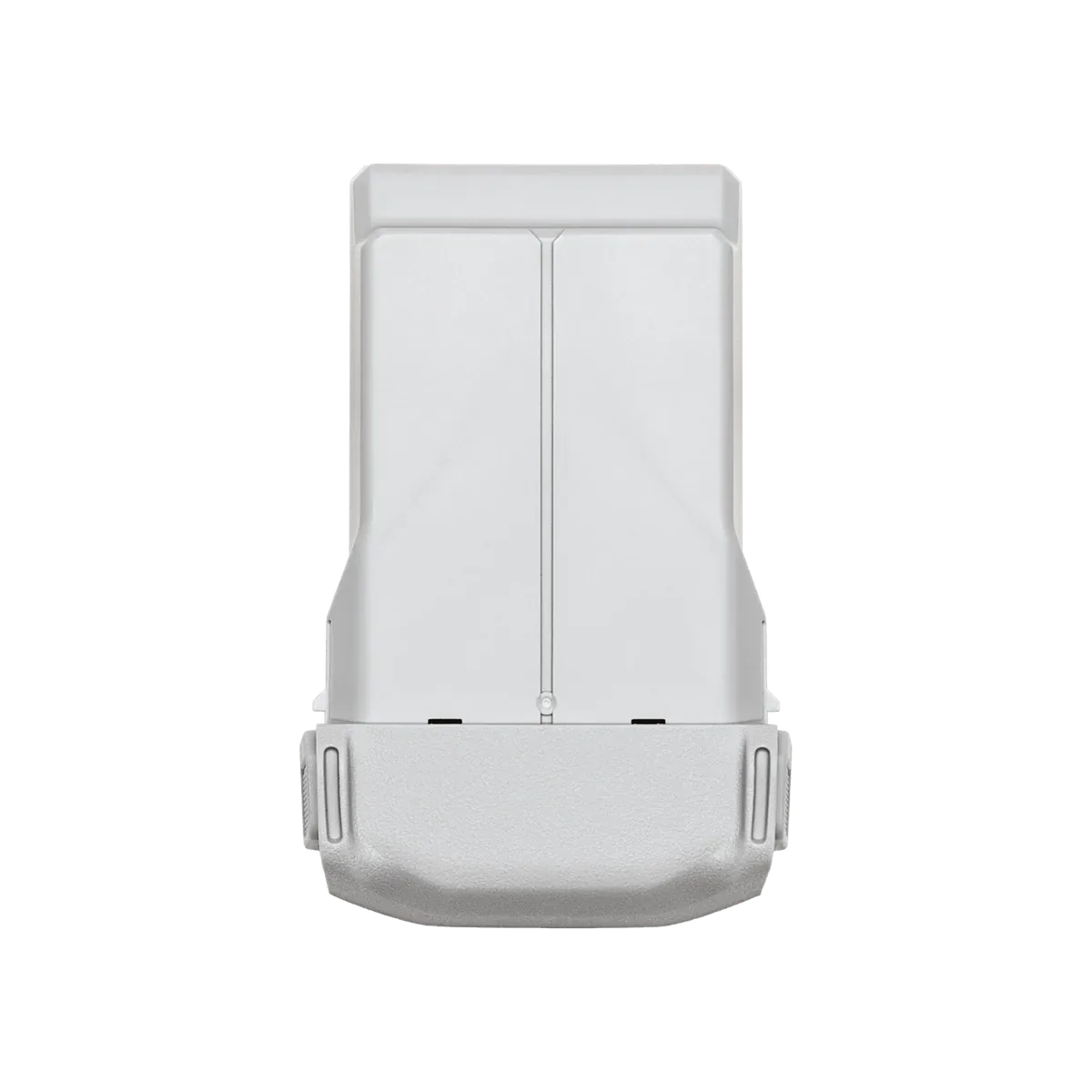
DJI offers batteries with increased capacity, advertised at 45 minutes on the Mini 4 Pro and 52 minutes on the Mini 5 Pro. Two major reservations before considering them as the solution.
First, availability: DJI indicates that the long-life battery of the Mini 4 Pro is not sold in Europe. Then and above all, the weight. For the Mini 4 Pro, the manufacturer indicates that the device thus equipped exceeds the threshold of 249 grams. For the Mini 5 Pro, it is even more explicit: mounted with the long-life battery, the drone exceeds the maximum mass of the C0 class and can no longer be operated as a C0 in the European Union. You therefore leave the most permissive category. Over a weekend, carrying an extra standard battery is almost always smarter than saving a few minutes by changing the regulatory regime.
Recharge between two flights
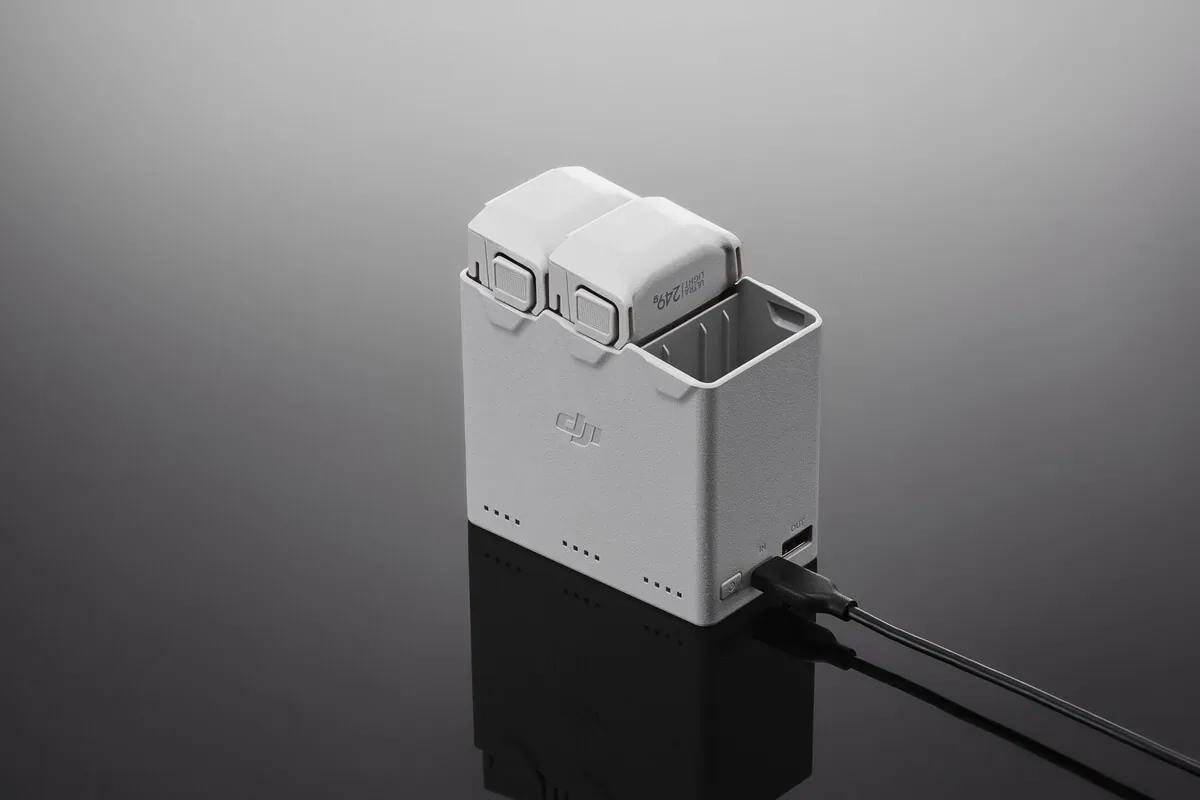
The Mini 4 Pro's battery displays 2,590 mAh for 18.96 Wh; that of the DJI Mini 5 Pro rises to 2,788 mAh, which partly explains its announced 36 minutes. These values are useful for sizing a portable recharge: a correct external battery or a cigarette lighter charger allows batteries to be recharged during journeys between two spots, and transforms a trip of three flights into a whole day.
One last piece of common sense advice: recharge the day before, and check the level of the radio controls at the same time. A flat radio immobilizes a fully charged drone.
If you are still hesitant, the Mini 5 Pro is the most durable in the catalog and the default choice for a busy day, while the DJI Mini 4 Pro remains excellent for a first outing on a tighter budget. In both cases, add the batteries to the reservation rather than giving them up on site.
More in this section
 Drones
Which drone to rent depending on what you are filming
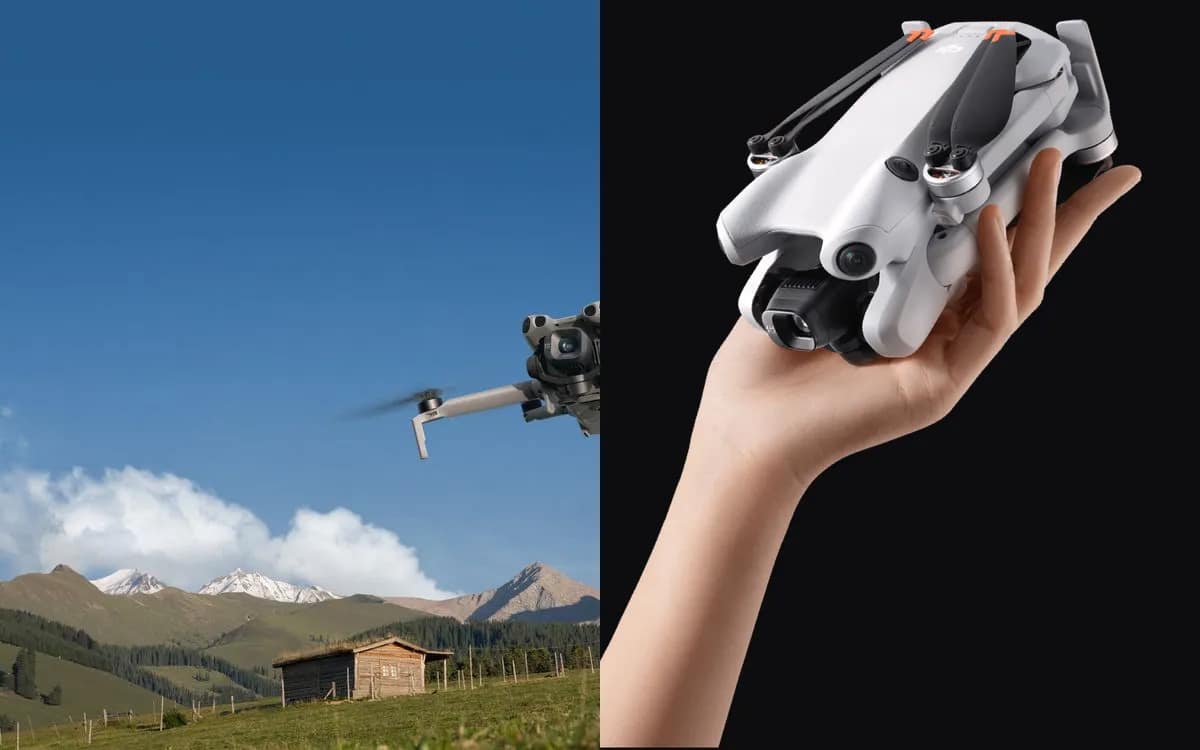
Two DJI Minis a generation apart. The choice comes down to three things: the declared weight, the light you will have, and the wind it will make.
4 min read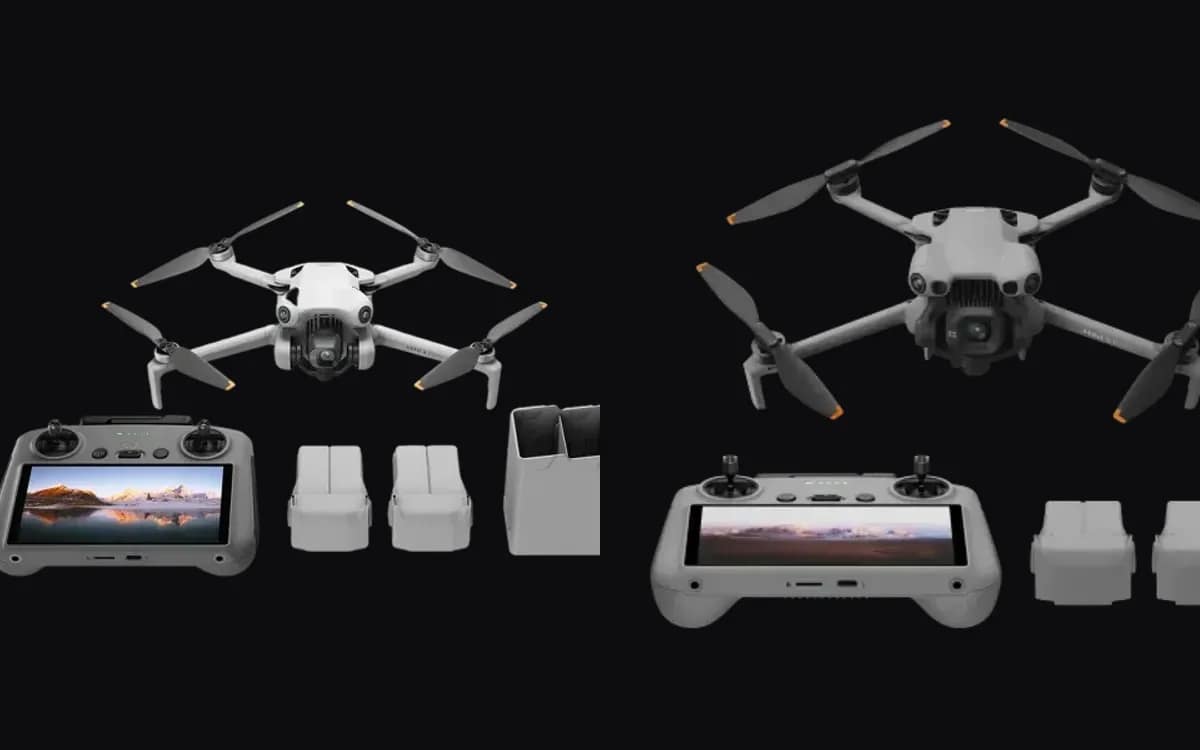 Drones
DJI Mini 4 Pro or Mini 5 Pro: which for your holiday?
Two drones under 250 g. The full table, then what matters on holiday: wind, evening light, mountains, flying and going abroad.
8 min read Drones
Filming a wedding with a drone: authorizations and practical advice
The drone brings a cinematic dimension to wedding videos. Necessary permissions, settings and flight angles for a magical result.
6 min read