
Drones
Which drone to rent depending on what you are filming
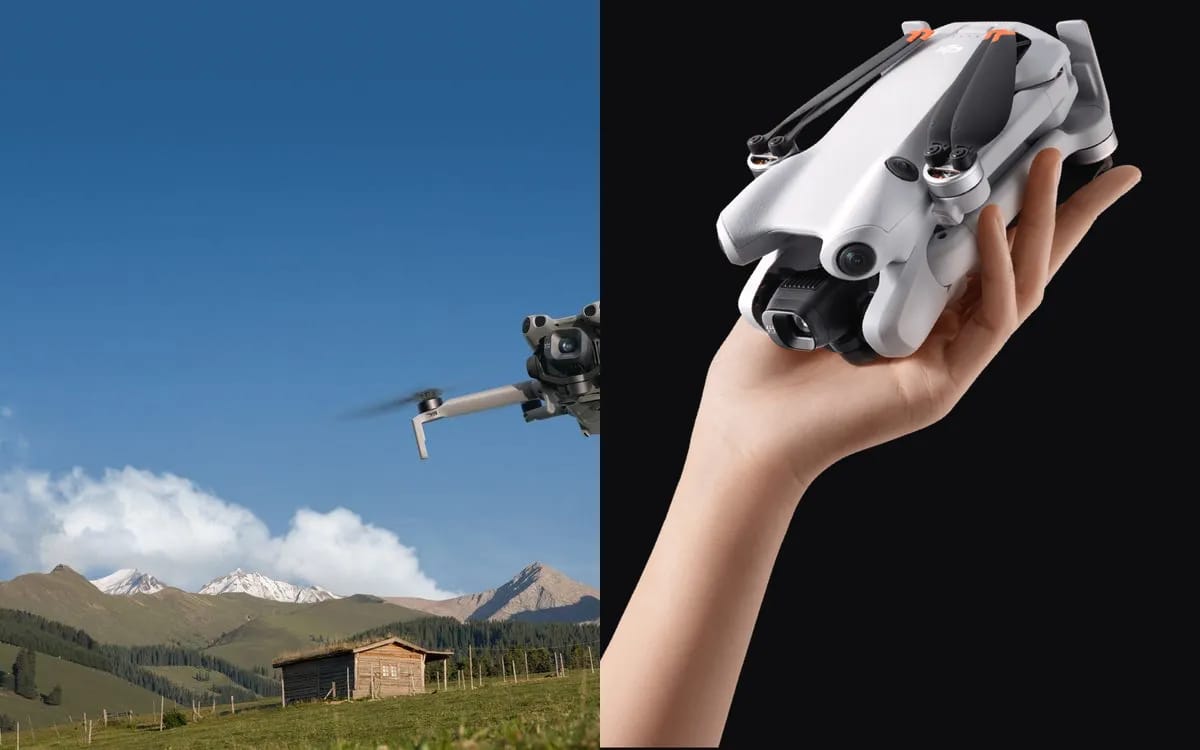
Two DJI Minis in the catalog, one generation apart. They are controlled the same way and both fit in a backpack. The choice depends elsewhere: on the declared weight, on the light you will have, and on the wind it will make.
The question of 250 g, first
This is the first thing we are asked, and it is the right question. Both devices are declared in the same European class. For the Mini 5 Pro, the sheet is brief: C0 (model MT5MFND). For the Mini 4 Pro, it requires careful reading: C0 (model MT4MFVD, MTOM 249 g) — a variant C1 MT4MFVDB at 342 g exists; the Intelligent Flight Battery Plus takes the device above 249g.
On the scale, the Mini 4 Pro announces < 249 g (with battery, propellers and microSD card), and the Mini 5 Pro 249.9 g ± 4 g (maximum declared mass, standard battery). Above all, remember what the Mini 4 Pro sheet says: it is the battery that tips the device above the threshold, not the model. Fly with the standard battery and you stay in the declared configuration.
The class listed on the device does not tell everything: what you are allowed to do also depends on the location, the height and what you are flying over. Our drone appendix summarizes what applies — and this check is done before booking, never on site.
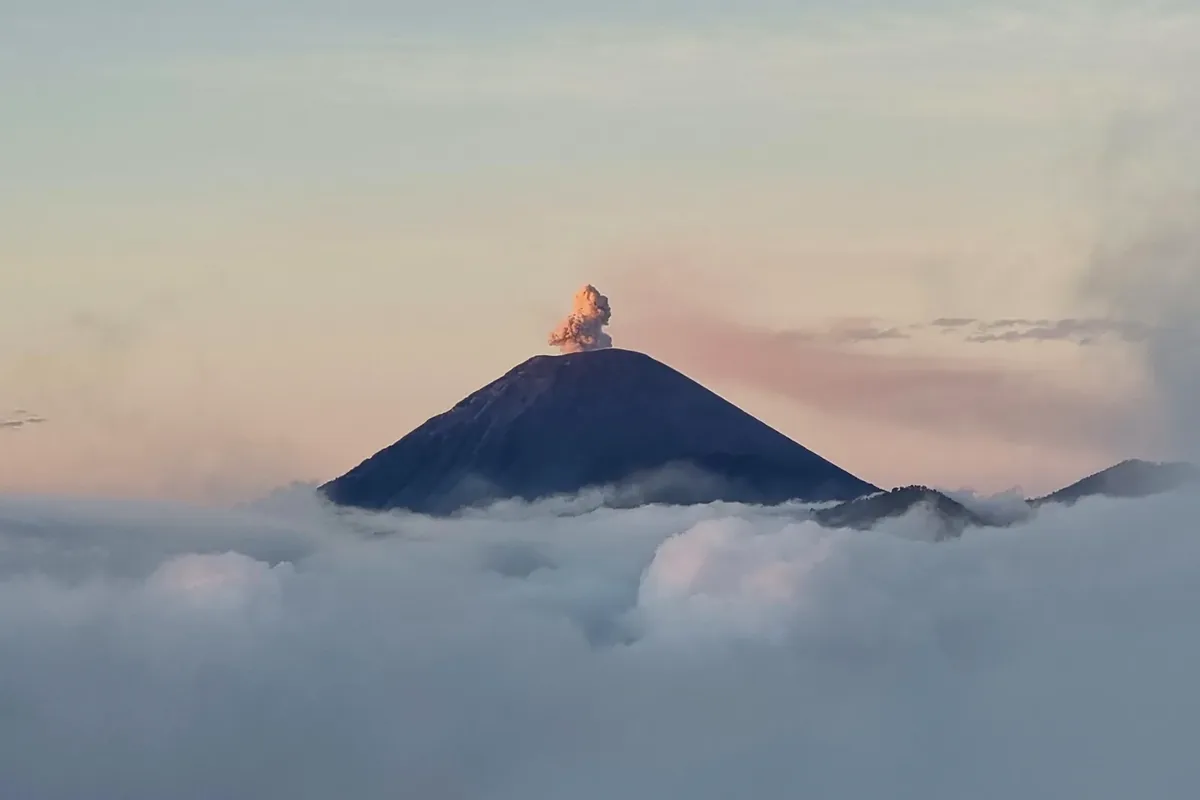
Filming in the mountains: wind and altitude
This is where the two devices stop being interchangeable.
- Wind resistance — 10.7 m/s for Mini 4 Pro, 12 m/s for Mini 5 Pro
- Maximum speed — 16 m/s, or 57.6 km/h (Sport mode) compared to 18 m/s, or 64.8 km/h (Sport mode)
- Maximum flight altitude — 4,000 m above sea level versus 6,000 m above sea level
On an Alpine pass, the last line is not theoretical: it tells how far the aircraft remains in its flight envelope. The first two decide the stability of your plans on a mistral day – a drone fighting against the wind produces an image that shakes before producing an alert.
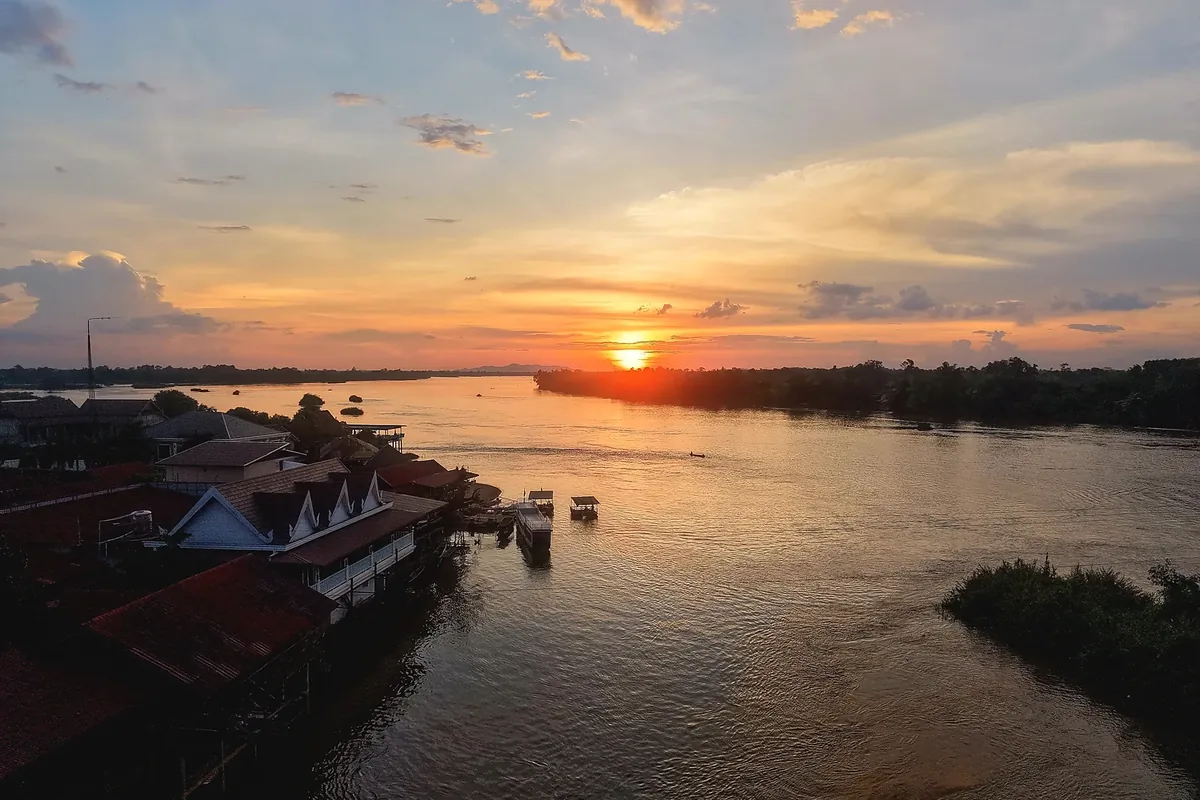
Filming when the light falls
The sensor is the real generation break. Mini 4 Pro: CMOS 1/1.3 inch — 48 Mpx, f/1.7. Mini 5 Pro: 1-inch CMOS — 50 Mpx, f/1.8. The opening is almost the same; it is the surface of the sensor that changes, and it is seen at dusk, in the undergrowth, under an overcast sky.
Flying at that time poses a second problem: seeing obstacles. Both detect in all directions, but the Mini 5 Pro adds LiDAR that the Mini 4 Pro does not have. What its sheet says: Frontal — measuring range 0.5 to 25 m at night (reflectivity greater than 10%), field 60° × 60°. If your plan starts in the golden hour and ends in the dark, that's a serious argument.
Shoot vertically, shoot in slow motion, shoot for a long time
Both take the vertical format without cropping. Mini 4 Pro: Native, without cropping. Mini 5 Pro: Native, by rotation of the nacelle, without cropping - its nacelle is the only one of the two whose sheet declares a rotation (3-axis mechanical stabilization - rotation of 225°, tilt controllable from −90° to +55°), where that of Mini 4 Pro only indicates an inclination (3-axis mechanical stabilization - tilt controllable from −90° to +60°). For slow motion: 4K at 100 fps / Full HD at 200 fps on one side, 4K at 120 fps / Full HD at 240 fps on the other.
In terms of duration, the difference is slim: 34 min (standard Intelligent Flight battery) versus 36 min (standard Intelligent Flight battery). What changes more is the onboard memory. Mini 4 Pro: 2 GB internal + microSD card (cards recommended by DJI up to 512 GB). Mini 5 Pro: 42 GB internal + microSD card (cards recommended by DJI up to 1 TB). Enough to save an outing the day the card remains on the table.
One line goes against the flow of the rest, suffice to say: it is the Mini 4 Pro which writes at the highest speed, 150 Mb/s against 130 Mb/s.
In summary, depending on what you are filming
- Holidays, coastline, wide shots in broad daylight: Mini 4 Pro is enough, by far.
- Mountain, wind, altitude: the Mini 5 Pro, which keeps the margin where the other reaches the limit.
- Golden hour, twilight, undergrowth: on Mini 5 Pro, for the sensor and for the LiDAR.
- Vertical video for networks: both, without cropping.
- Improvised exit: Mini 5 Pro, whose internal memory catches up with a forgotten card.
The complete face-to-face, characteristic by characteristic, is in our comparison DJI Mini 4 Pro or Mini 5 Pro: which one to rent?. Sheets and availability: Mini 4 Pro and Mini 5 Pro .
A word of method, valid for both: locate the takeoff location before the day of filming. A drone rented for three days does not cover an area where you cannot fly.
More in this section
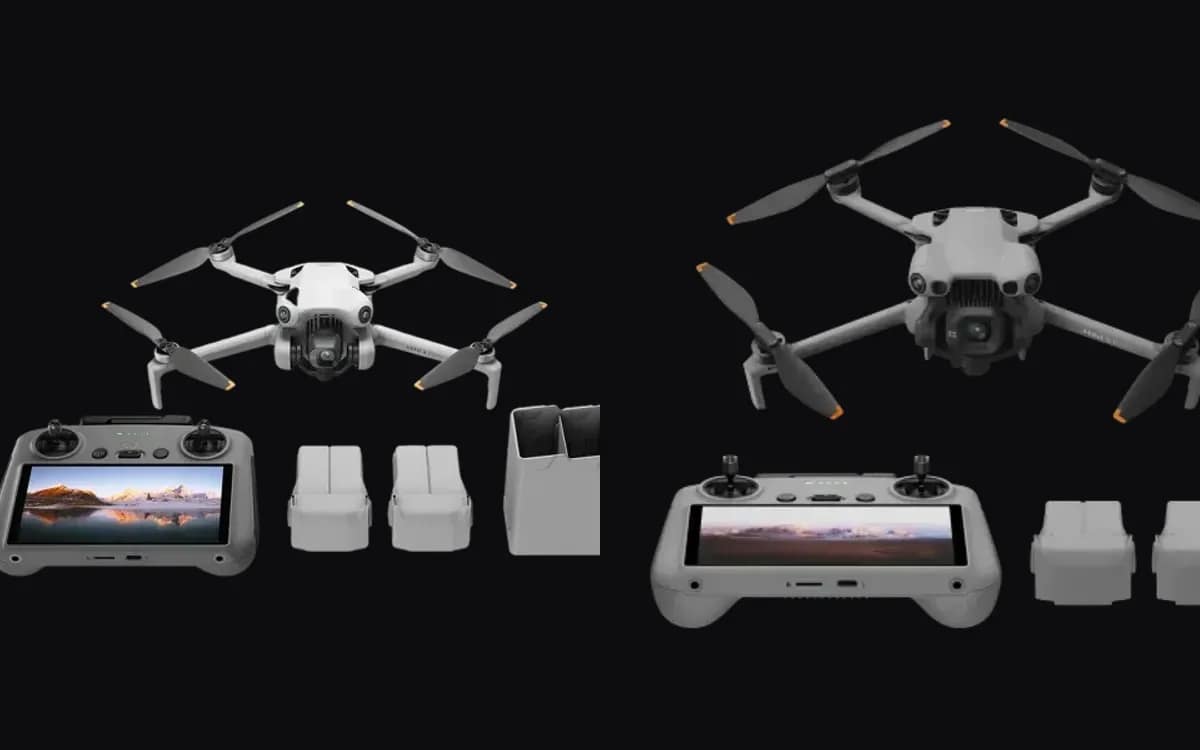 Drones
DJI Mini 4 Pro or Mini 5 Pro: which for your holiday?
Two drones under 250 g. The full table, then what matters on holiday: wind, evening light, mountains, flying and going abroad.
8 min read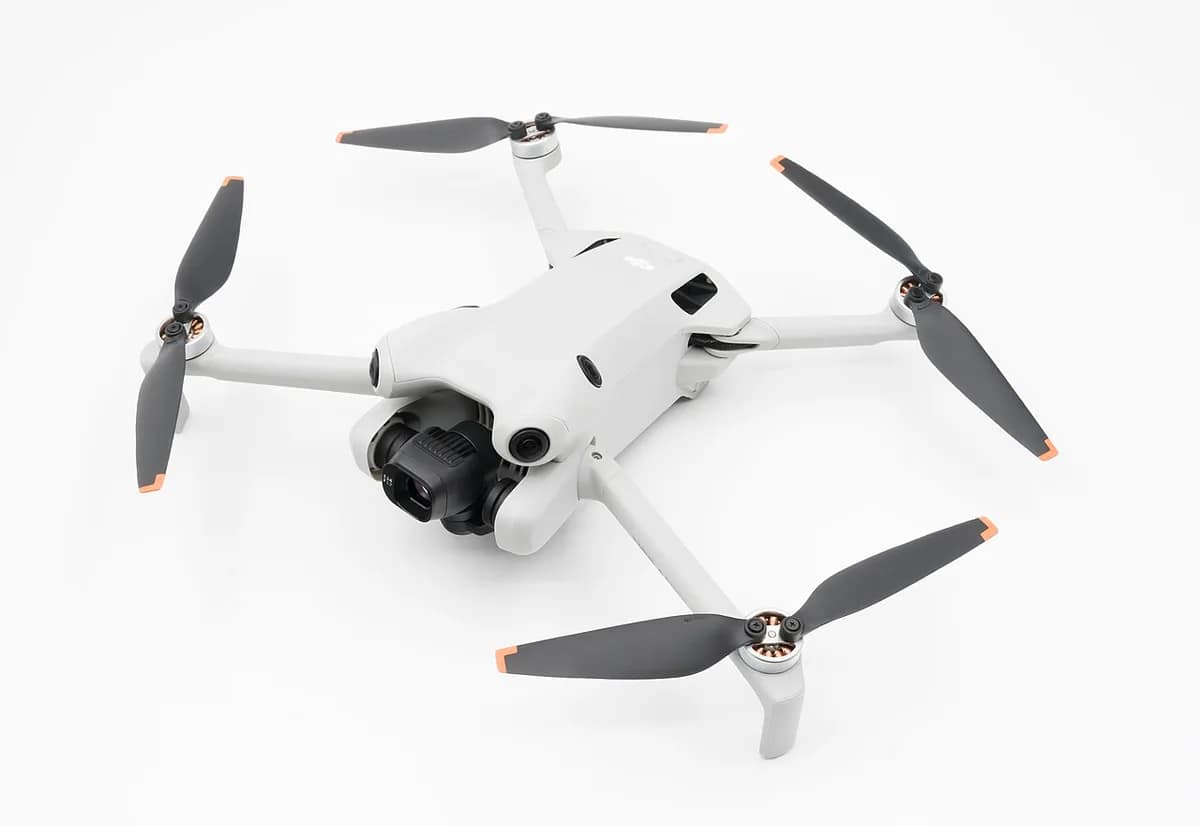 Drones
Filming a wedding with a drone: authorizations and practical advice
The drone brings a cinematic dimension to wedding videos. Necessary permissions, settings and flight angles for a magical result.
6 min read Drones
Top 10 Drone Spots in Lyon and Rhône-Alpes 2026
Discover the 10 best spots for drone filming in Lyon and Rhône-Alpes. Locations, flight tips and regulations for each site.
6 min read