
Drones
DJI Mini 4 Pro or Mini 5 Pro: which for your holiday?
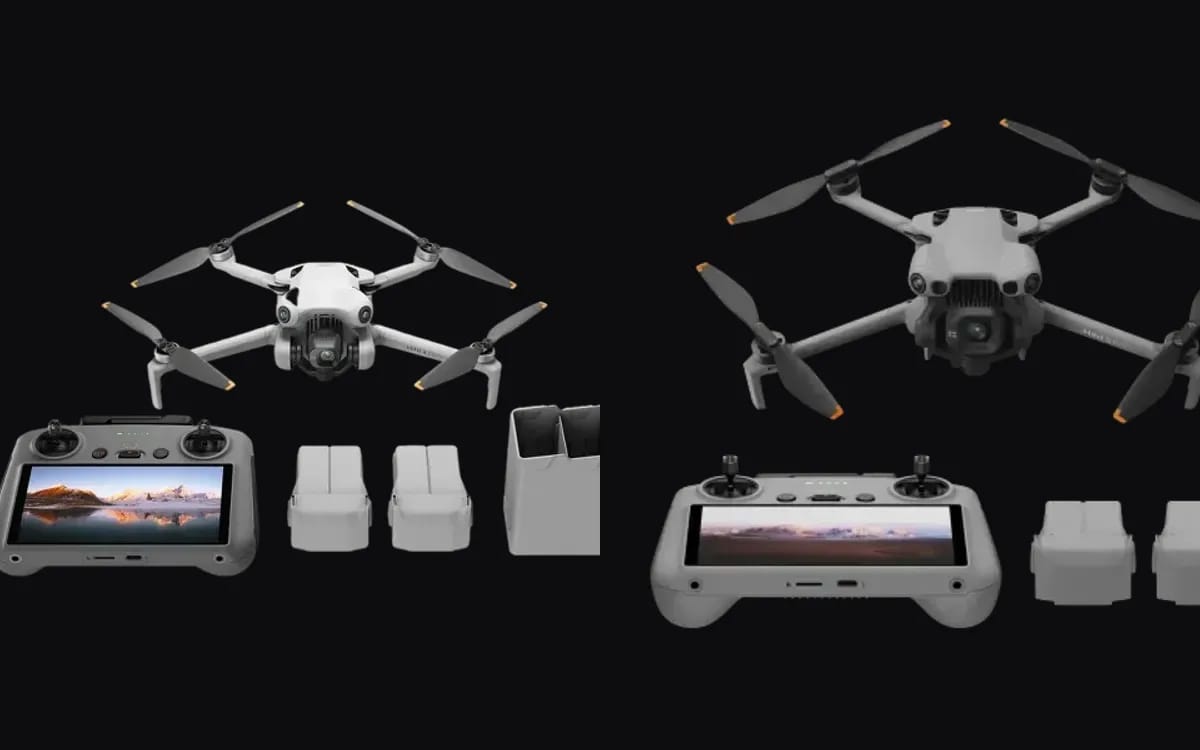
Both fit in a pocket and weigh less than 250 grams with their standard battery. That is the threshold that exempts you from training in France, and it is crossed as soon as you change the battery. So the real question is not "which one is better" but what you are going to film.
For a holiday, the question narrows down: beach, mountains, plane, foreign country. This guide compares the two models in our drone rental on those concrete cases, after the full specification table.
The table, line by line
21 comparable specifications, of which 19 differ and 2 are identical. The values in bold are the ones that set the two aircraft apart.
| Specification | DJI Rental - Mini 4 Pro | DJI Rental - Mini 5 Pro |
|---|---|---|
| Takeoff weight | < 249 g (with battery, propellers and microSD card) | 249.9 g ± 4 g (maximum declared mass, standard battery) |
| European class | C0 (model MT4MFVD, MTOM 249 g) — a C1 variant MT4MFVDB at 342 g exists; the Intelligent Flight Battery Plus takes the aircraft above 249 g | C0 (model MT5MFND) |
| Sensor | 1/1.3-inch CMOS — 48 MP, f/1.7 | 1-inch CMOS — 50 MP, f/1.8 |
| Photo resolution | 48 MP (8064 × 6048) — JPEG and DNG (RAW) | 50 MP (8192 × 6144) — JPEG and DNG (RAW) |
| Max video | 4K (3840 × 2160) up to 100 fps | 4K (3840 × 2160) up to 120 fps |
| Slow motion | 4K at 100 fps / Full HD at 200 fps | 4K at 120 fps / Full HD at 240 fps |
| Colour profiles | D-Log M and HLG, 10-bit 4:2:0 (H.265) | D-Log M and HLG, 10-bit 4:2:0 (H.265) |
| Max video bitrate | 150 Mbps | 130 Mbps |
| Obstacle detection | Omnidirectional — dual vision sensors + 3D infrared sensor | Omnidirectional — dual vision sensors + forward LiDAR + 3D infrared detection system (0.3 to 8 m, under the aircraft) |
| LiDAR | Not fitted | Forward — measuring range 0.5 to 25 m at night (reflectivity above 10%), 60° × 60° field |
| Video transmission | DJI O4 — 10 km max in Europe (CE), 1080p 60 fps live preview | DJI O4+ — 10 km max in Europe (CE), 1080p 60 fps live preview |
| Flight time | 34 min (standard Intelligent Flight battery) | 36 min (standard Intelligent Flight battery) |
| Max speed | 16 m/s, or 57.6 km/h (Sport mode) | 18 m/s, or 64.8 km/h (Sport mode) |
| Storage | 2 GB internal + microSD card (cards recommended by DJI up to 512 GB) | 42 GB internal + microSD card (cards recommended by DJI up to 1 TB) |
| Wind resistance | 10.7 m/s | 12 m/s |
| Gimbal | 3-axis mechanical stabilisation — tilt controllable from −90° to +60° | 3-axis mechanical stabilisation — 225° rotation, tilt controllable from −90° to +55° |
| Vertical shooting | Native, no cropping | Native, by rotating the gimbal, no cropping |
| Max flight altitude | 4,000 m above sea level | 6,000 m above sea level |
| Dimensions (folded) | 148 × 94 × 64 mm (folded, without propellers) | 157 × 95 × 68 mm |
| Battery | 2,590 mAh — 18.96 Wh | 2,788 mAh — 19.52 Wh |
| Zoom | Digital — 1× to 3× in 12 MP and in 4K, 1× to 4× in Full HD | Digital — 1× to 3× in 12 MP and in 4K, 1× to 4× in Full HD |
Who is the DJI Mini 4 Pro for?
The Mini 4 Pro remains the easy choice: it does everything properly, flies without having to think, and its flight time is enough for a day of shooting with two batteries.
See the DJI Mini 4 Pro page and availability
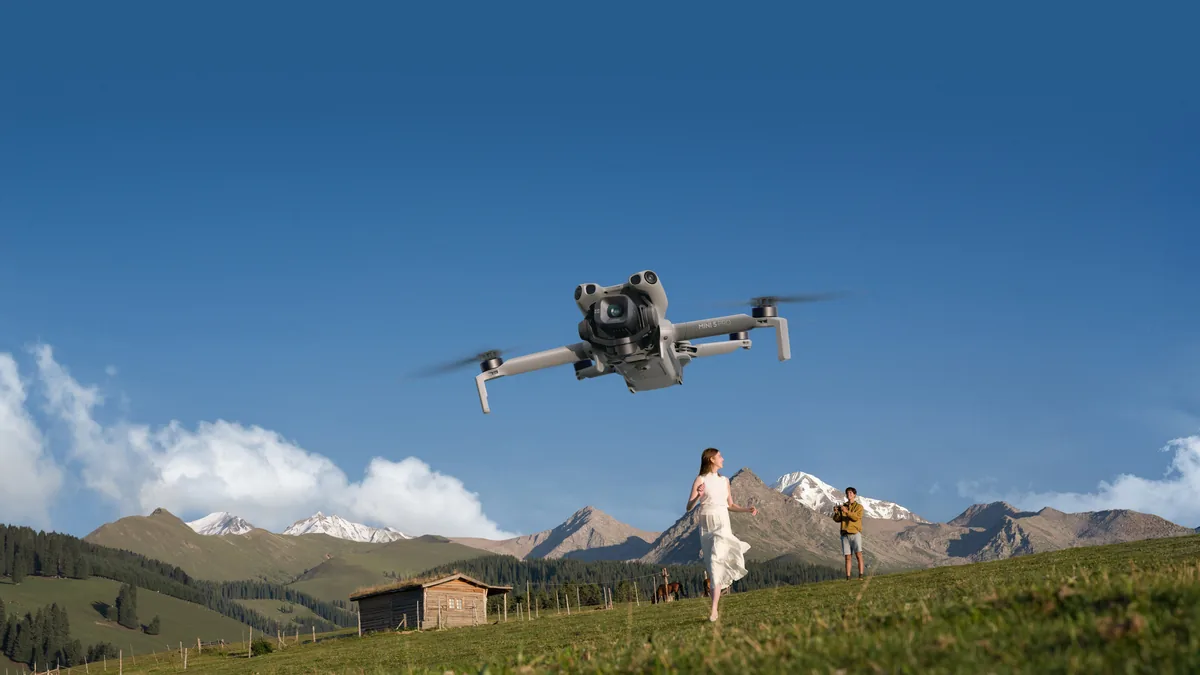
Who is the DJI Mini 5 Pro for?
The Mini 5 Pro steps up where it shows in the image: a larger sensor copes better with low light, and the slow-motion modes open up shots the other one cannot do.
See the DJI Mini 5 Pro page and availability
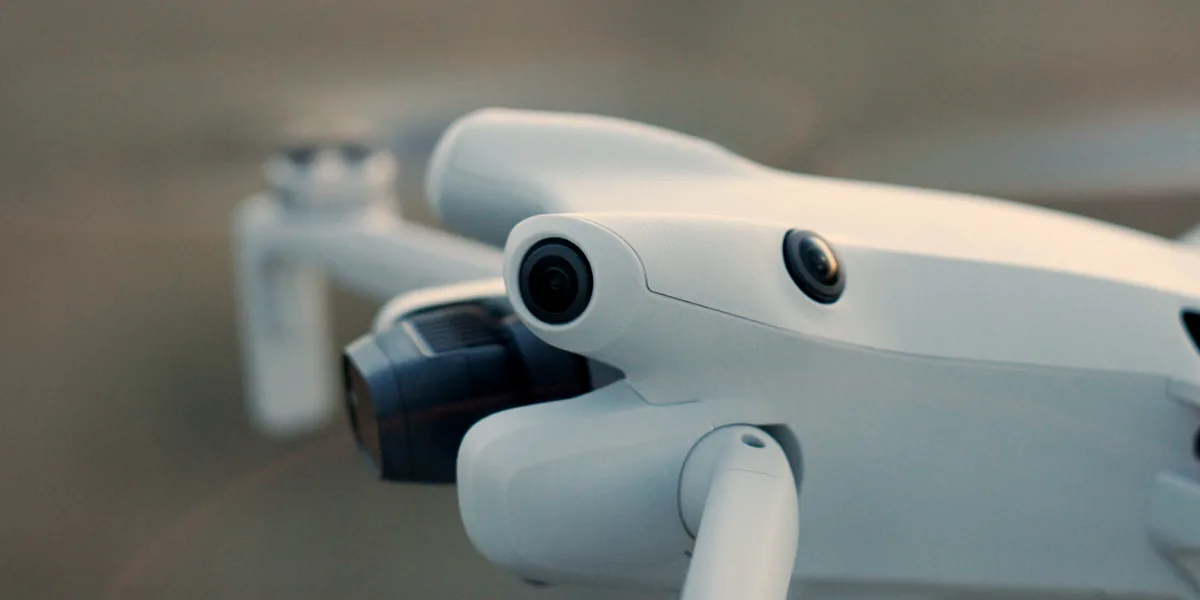
What the table does not say
If your shoot includes a single scene at the end of the day or a slow-motion shot, take the Mini 5 Pro. Otherwise the Mini 4 Pro will do exactly the job.
The automated modes will not set them apart either: MasterShots, QuickShots, ActiveTrack and Waypoints are on both, with the same logic of use. A beginner gets clean shots first time with either.
The stated flight time deserves the same caution. The 34 and 36 minutes are measured in ideal conditions; add wind, changes of direction and a return to the takeoff point, and both models give back a few minutes. A two-minute gap will not change your day: plan for at least two batteries, whatever the model. The rented pack contains three.
For your holiday: sea, evening light, mountains
Seaside. Wind is the first enemy of a light drone. The Mini 5 Pro withstands 12 m/s, the Mini 4 Pro 10.7 m/s. The gap is real, but these are datasheet values: on a cliff or an exposed beach, a drone under 250 g gets shaken well before that. If in doubt, do not take off. We detail the coastal rules in our article on flying a drone by the sea.
Evening light. This is where the Mini 5 Pro's 1-inch sensor earns its place: at sunset it keeps more detail in the shadows than the Mini 4 Pro's 1/1.3-inch. If your shots are mostly in full daylight, the difference is barely visible.
Mountains. The maximum flight altitude is 6,000 m for the Mini 5 Pro and 4,000 m for the Mini 4 Pro, which covers any European pass anyway. The real issue is the cold: both operate from −10 to 40 °C, and a Li-ion battery that has spent the night outside loses flight time. Keep them warm in a pocket until takeoff.
Size. Folded, the Mini 4 Pro measures 148 × 94 × 64 mm and the Mini 5 Pro 157 × 95 × 68 mm. A few millimetres: both fit in the bag supplied with the pack, and the choice does not hinge on that.
Flying and going abroad: what really matters
The batteries of both drones are Li-ion at 18.96 Wh (Mini 4 Pro) and 19.52 Wh (Mini 5 Pro), about a fifth of the 100 Wh limit set for spare batteries in the cabin. They travel in the cabin, never in the hold, with terminals protected. With the pack of three batteries, one stays in the drone and two travel as spares: that is compatible with airlines that limit spare batteries to two. Still, re-read your airline's page before the flight.
Abroad, local rules apply and they vary from country to country. We have gathered them in the drone rules country by country. We deliver across Europe, and you can also collect the equipment in Lyon by appointment: see drone rental in Lyon.
The regulations do not depend on the model
Both aircraft come in under 250 grams with their standard battery and fall into class C0, which eases the formalities, but nothing else. The threshold does not exempt you from registering as an operator: the exemption requires an aircraft with no sensor capable of collecting personal data, and both carry a camera. No-fly zones, distance from people, the ban on flying over a gathering and maximum height apply in the same way, and a zone that was open last week may be closed today: check before every flight. Everything is detailed in our guide to drone regulations in France.
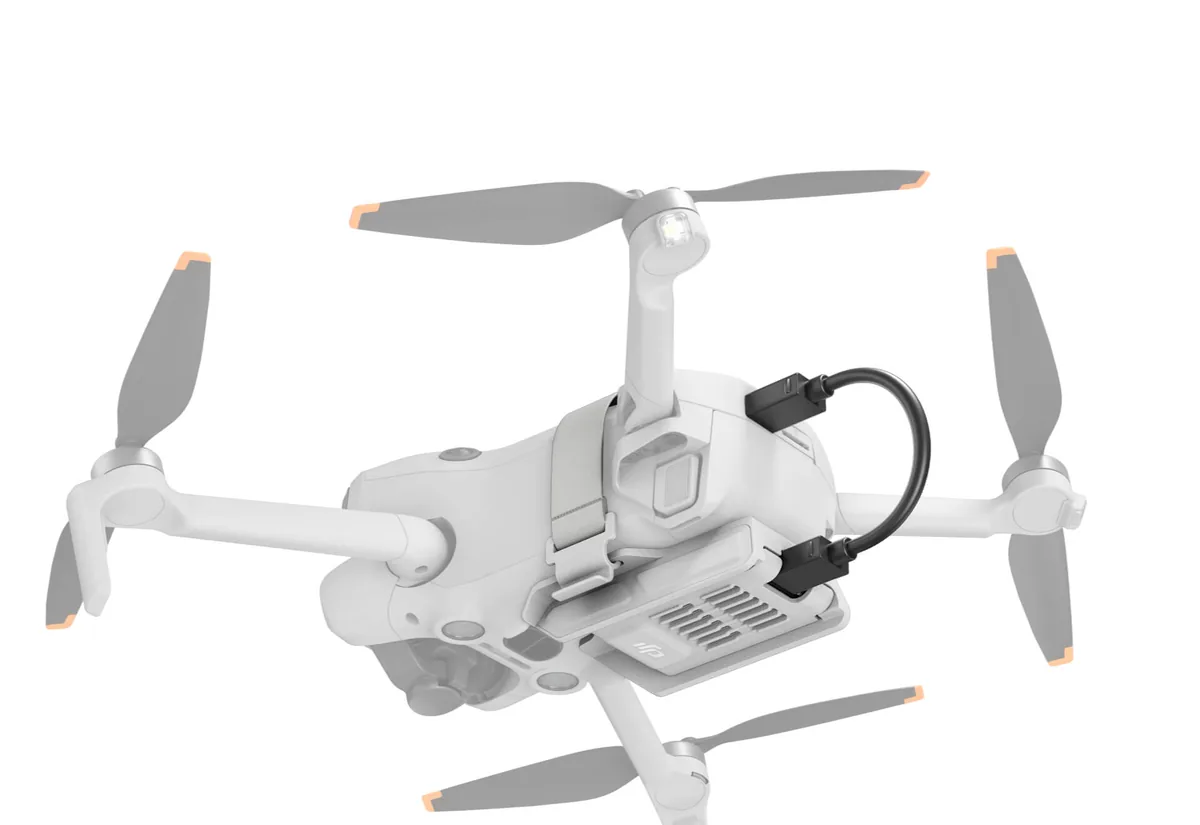
One point does set the two models apart, though, and it is not in the table. The Mini 4 Pro can be rented with the "XXL Batteries" option: fitted this way, it exceeds 250 g and no longer meets the conditions of its C0 class. The A1/A3 proof of online training completion, free and online, then becomes mandatory before the flight, and flying over people who are not taking part in the flight is no longer allowed. The Mini 5 Pro does not offer this option. The details are in our article AlphaTango: who registers when you rent a drone?
Renting rather than buying
No table replaces a flight. If you are still undecided, book both two weeks apart and compare them on your own shots: that is what rental allows and buying rules out. A holiday does not justify tying up the price of a drone, nor taking on its maintenance: batteries, updates and servicing stay on our side.
Breakage and theft insurance is included in the rental price of cameras and drones (except for delivery to the Netherlands or Portugal), with a security deposit whose amount is shown on the product page. The equipment is shipped the day before by Chronopost anywhere in France, or can be collected in Lyon.
More in this section
 Drones
Filming a wedding with a drone: authorizations and practical advice
The drone brings a cinematic dimension to wedding videos. Necessary permissions, settings and flight angles for a magical result.
6 min read Drones
Top 10 Drone Spots in Lyon and Rhône-Alpes 2026
Discover the 10 best spots for drone filming in Lyon and Rhône-Alpes. Locations, flight tips and regulations for each site.
6 min read Drones
Drone rental in Lyon: Regulations and Spots 2026
Rent a drone in Lyon legally. Complete guide: DGAC 2026 regulations, authorized flight zones, best aerial photo and video spots.
6 min read