
DJ & sound system
Speakers for 100 guests: the right benchmarks
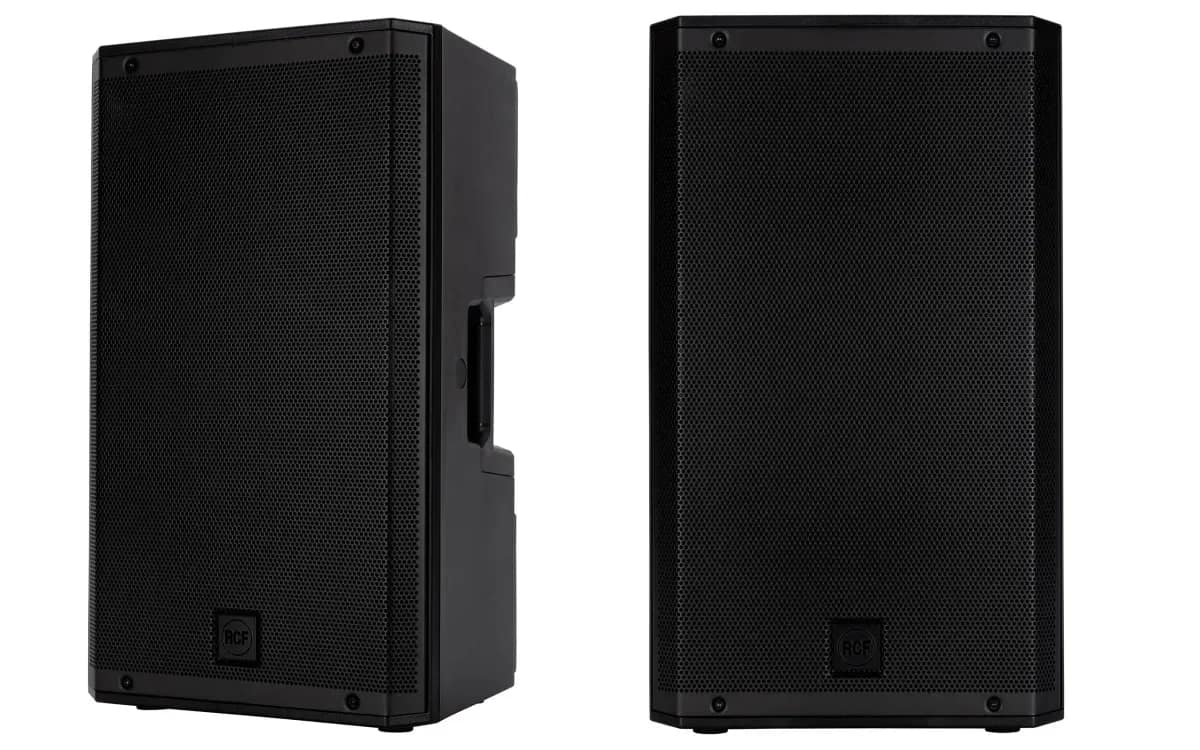
No manufacturer sells "a number of guests": RCF publishes no guest count for the RCF ART 912-A pair of speakers, and Fox Rider will not invent one. What exists are criteria: the type of music, the venue, the distance to the back row. With them, you can judge for yourself whether one pair is enough for around a hundred guests.
This guide gives the method, with three typical situations. It also says what the pair does not do: it is rented on its own, without a subwoofer, does not take a microphone directly, and is picked up in Lyon 3. All the rental information is on the speaker rental in Lyon page.
First question: background music or dance floor?
This is the most important criterion, and it changes everything. Background music is set at a level where people can still talk: guests chat, the sound accompanies. A dance floor requires a much higher level: guests must hear the music over their own noise, and a crowd makes a lot of it.
Expectations matter too: a children's birthday, a family dinner and a party among friends do not have the same volume requirements. Ask yourself what your guests are coming for.
The same number of guests therefore does not call for the same equipment depending on the evening. A hundred people seated at a dinner do not need what a hundred people standing and dancing need. Answer this question first; the rest follows.
Second question: the distance to the back row
In a free field, the level drops by about 6 dB each time the distance doubles. A guest placed twice as far from the speakers receives noticeably less, and one four times as far even less. This is why speakers are not placed at the back of a room, and why guests are not seated right against them.
Indoors, the walls send the sound back: this is reverberation. In a room with bare walls, the sound is more present, but also more blurred, and speech becomes less clear even at high volume. In a garden, with no walls, no reflection helps: the level fades faster with distance.
Dispersion matters too. This speaker projects into a cone of 100° horizontally and 60° vertically, which is narrower in height than in width. Placed on its stand, above heads and aimed at the room, it reaches the back; placed low, it mostly sprays the front rows, which absorb the sound.
Peak power and 130 dB: reading the figures correctly
The data sheet states 2100 W peak per speaker. It is a peak value, not continuous power: it does not say what the speaker can sustain over a whole evening. Comparing two data sheets only makes sense if the measurement is the same, which is rarely specified.
It also states 130 dB SPL maximum, at one metre from the speaker. It is a ceiling, not a target: nobody should stay at that distance at that level, and the volume of an evening is set far below. These figures show that the speaker has headroom, not that it covers a given number of guests.
Bass without a subwoofer
The frequency response runs from 50 Hz to 20,000 Hz, with a 12-inch woofer. That is very good for voices, pop, rock or dinner music. The data sheet stops at 50 Hz: the very deep bass of electro or hip-hop, below that, is reproduced little by the pair.
This is where a subwoofer is justified: dance floor, music where you feel the bass in your chest. Fox Rider does not rent one. If a subwoofer is essential to your evening, you will have to find one elsewhere or accept less deep bass. Better to know before booking.
Three typical situations
Birthday in a village hall. The room is reverberant and people dance: this is the most demanding case. Place the speakers in front of the dance floor, up high, and raise the volume gradually. What decides is the size of the room and the gap to the back row, more than the number of guests. To prepare the rest of the evening, read what DJ equipment for a birthday or a private party.
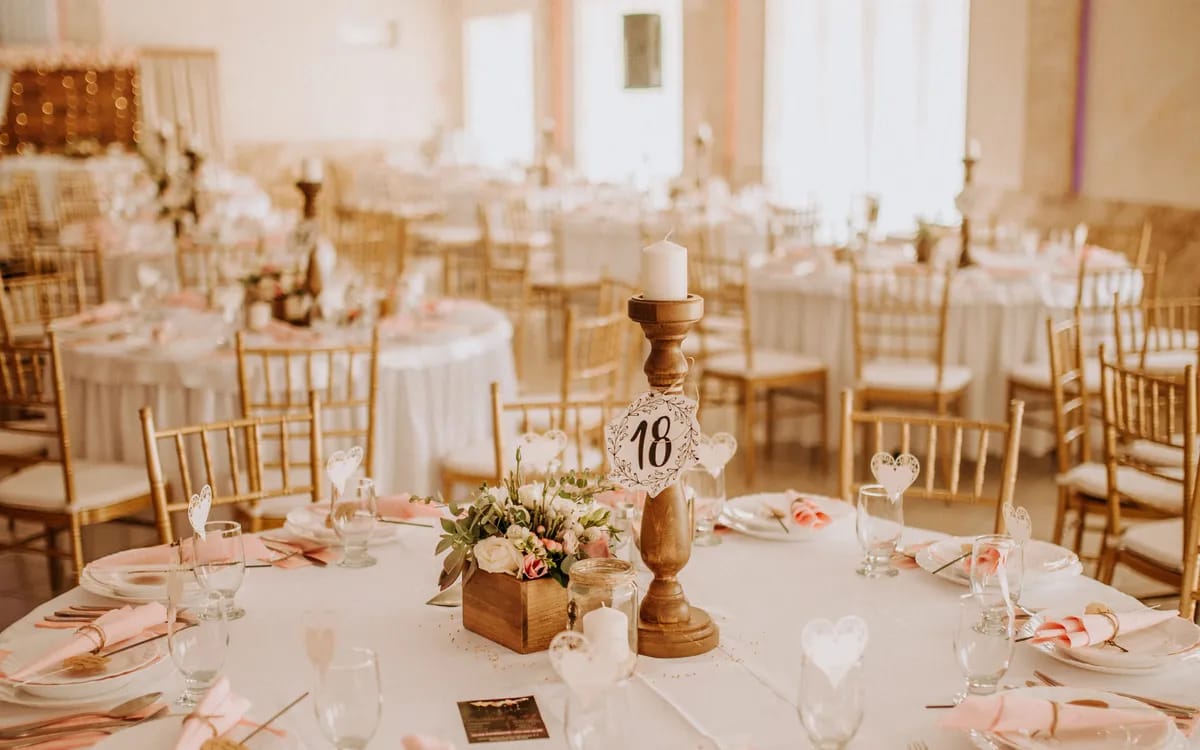
Wedding dinner. Background music during the meal, then perhaps an opening dance. The volume stays low, so the margin is comfortable. For the speeches, you need a microphone, and it does not plug into the pair: it goes through the Pioneer XDJ-RX3 console, with which you can add a Shure SM58 as an option, €5 per microphone per rental (two at most), XLR cable supplied and microphone stand free of charge. The article speaker rental for a wedding: choosing your sound system helps you prepare the whole setup.
Garden. No wall to send the sound back, so a faster drop with distance: bring the guests closer to the speakers, without putting them right against them. You also need a mains socket for each speaker. RCF publishes no waterproofing rating: do not expose the pair to rain.
Five checks before booking:
- is the venue enclosed, reverberant, or open?
- will guests dance, or talk around a meal?
- what is the distance between the speakers and the back row?
- does the music go very low in the bass?
- is there a mains socket near each speaker?
One last benchmark: at the end of the evening, nobody should have ringing ears. If they do, the volume was too high, whatever the speaker.
If your situation leans towards the demanding criteria (dance floor, reverberant room, long distance, very deep music), plan something to complete the pair. Otherwise, it serves as a reliable working base. In every case, it is rented on its own, picked up in Lyon 3 and not shipped.
More in this section
 DJ & sound system
Collecting a pair of speakers in Lyon 3: how it works
From appointment to return, the practical process with the RCF speaker pair: what is in the rental, what to bring, how to return it.
5 min read DJ & sound system
Two speakers on stands: where to place them and how high
Height, spacing, angle, distance from walls, mono or stereo, Linear or Boost mode: how to position a pair of speakers on stands for a party.
5 min read DJ & sound system
Active or passive speaker: what really changes
An active speaker has its amplifier built in, a passive one does not. What that changes for cabling, power and choosing a pair for a party.
5 min read