
Guides
Hybrid or action camera: which one to take?
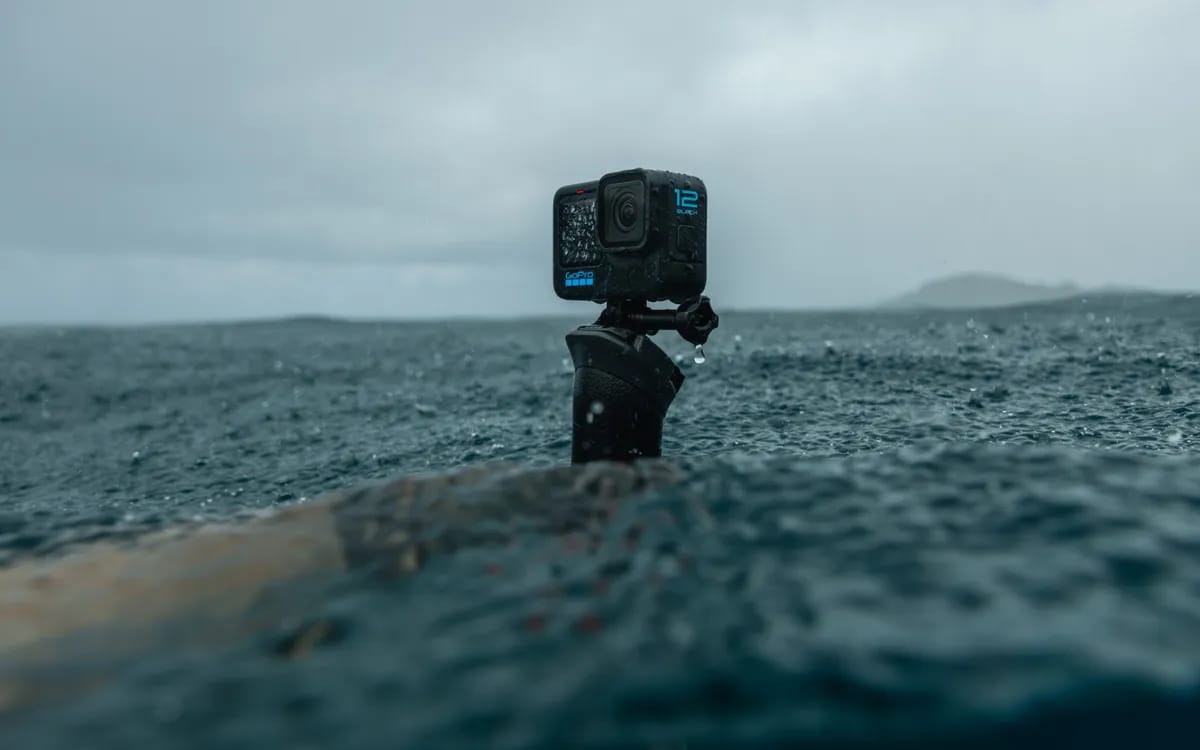
The question comes up at every start: I have invested in a decent hybrid, should I really add an action camera? Posing the problem in terms of image quality leads to the wrong answer. The two devices are not competing for the same plans. The real criterion is not “which films better”, but “which one I will actually pull out of the bag the moment something happens”.
What your hybrid does better, that nothing replaces
A recent full-frame camera remains ahead in all areas where there is time. The Canon EOS R6 Mark III, announced on November 6, 2025, features a 32-megapixel full-frame sensor, 7K RAW video up to 60p, 4K 120p, an ISO range 100 to 64,000 and internal stabilization announced up to 8.5 stops in the center of the image. The Sony A7 V, for its part, offers 33 megapixels, 4K 60p across the entire width of the sensor and 4K 120p in Super 35 crop; it is announced at $2,898 naked, excluding lens.
Faced with this, no action camera claims to compete in low light, depth of field or calibration latitude. If your project involves controlled lighting, with time to compose, the question does not arise: your hybrid is enough.
The twenty percent where the hybrid stays in the bag
The problem is not quality, it’s access. There is a part of every trip where taking out a multi-thousand euro camera is impossible, forbidden or simply unreasonable: underwater, in the pouring rain, on a helmet, in a festival crowd, attached to a handlebar, held at arm's length above a canoe. This is precisely where the images you never reported are located.
The manufacturer figures tell this border well:
| Criteria | GoPro HERO12 Black | Insta360 X5 |
|---|---|---|
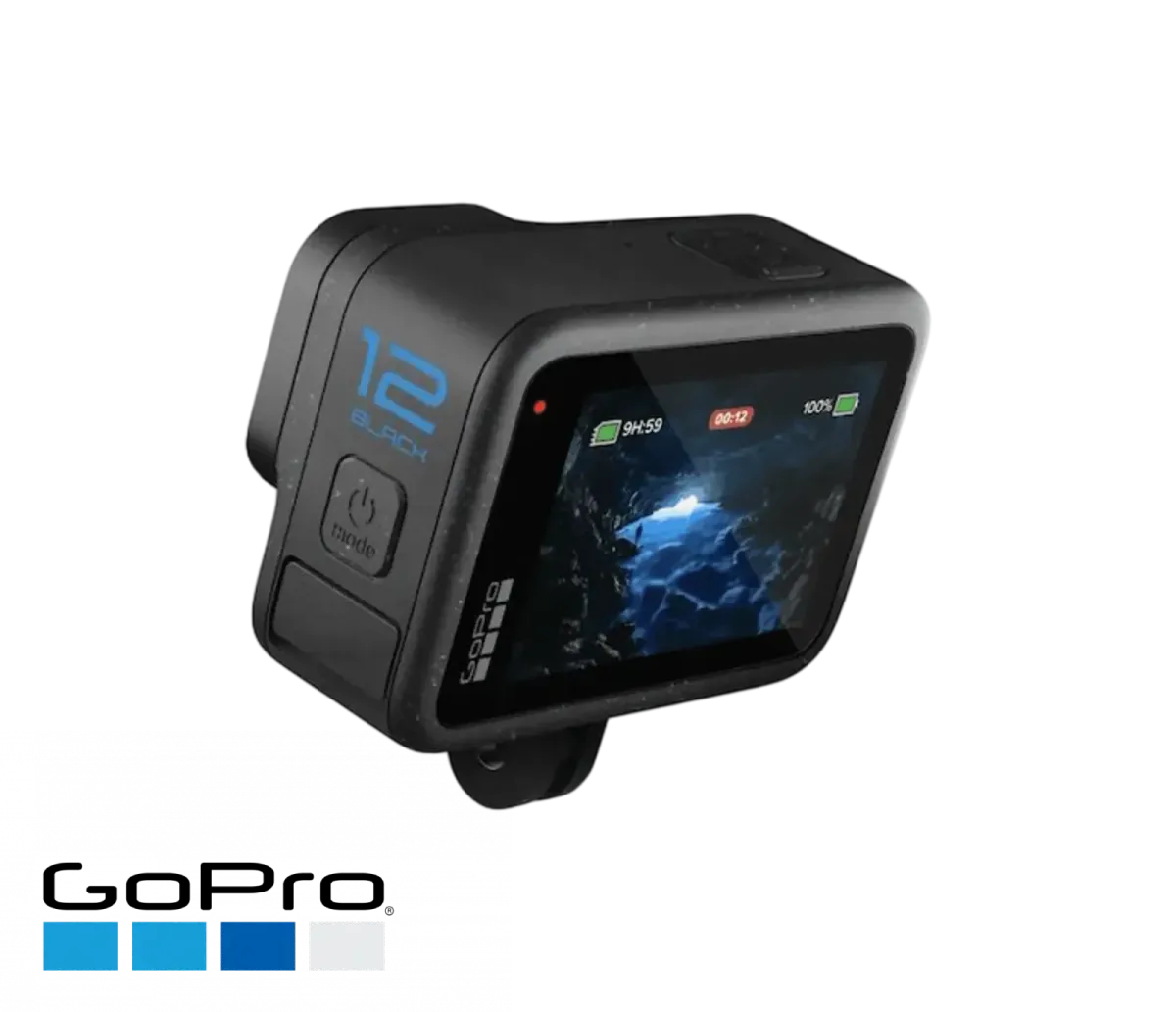
| Weight | 154 g with battery and mounting brackets | 200g |
| Waterproofing without box | 10 m (60 m with protective case) | 15m |
| Maximum definition | 5.3K at 60fps, 4K at 120fps | 8K at 30fps in 360° |
| Autonomy announced | up to 70 min in 5.3K60, more than 2h30 in 1080p30 | 93 min in 8K30, 135 min in 5.7K30 |
One hundred and fifty-four grams that you can drown, hit and strap: that’s the whole argument. The HERO 12 Black does not replace your hybrid, it fills the niche where your hybrid does not fit.
The constraint that no one anticipates: recording duration
A hybrid is designed for photography and short shots. On the EOS R6 Mark III, the continuous recording times published in the announcement are around 23 minutes in oversampled 4K DCI, 24 minutes in 7K open gate at 30p and 28 minutes in 4K DCI 120p depending on the auto power off setting. It's comfortable for an interview, short for a full descent, a boat ride or a ceremony.
An action camera is made for the opposite: the HERO12 Black claims more than two and a half hours in Full HD at 30 fps, and the Insta360 X5 claims 208 minutes in endurance mode in 5.7K at 24 fps. If your day contains a long sequence that you absolutely must not miss, it is no longer a question of taste, it is a question of format.
Risk calculation, often the most decisive
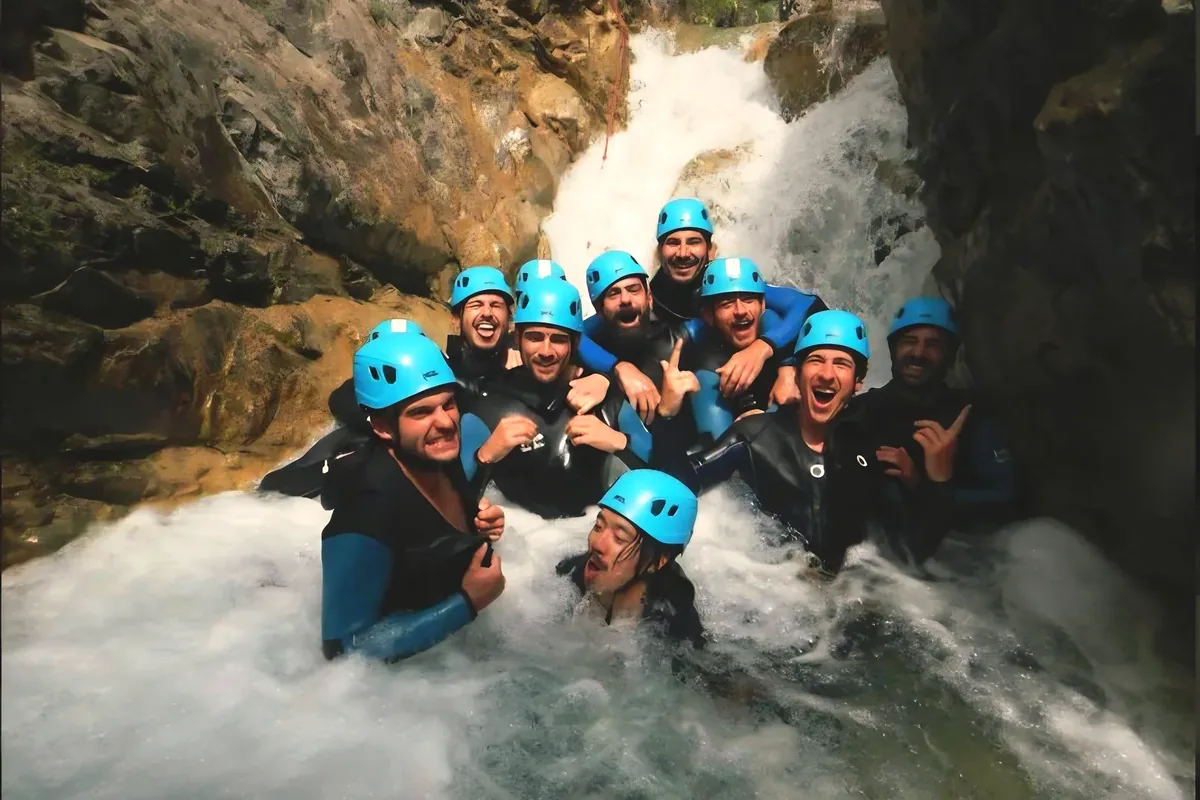
Taking a camera worth several thousand euros in a kayak, via ferrata or in a concert pit means accepting a risk that most of us unconsciously refuse – and this hesitation costs you images. A rented camera, covered by breakage and theft insurance included in the price, completely changes the relationship with risk. You attach it to the helmet without thinking. This is where renting becomes rational: you're not paying for a device, you're paying for the mental permission to put it at risk.
So, buy an action camera?
Rarely. An action camera used three weekends a year is the type of purchase that ages in a drawer while models are renewed. During a stay, the rental of a HERO 12 Black or a X5 for a few days remains out of proportion with the price of a new box, batteries and card included. And if you film every weekend, the arbitration is reversed: buy, you will make it profitable.
The honest answer to the initial question is therefore: both, but never at the same time. Save the hybrid for the shots you prepare, add a rented action camera for the ones you can't prepare. It’s the only montage that draws you in with the images that you then tell.
More in this section
 Guides
Which microSD card for your action camera?
V30, A2, exFAT: three acronyms decide whether your card supports 4K or lets you down in the middle of a descent. And this is how many hours a card really lasts.
4 min read Guides
Pack your return package well: the method
Four moves, two minutes. This is what separates a peaceful return from a package that disappears on the way.
2 min read Guides
Deductible and insurance: what you really pay
The deductible is not a fee. This is the most common confusion, and it distorts any price comparison.
2 min read