
Drones
DJI Neo 2 or Mini 4 Pro: which one to choose?
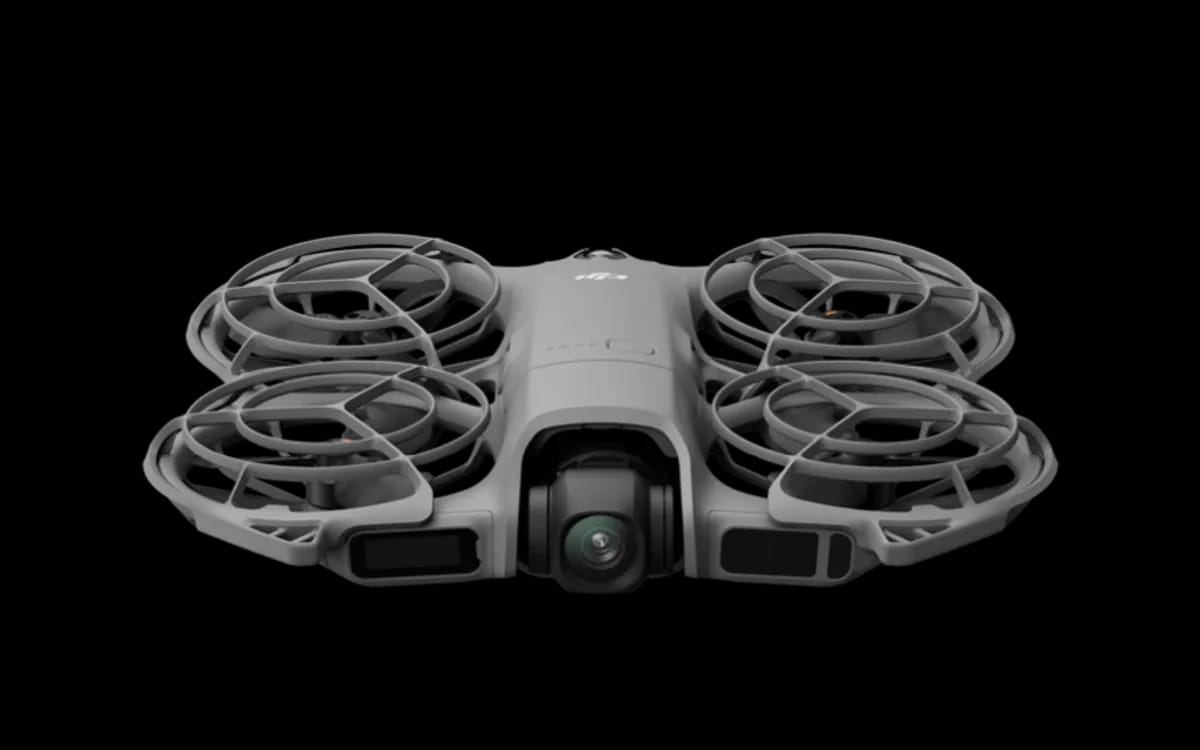
Two devices, two opposing promises. The DJI Neo 2 fits in one hand, takes off from the palm and follows you on its own. The DJI Mini 4 Pro requires a radio control, a little attention and in exchange gives you full control of the frame. Before booking, the real question is not “which is better” but “do I want to be filmed, or do I want to film”.
Two answers to two different questions
The Neo 2 weighs 151g without its optional transceiver. It can be controlled by gesture or with a DJI radio control, and its subject tracking manages eight directions – forward, backward, left, right and the four diagonals – at advertised speeds of up to 12 m/s. The Mini 4 Pro remains under 249 g and is controlled by radio control, with an O4 transmission given for 10 km in Europe.
Both carry the European C0 marking, the most flexible class in the open category. On this specific point, neither of the two benefits you.
What the Neo 2 does better
- It leaves and returns in the hand, without a clear take-off zone, which changes everything on a trail or ski slope.
- He flies with propeller protections, so closer to people without worrying them.
- It does not require any control: you launch a mode, it executes, you continue your activity.
- It costs little: DJI announced it at €239 in Europe, a fraction of the price of a Mini.
On paper it holds the video comparison, with 4K up to 100 fps – provided you use the motion controller or the radio control, this rate not being available otherwise. Its obstacle detection combines omnidirectional monocular vision, frontal LiDAR and downward infrared, over a range of 0.5 to 15 m.
What the Neo 2 doesn't do
Its sensor is a 1/2 inch 12 MP open to f/2.2. Compared to the 1/1.3 inch of 48 MP of the Mini 4 Pro, the gap widens as soon as the light drops: undergrowth, end of day, overcast weather. This is the most visible limit in editing, and it cannot be made up for.
The autonomy then: around 19 minutes, and only 17 with the propeller protections fitted, compared to 34 minutes for the Mini 4 Pro. A Neo 2 flight is counted in short sequences, not in a scouting session. Finally, the video link goes via Wi-Fi in the basic configuration – the O4 transceiver is a separate accessory – whereas the Mini 4 Pro has long-range transmission straight away.
In other words: the Neo 2 films you, it doesn't let you compose. No wide shot of a valley, no slow descent along a facade, no location at 800 m.
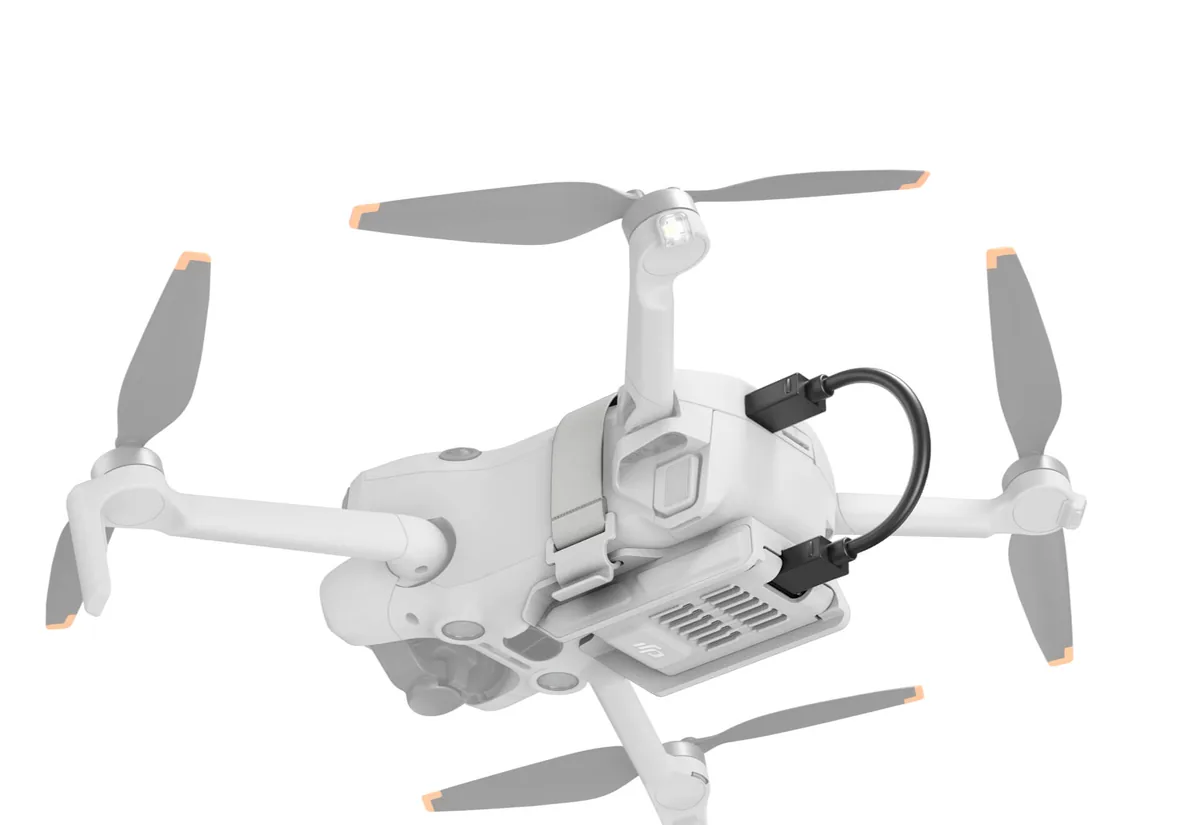
The Mini 4 Pro also knows how to follow you
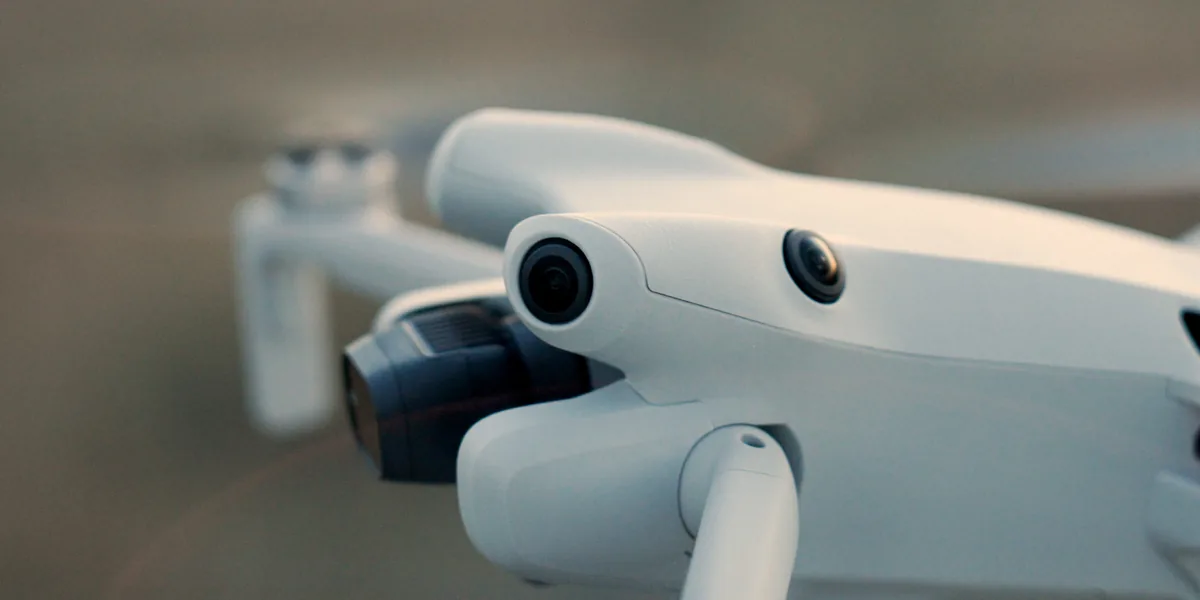
This is the point that we often forget. The DJI Mini 4 Pro features subject tracking capable of turning around you, and its omnidirectional obstacle detection – vision in all directions plus 3D infrared downwards – makes it significantly more serene in a cluttered environment than a device that only looks in front of it. You lose the hand take-off and extreme lightness; you gain the “I film myself” mode and the “I film the landscape” mode, in the same bag.
With 10.7 m/s of wind resistance announced, 4K up to 100 fps and 34 minutes of autonomy, it covers the entire day with two batteries, which a Neo 2 will never do.
Three situations, three answers
You're going trail running or skiing alone. No one will hold the controller, you want ten clips of you moving and nothing else: the Neo 2 is designed for this, and its extreme lightness works in its favor.
You are going on vacation or a weekend with several people. There will be landscapes, facades, a beach seen from above, perhaps a light at the end of the day: there, automatic tracking is no longer enough, you need to be able to go up, back up, choose your height. The Mini 4 Pro is the right tool.
You are filming for a client or for real estate. The question does not even arise: you need the sensor, the autonomy, the range and complete obstacle detection.
Finally, a word on the procedures, which are often misunderstood: the lightness of the Neo 2 does not exempt you from this. Registration of the operator is mandatory as soon as a drone has a sensor capable of collecting personal data, therefore as soon as it has a camera, regardless of its mass. Maximum height of 120 m and ban on flying over a gathering of people also apply to both devices.
Our advice, and what we praise
Let's be clear: the Neo 2 is not in our catalog. If you're just looking to be followed during a trail or a ski session, without ever touching a controller, it's a worthwhile purchase - we'd rather tell you that than sell you something else.
On the other hand, whenever you want real aerial shots, margin in low light and a full day of flight, renting the Mini 4 Pro meets both needs at the same time. And if morning or evening light is on the agenda, the Mini 5 Pro and its 1-inch sensor are still one step ahead.
More in this section
 Drones
DJI Flip or Mini 4 Pro: which to choose?
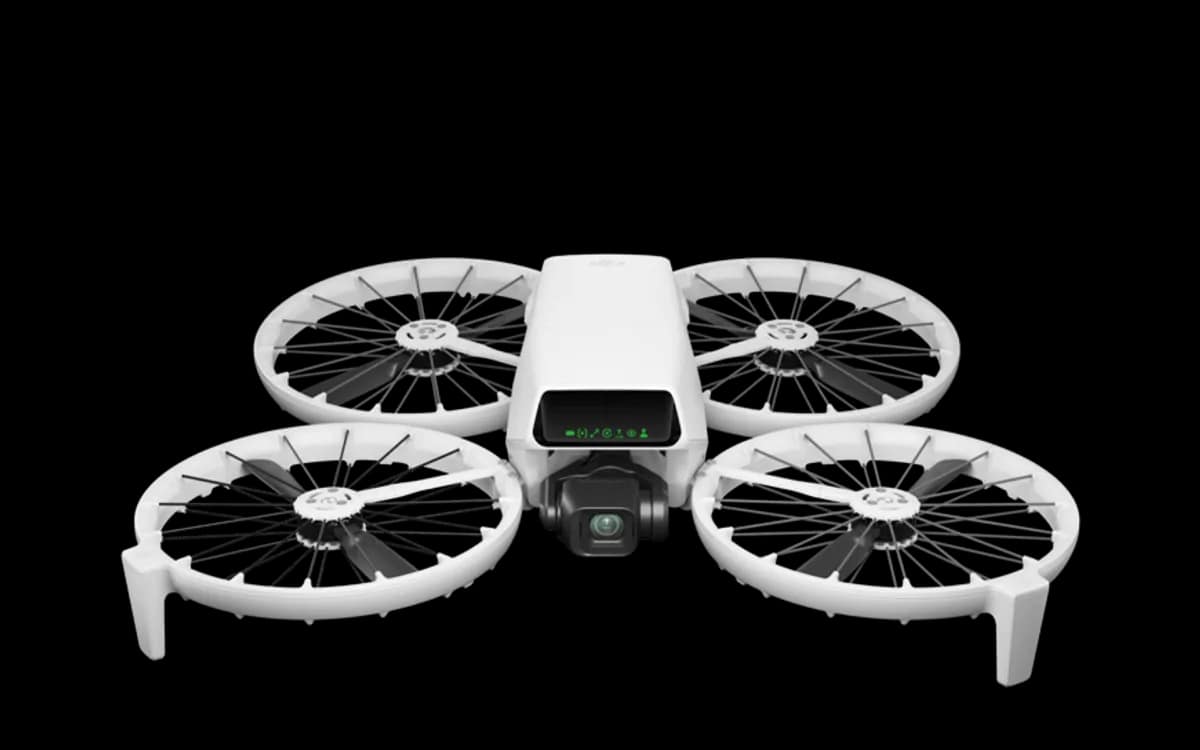
The DJI Flip protects its propellers, the Mini 4 Pro sees in all directions. Two opposite ways of securing a flight among people.
4 min read Drones
DJI Air 3S or Mini 5 Pro: which one to choose?
Both feature a 1-inch sensor. But 724 g versus 249.9 g, it's not just a question of bag: it's a change in regulatory class.
4 min read Drones
Drone autonomy: how many batteries?
The technical sheets announce 34 or 36 minutes. Here's where these figures come from, what's left on the ground, and how many batteries to take.
4 min read