
Vlogging & creation
Osmo Pocket 4P: what the dual objective changes
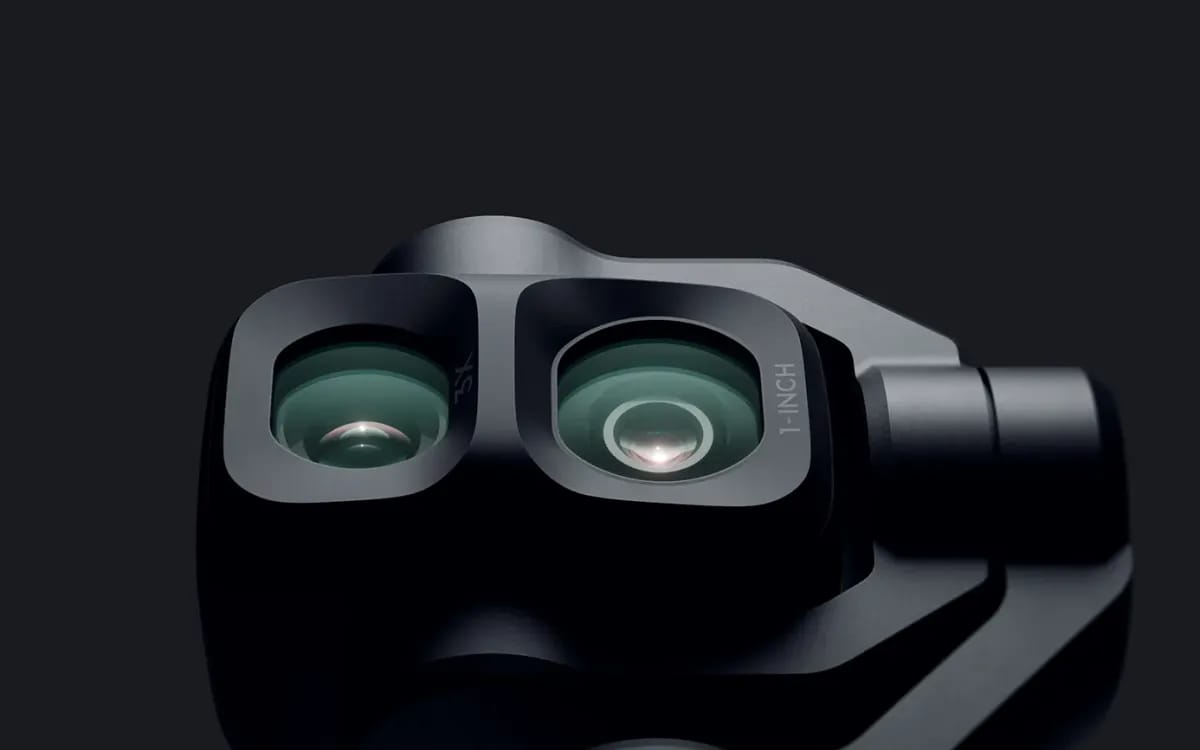
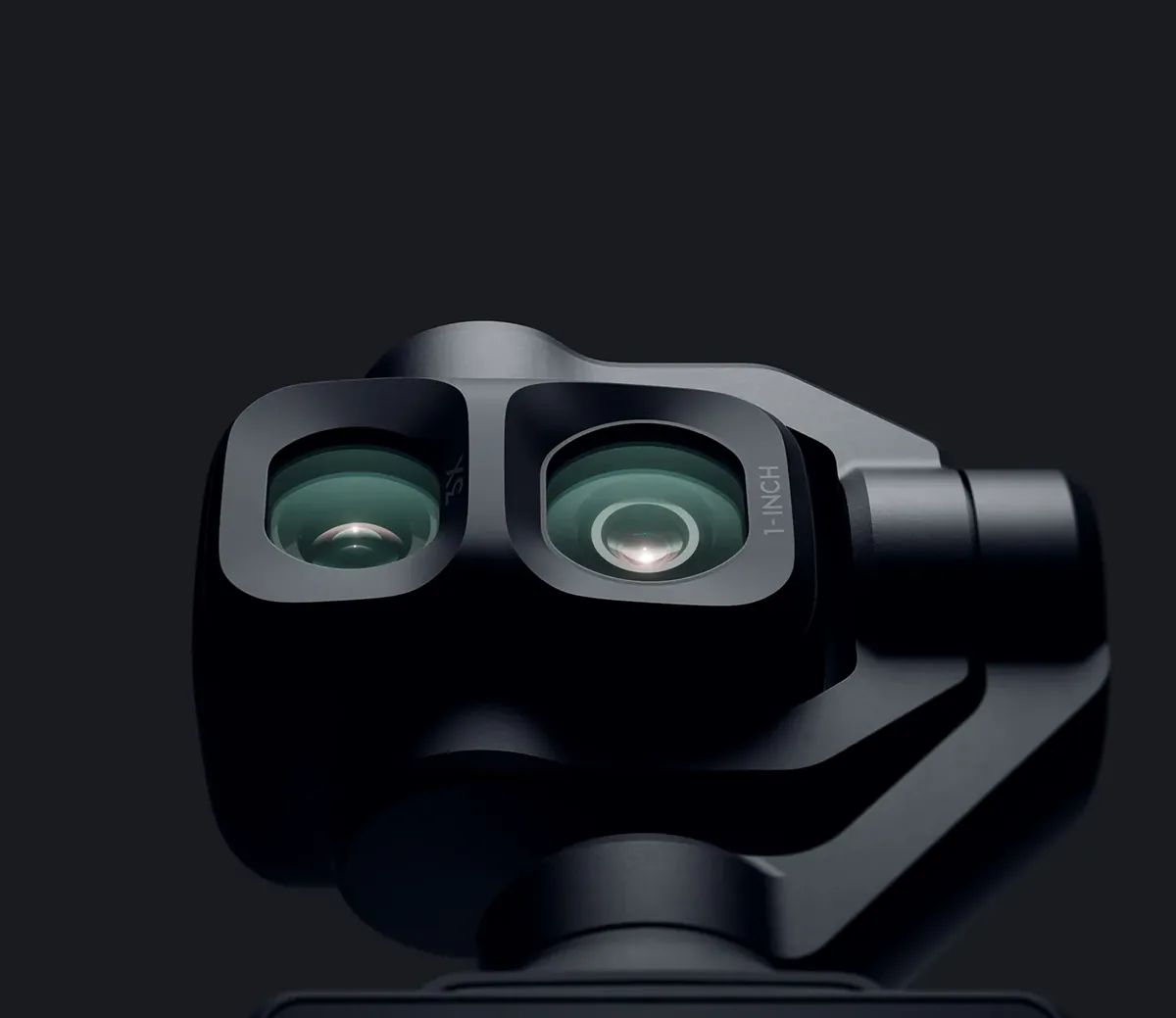
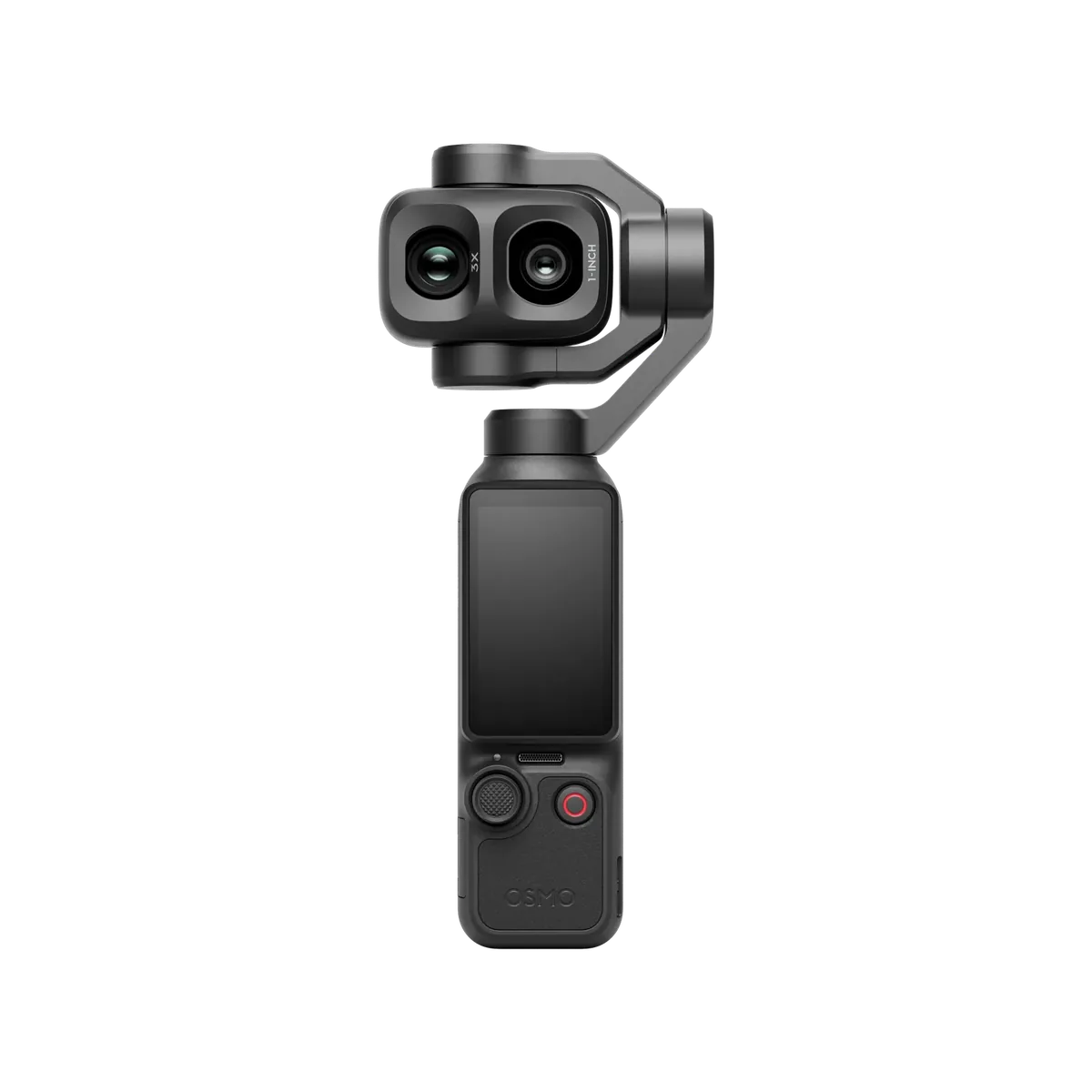
Two lenses on a single front panel: the DJI Osmo Pocket 4P combines a 20mm equivalent wide-angle lens in front of a 1-inch sensor and a 60mm equivalent telephoto lens in front of a second sensor. The result is simple: you can change the framing without advancing the image or cropping it. The rest of this page explains what this allows and in what situations it's unnecessary.
Cameras and drones delivered to 9 countries (France, Germany, Belgium, Spain, Italy, Luxembourg, Monaco, Netherlands and Portugal): Osmo Pocket rental.
See also: Insta360 rental.
What changes when filming from 20mm to 60mm
At the same distance, a longer focal length makes your subject appear significantly larger in the frame, and that's the whole difference between a 20mm wide-angle lens and a 60mm telephoto lens. Translated into filmmaking terms: you can film a bust during an interview without the camera being placed on the table, you can capture the details of a craftsman's hands without passing the camera between him and his workbench, you can isolate a plate in the middle of a service without making the waiter step back.
The second effect is less frequently discussed and often more visible on screen: a long focal length flattens the planes and separates the subject from the background. This is what immediately distinguishes a shot "shot on a phone" from a well-framed shot. An ultra-wide-angle lens, on the other hand, flattens everything and distorts faces as soon as you get closer.
Why this is not the same as a digital zoom
Almost all compact cameras offer a zoom function. In the vast majority of cases, it's digital: the camera crops a portion of the image already recorded by the sensor and then enlarges it. A second lens, however, actually creates a tighter image before recording.
| Criteria | Digital zoom | Second objective |
|---|---|---|
| Definition of a close-up | Only a portion of the pixels | The full definition of the sensor |
| Low-light performance | The noise is magnified along with the image. | No noise added by the magnification, but a smaller sensor than the wide-angle lens. |
| Background rendering | Unchanged, simply reframed | Compressed shots, detached subject |
The 1-inch sensor, the other half of the equation
The sensor in the main lens is 1 inch, significantly larger than those in action cameras, whose sensors are measured in fractions of an inch. A larger surface area captures more light for the same exposure time, and this is precisely where small cameras fall short: inside restaurants, at the end of the day, in a gym lit by fluorescent lights. However, there's a significant caveat: this large sensor is for the wide-angle lens. The telephoto lens uses a smaller 1/1.28-inch sensor with a lower maximum sensitivity—so it's the one that will struggle first when the light fades.
We've documented this point separately, with settings that save a sequence when the light falls: shooting at night with an action camera. The advice remains valid; the equipment simply changes the threshold at which it becomes necessary.
What this replaces in a bag
Let's compare it with what's already available for rent. The GoPro HERO 12 Black offers several digital lenses, but only one physical lens, and it's very wide. Everything about it is wide-angle by design: it's a camera made to be close to the action, not to frame tightly from three meters away.
The Insta360 X5 also has two lenses, but back to back, to cover the entire sphere: you then crop into a 360-degree image. Two opposing philosophies, then — cropping after the fact on one hand, choosing your focal length during filming on the other.
Cases where the dual objective is useless
Refusing to say so would be a selling point, not a useful one. A telephoto lens won't help you with landscape shots, where a wide-angle lens is what you need. It's equally useless for fast-paced action, where you're filming at close range and the slightest tremor is amplified by the long focal length. And it has no place where a sealed camera body is essential: underwater, in the snow, or on a helmet.
For these uses, an action camera remains the correct tool, and our comparison between 360 and action camera will give you the complete decision.
From when will you be able to rent it?
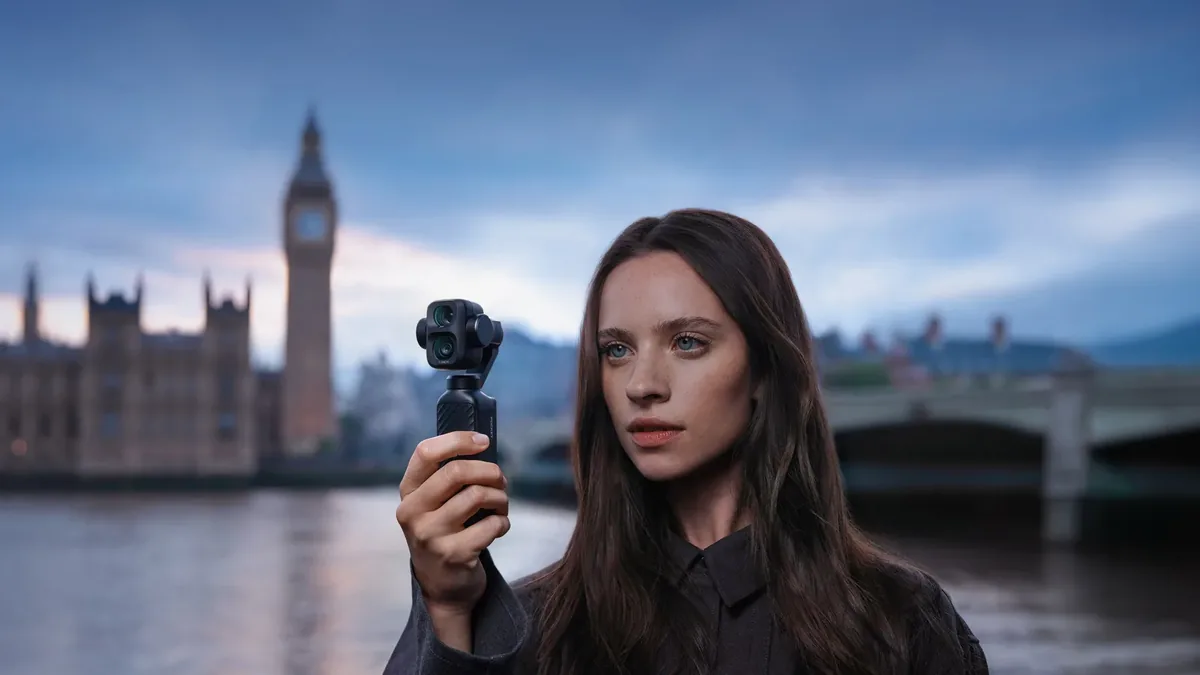
The DJI Osmo Pocket 4P has been in our fleet since 27 August 2026. It is the DJI Osmo Pocket 4P for rent. We haven't had it in our hands yet: everything above describes what the device's design allows, not a field test, which we haven't conducted. What you receive is a box with the accessories of the Vlog Combo, and never the Standard Combo, which is the less well equipped box. Its accessories — DJI Mic Mini 2 wireless microphone kit, Osmo FrameTap, Osmo mini tripod, Osmo Pocket 4 fill light — are included in the booking, at no extra cost and with no box to tick.
When buying, on the other hand, the choice does arise: DJI only displays the Standard Combo, at €599 (price recorded on August 19, 2026); the Vlog Combo is listed by retailers for around €690. That is the one to aim for if you buy rather than rent.
The calendar is open for booking. If its dates are already taken, the HERO 12 package can be rented by the day or by the week — current rates on its product sheet — including a 1TB microSD card and hard case.
See also: DJI Osmo rental or rent an Insta360.
More in this section
 Vlogging & creation
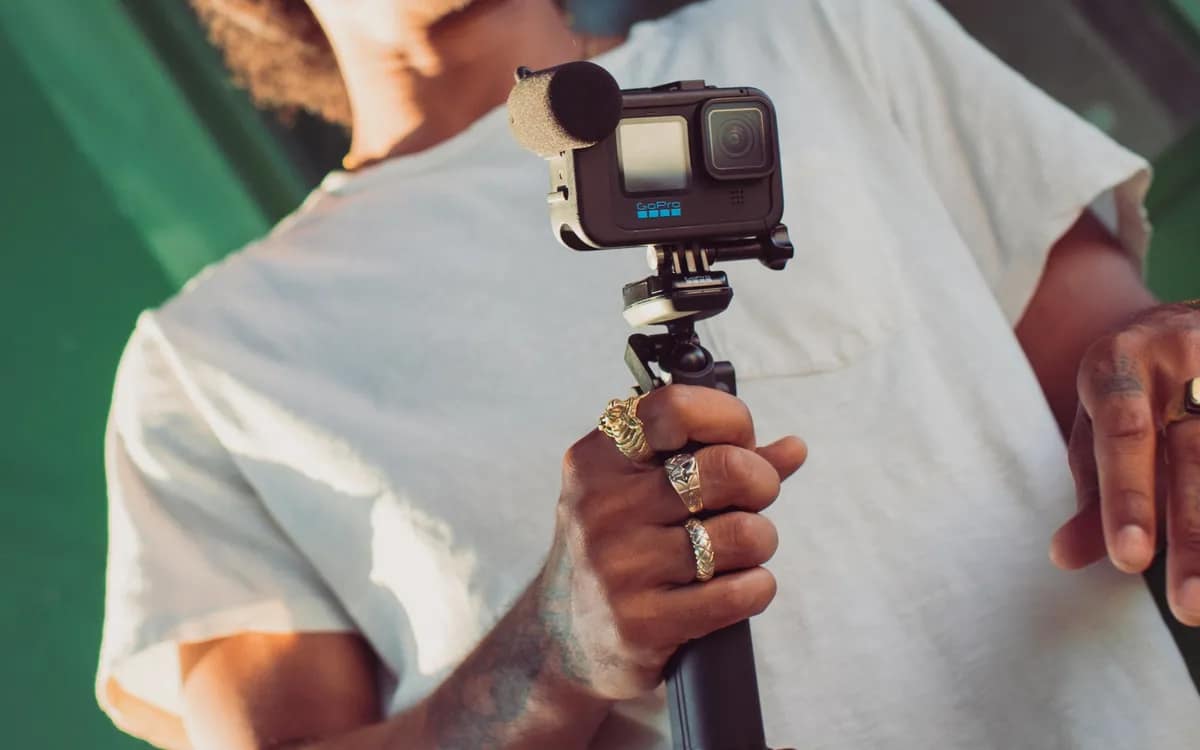
The sound of your camera: external microphone and wind
The image is beautiful, the sound is unlistenable. Here's what your settings fix for free, and when you should add a real microphone.
5 min read CC0 · Wikimedia CommonsVlogging & creation
Edit a 360 video: which PC or phone?
Nothing is more frustrating than a rented 360 camera and choppy footage during editing. Here is the configuration actually requested, and what to do if yours is below.
4 min read Public domain · Wikimedia CommonsVlogging & creation
Filming in Log: should you really start doing it?
Filming in Log provides material for grading, but lengthens editing. Three questions are enough to find out if this detour is worth it for your videos.
4 min read