
Drones
Filming people with drones: what the law says
You have checked the zone map, your drone weighs less than 250 grams, the weather is good: you have the right to take off. This still doesn't tell you whether you have the right to film the group of friends on the beach, the neighbor's terrace that walks into the frame, or the wedding guests you're hovering over. These are two distinct bodies of rules, and the second is not played out before the DGAC but before a civil or criminal judge.
Flying over people and filming them are two different issues
European regulations classify leisure flights in the open category, itself divided into subcategories A1, A2 and A3. A device weighing less than 250 grams falls under subcategory A1, the most permissive: the Ministry of Ecological Transition indicates that flying over people is tolerated. Tolerated is not recommended — the doctrine remains to avoid it as much as possible and to take extra precautions when this is not possible.
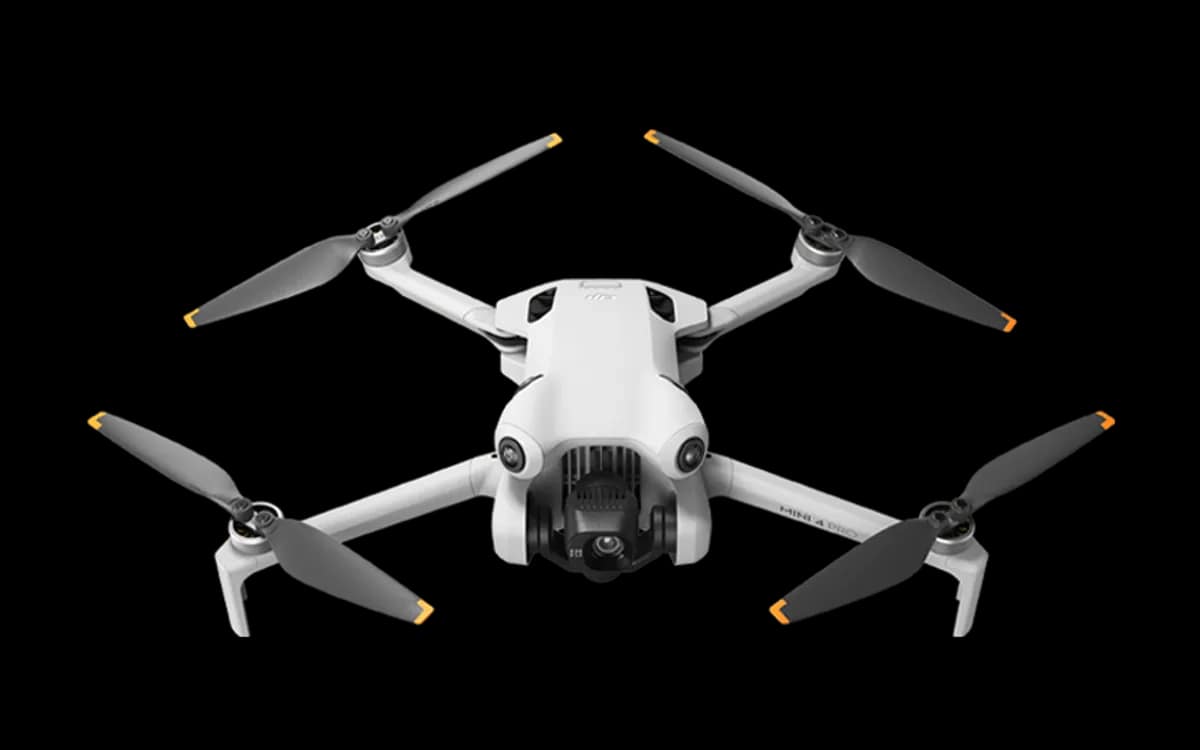
This tolerance assumes the standard battery. We offer an “XXL Batteries” option on the DJI Mini 4 Pro at €4 per rental: thus equipped, the device exceeds 250 g and no longer meets the conditions of its C0 class. In this case, you must conduct the flight in such a way that you can reasonably assume that no one will be overflown. If this happens, you minimize hover time. The A1/A3 training certificate also becomes mandatory, before takeoff. The Mini 5 Pro does not offer this option. We detail the point in AlphaTango: who registers when you rent a drone?
However, there are no exceptions to this limit, whatever the subcategory: flying over gatherings of people is prohibited. A gathering is defined by density — the group is so dense that those present would not be able to move aside if the device fell. A market, a concert, a crowded beach in August, a race finish fall into this definition. In all cases, the maximum height remains 120 meters above the ground.
These rules protect bodies, not images. You can follow all the flight rules to the letter and still commit an invasion of privacy.
What the penal code really prohibits
Article 226-1 of the penal code punishes with one year of imprisonment and a fine of 45,000 euros the act of violating the privacy of another person by fixing, recording or transmitting, without their consent, the image of a person found in a private place. An enclosed garden, a terrace, a swimming pool, the interior of a room behind a bay window: these are private places, and the altitude of your drone changes nothing.
The text provides for a presumption of consent when the acts were carried out in full view of the interested parties without their having objected, although they were in a position to do so. This is exactly where the drone becomes tricky. At fifty meters high, no one sees you filming and no one can object: presumption does not apply. The discretion of the device, which makes all its aesthetic appeal, turns against you on a legal level.
In public spaces, article 226-1 does not apply, but article 9 of the civil code remains: everyone has the right to respect for their private life. Jurisprudence has drawn from this the right to image. An identifiable and individualized person in your shot can request its removal, even if you filmed from a public highway.
Publishing commits a second time
The CNIL is explicit: it is prohibited to distribute or sell images without the consent of the people concerned. It also recommends not recording images allowing people to be recognized or identified – faces, license plates – without their authorization, and recalls that non-compliance with these restrictions exposes the owner of the drone to a criminal risk. Filming and publishing are therefore two separate decisions, to be made separately.
- Ask for the agreement of recognizable people before to shoot, and formalize it in writing as soon as the video is published or sold.
- Treat going live as a separate choice: a plan you keep to yourself doesn't raise the same questions as a plan that's released.
- Blur faces and plates when a person appears by accident and the shot remains essential for editing.
- Be wary of commercial uses: a video that sells a good, service or place moves the cursor and makes the written agreement essential.
Under 250 grams, the camera still requires you to record yourself
One point regularly escapes tenants. The registration exemption only applies to a device weighing less than 250 grams without a sensor capable of collecting personal data. As soon as a camera is loaded, the registration of the operator on the AlphaTango platform of the DGAC becomes obligatory again, including for strictly recreational use. The process is free and produces an operator number to affix to the device.
Concretely: the DJI Mini 4 Pro weighs less than 249 grams with its standard battery, the DJI Mini 5 Pro 249.9 grams, and both have a camera. Weight saves you from the heaviest obligations in the open category, not registration. Do this before the day of the shoot, not in the parking lot of the spot.
Frame so you have nothing to erase
The best legal protection remains a framework. The DJI Mini 4 Pro camera is equivalent to a 24 mm and covers a field of 82.1 degrees: it is a wide-angle, it does not magnify anything. For a face to become identifiable, you have to go down and get closer, therefore consciously deciding to do so. Conversely, gaining height or tilting the basket towards the landscape transforms people into silhouettes, and the question of image rights evaporates by itself.
- Edit before framing: a wide shot poses no identification problem.
- Avoid gardens and terraces at the edge of fields, including during transit phases.
- Cut the recording during takeoff and approach, times when the aircraft is low and close to people.
- Warn the people present at the filming location: this is what defuses the majority of conflicts before they exist.
The DJI Mini 5 Pro follows the same logic with a larger sensor: more detail in the image also means more identifiable detail, therefore more vigilance when publishing. Renting one or the other for a weekend saves you from buying a camera before having decided these questions, and gives you time to test your frames without commitment.
More in this section
 Drones
Drone weighing less than 250 g: what does it change?
Under 250 g, a drone gains real freedoms, but not all those that are attributed to it. Here's what the C0 class really changes, and where the catch lies.
4 min read Drones
DJI Neo 2 or Mini 4 Pro: which one to choose?
Being filmed while running or skiing without touching a controller: is that enough? Honest comparison between the DJI Neo 2 and the DJI Mini 4 Pro.
5 min read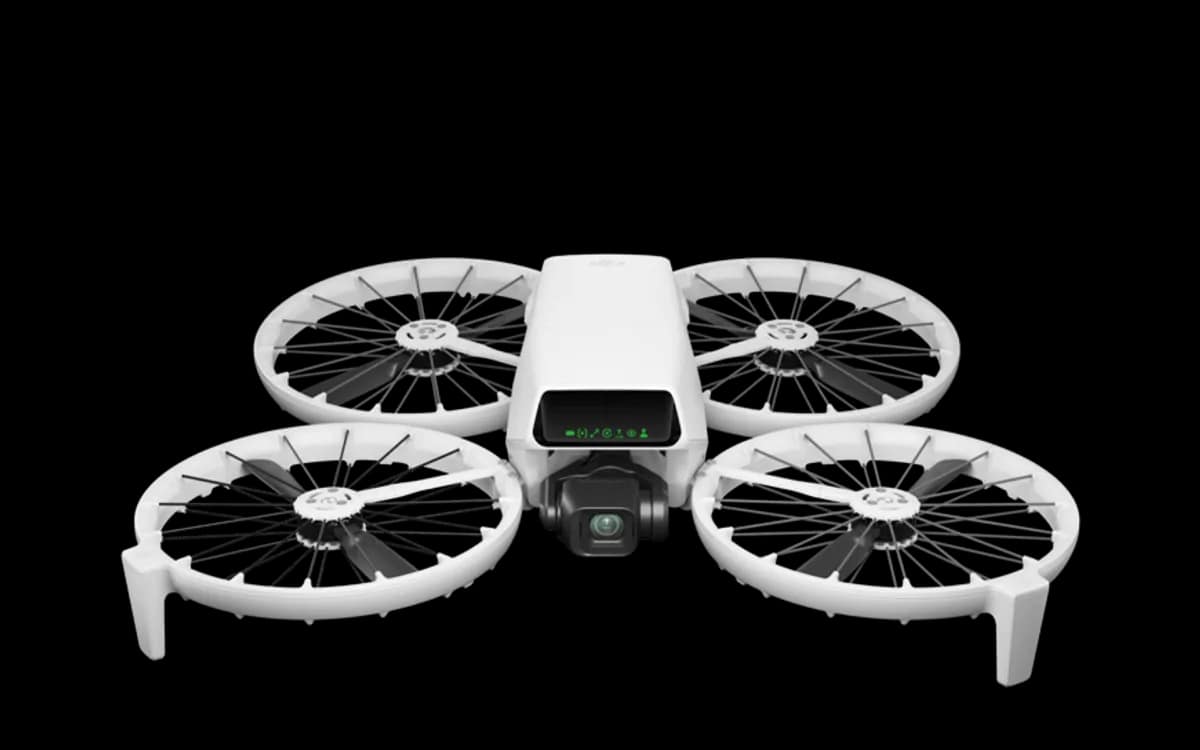 Drones
DJI Flip or Mini 4 Pro: which to choose?
The DJI Flip protects its propellers, the Mini 4 Pro sees in all directions. Two opposite ways of securing a flight among people.
4 min read