
Drones
HoverAir X1 ProMax or DJI Mini 5 Pro?
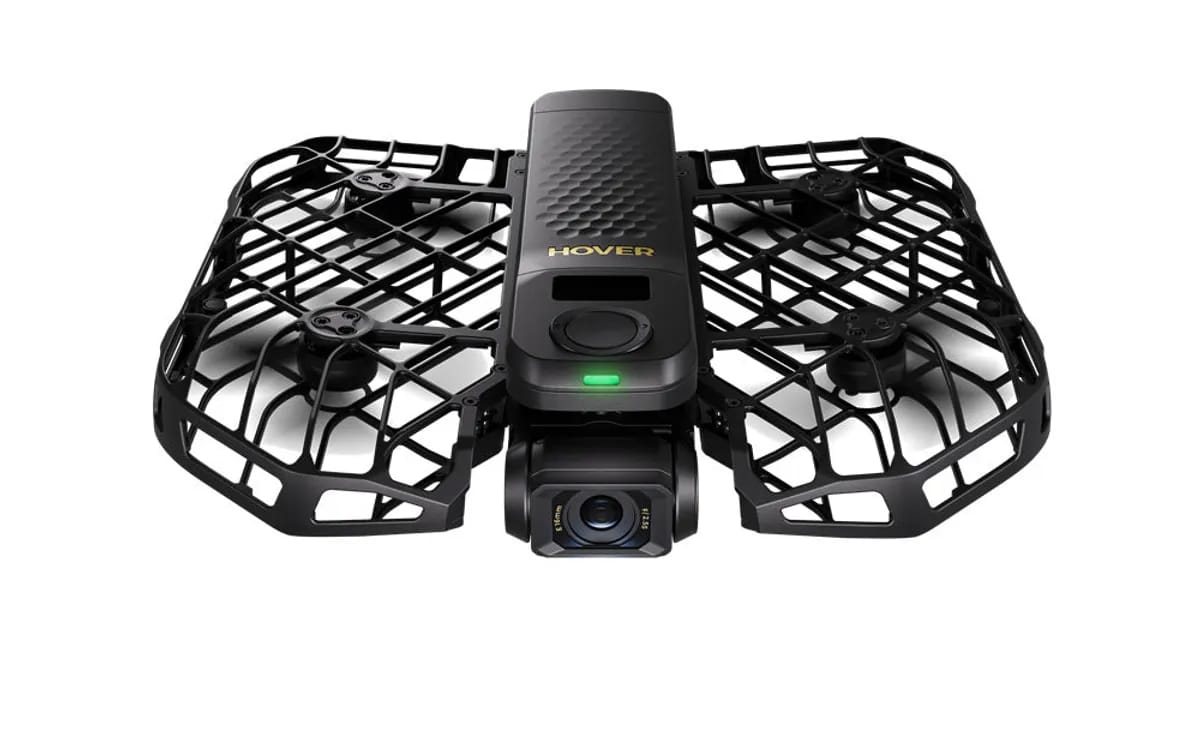
The HoverAir X1 ProMax has a formidable argument: it films in 8K, launches with your hand, follows you at 42 km/h and requires no steering. The DJI Mini 5 Pro displays “only” 4K. On a product sheet, the fight seems to have been resolved. On the ground, it is not at all.
At Fox Rider: rent the DJI Mini 5 Pro — damage & theft cover included, €250 deposit, delivered 24 h ahead.
8K versus 4K: resolution is not quality
The HoverAir X1 ProMax films in 8K at 30 frames per second, and in 4K up to 120 fps, with a 1/1.3-inch sensor. The Mini 5 Pro tops out at 4K/120fps and Full HD at 240fps, but behind a 1-inch 50MP sensor.
The number of pixels tells how many points are recorded. The size of the sensor tells how much light each receives. Spreading 8K over a surface area of 1/1.3 inch amounts to cutting the same quantity of light into many more pieces: in direct sunlight it goes very well, in the shade or at the end of the day the noise builds up more quickly. This is exactly where the Mini 5 Pro’s 1-inch sensor widens the gap.
Autonomy and range: two worlds
- Autonomy: the X1 ProMax is given for around 16 minutes, and independent tests go down to 11-13 minutes in active tracking. The Mini 5 Pro claims 36 minutes with its standard battery.
- Range: the HoverAir is controlled from the phone, with an announced range of up to 500 m in an open environment — 250 m from an iPhone — and up to 1 km with its beacon. The Mini 5 Pro uses the O4+ transmission, given for 10 km under CE standards.
- Wind: DJI announces 12 m/s of resistance on the Mini 5 Pro, a value which counts as much by the sea as in the mountains.
- Storage: 64 GB internal and microSD card up to 1 TB on the HoverAir side, 42 GB internal on the Mini 5 Pro side.
These numbers tell a simple story: the HoverAir is designed for short sequences, around you. The Mini 5 Pro is designed for a filming session.
What the HoverAir really does better
It should not be caricatured. Its 192.5 g, its integral protective cage and its take-off from the hand make it the simplest tool available when you are alone and busy with something else: mountain biking, trail running, skiing, climbing. No one holds the controller, no one frames, and the result is usable.
One point, however, is worth knowing: its obstacle detection exists but remains partial – the tests reveal rear and side coverage, without equivalent frontal protection. At 42 km/h on a single-track, it pays off.
Who decides on the framework?
This is the fundamental question, and it often goes unnoticed. On the HoverAir, you choose a mode — orbit, distance, backtrack — and the device executes a pre-programmed path. The result is clean, regular, and always focused on you. This is perfect for personal content; it’s very limiting as soon as you have to tell something other than yourself.
On the Mini 5 Pro, you decide everything: height, axis, approach speed, when the camera tilts. Its nacelle rolls from −180° to 45°, or 225° of amplitude, which allows filming vertically without cropping – useful if the video ends up on a mobile format. The drone records in 10 bits with D-Log M and HLG profiles, up to 130 Mb/s: material for grading during editing, not just a file ready to publish.
The counterpart is honest: you have to pilot, and therefore learn. Allow a first hour of getting started before attempting the plan that is important to you.
Weight and regulations: draw
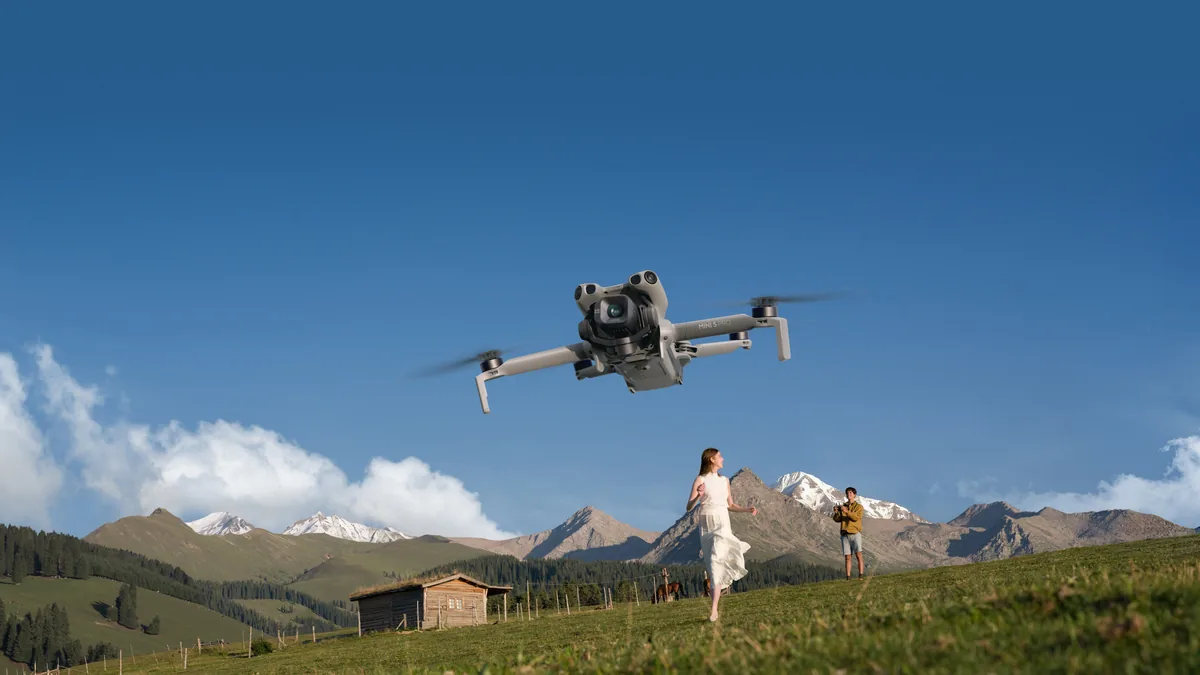
Many believe that the HoverAir escapes regulations thanks to its lightness. This is false, and in both senses. With 192.5 g it remains below the 250 g threshold, like the Mini 5 Pro and its 249.9 g, and therefore flies in subcategory A1 just like him. The same rules apply to both: maximum height of 120 m, absolute ban on flying over a gathering of people, and registration of the operator is mandatory as long as the device has a sensor capable of collecting personal data, which is the case with any camera.
Which one for a sports weekend?
If your only goal is to bring back ten clips of you in action, without ever worrying about the frame, the HoverAir does the job — it's not in our catalog and we're not going to pretend otherwise.
If you want to bring back a film: wide shots of the valley, a descent along a ridge, end-of-day light that lasts for editing, then this is the le DJI Mini 5 Pro you need, and it can be rented for the weekend. For a tighter budget, le Mini 4 Pro maintains 34 minutes of autonomy and the same freedom of framing, with a 1/1.3 inch sensor.
More in this section
 Drones
Filming people with drones: what the law says
You have the right to take off: this does not tell you whether you have the right to film the people entering the frame, nor to publish the shot.
6 min read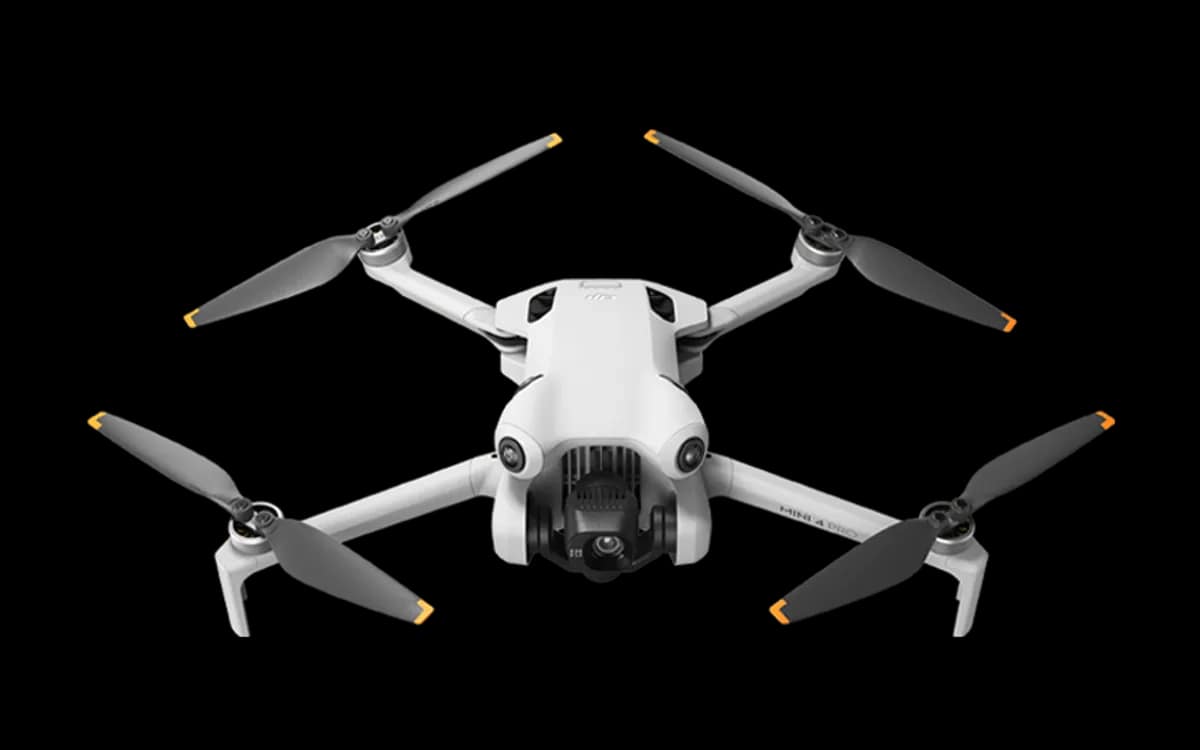 Drones
Drone weighing less than 250 g: what does it change?
Under 250 g, a drone gains real freedoms, but not all those that are attributed to it. Here's what the C0 class really changes, and where the catch lies.
4 min read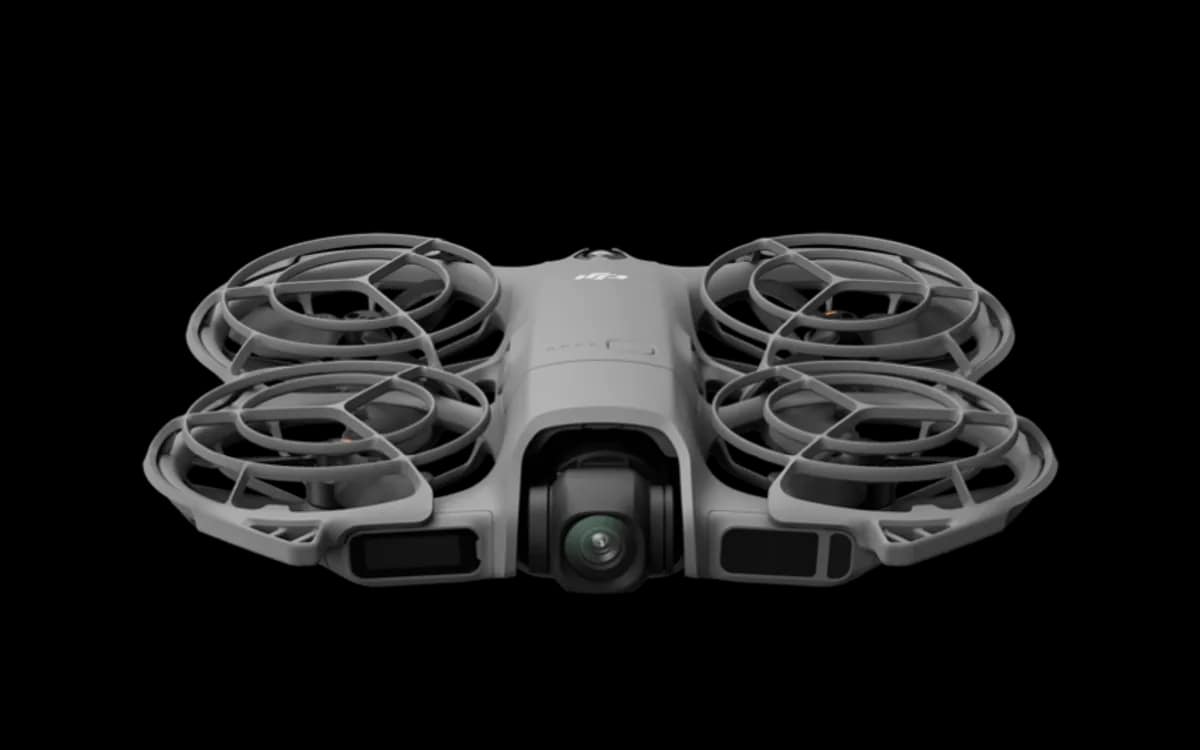 Drones
DJI Neo 2 or Mini 4 Pro: which one to choose?
Being filmed while running or skiing without touching a controller: is that enough? Honest comparison between the DJI Neo 2 and the DJI Mini 4 Pro.
5 min read