
Guides
A renovation projection is not a quote
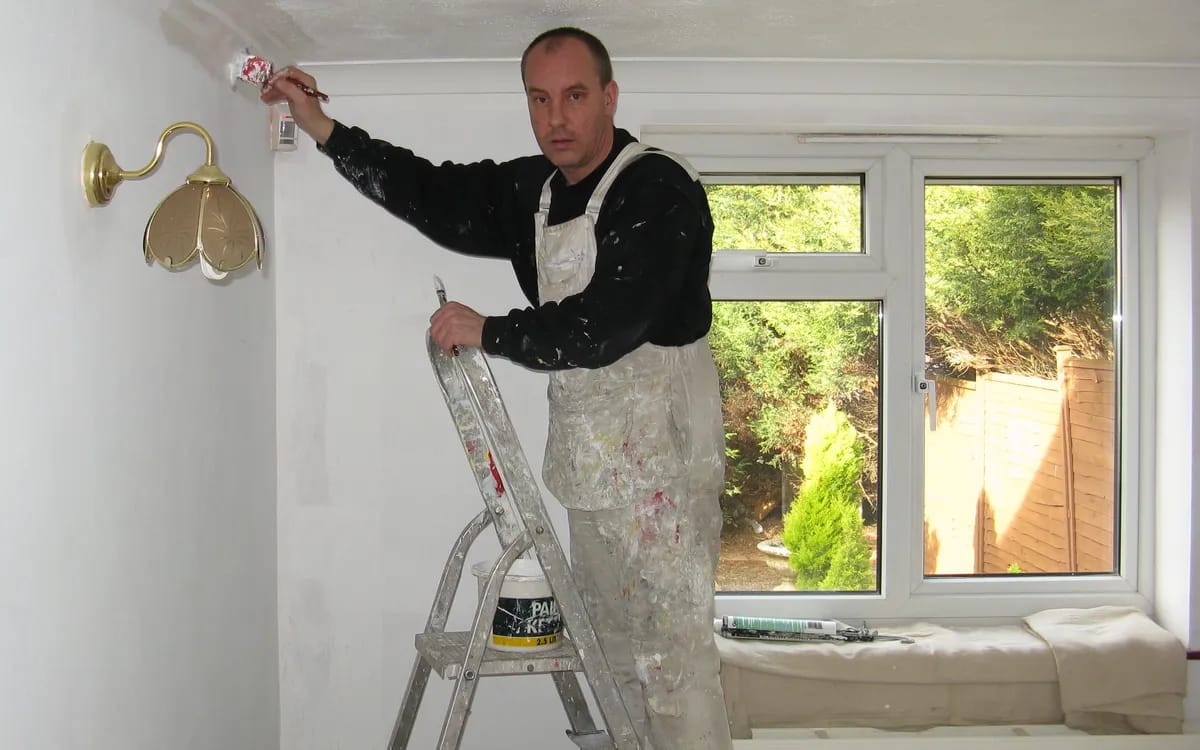
An image of renovation work and a quote for that work never come from the same hand, and that is a good thing. One shows an intention, the other commits whoever signs it. Confusing the two helps nobody: not the owner, who thinks they hold a costing, not the tradesperson, who inherits an expectation they did not create, and not the image maker, who promises what they cannot deliver.
This article draws the line. It is not about being careful for its own sake: it is the condition for a projection to stay useful rather than dangerous.
What a quote contains that an image does not
A quote names a company, describes the work, gives quantities, sets an amount and a period of validity. It is signed. It commits its author to what they wrote, and the client to what they accept. It is a contractual document, produced by someone who has seen the site and will answer for the result.
A projection has none of that. No company named, no quantity, no work described, no amount — and an honest projection never shows one. It has a viewpoint, a light, assumed materials. It says “this is the intended effect”. It says neither how to get there, nor at what price, nor whether it can be done.
Three trades, three responsibilities
The clearest way to hold the line is to name who answers for what.
| Who | What they produce | What they answer for |
|---|---|---|
| The image maker | Photos, a video, a view of intent | The faithfulness of the shot and a clear mention of what has been retouched |
| The project manager or architect | A project, plans, a design | Feasibility, compliance, the technical consistency of the whole |
| The building company | A quote, then the work | The price, the time frame and the proper execution of what it signed |
These three columns do not overlap. An image maker who starts pricing work steps out of their role and out of their insurance. A tradesperson who treats a view of intent as a specification works from a document that never had that ambition. Everyone in their place, and the image stays a tool for understanding instead of becoming a source of dispute.
What an image must not be made to say
Four sentences come up again and again around a projection, and none of the four holds:
- “It shows it can be done.” No. A partition disappears just as easily in an image whether it is load-bearing or not. The structure cannot be read from a photo.
- “It gives the floor area after the work.” No. No measurement is taken, no area is calculated. The only dimensions that count are the ones someone measures on site.
- “The builder only has to follow the image.” No. A view of intent describes neither the materials, nor the thicknesses, nor how things are installed. It proposes an effect, not a method.
- “That is what we will get in the end.” No, and it is the riskiest of the four. A colour, a joinery item, a worktop change appearance depending on the product chosen, the light of the place and the hand that fits it.
What happens when they are confused
The consequences are concrete. A buyer who saw an image with no label believes they are looking at a guaranteed future state, finds something else on completion and turns against the seller. An owner who shows the view of intent to three companies gets three different readings of the same picture, then three costings that cannot be compared. And a tradesperson who priced from an image ends up bearing a gap they did not create.
None of this happens when the image is named for what it is. One line is enough, written where it will be read, under the image and not at the bottom of the page: view of intent, not contractual, replaces neither a plan nor a quote. This habit of naming things is nothing unusual in our trades — it is the same as for the documents to have signed before a shoot, described in the authorisations to sign.
Presenting a projection honestly
The method fits in four rules, and they are easy to follow:
- Always in pairs. The real photo and the view of intent side by side, never the second on its own. The reader must be able to compare.
- Always labelled. The mention under the image, in the same block, not in a caption sent somewhere else.
- Never priced. No amount, no floor area, no construction time appears on or next to the image.
- Always dated. A projection made from photos taken in March is not worth much if the room has changed by June.
What the image really brings
Once the line is held, the service becomes clear: the projection saves decision time. It lets a buyer picture themselves without spending a whole visit on it, a landlord explain what they intend to redo, an owner tell their tradesperson what they have in mind instead of searching for words. It is a conversation tool, and a very good one.
That is also why it is prepared together with the other images of the property rather than afterwards. The reasoning joins that of our guide to drones and 360 video in real estate: it is understanding the property that triggers visits, not flattery. And for those ordering on behalf of a company, invoicing is handled like any other service — renting in your company’s name sets out the framework.
Do you have a property to show and renovation work to explain? Describe the project in the form: I will tell you what an image can carry, and from what point you need to see a building professional.
More in this section
 Guides
The photo that makes a renovation preview possible
Frontal exposure, entire room, flat lighting, reasonable focal length: the four decisions made on site that make an image usable — or definitively unusable.
5 min read Guides
Which device for which plan: the 2026 table
Five devices facing around ten current plans, with what each does better than the others and the pitfall of each. Choose the plan first, the device second.
4 min read Guides
Should you still buy a GoPro in 2026?
GoPro filed a financial document on June 1, 2026 mentioning “substantial doubt” about its continuity of operation. What this word means, and what it doesn't mean.
4 min read