
Travel
Drones and LiPo batteries on planes: airline rules
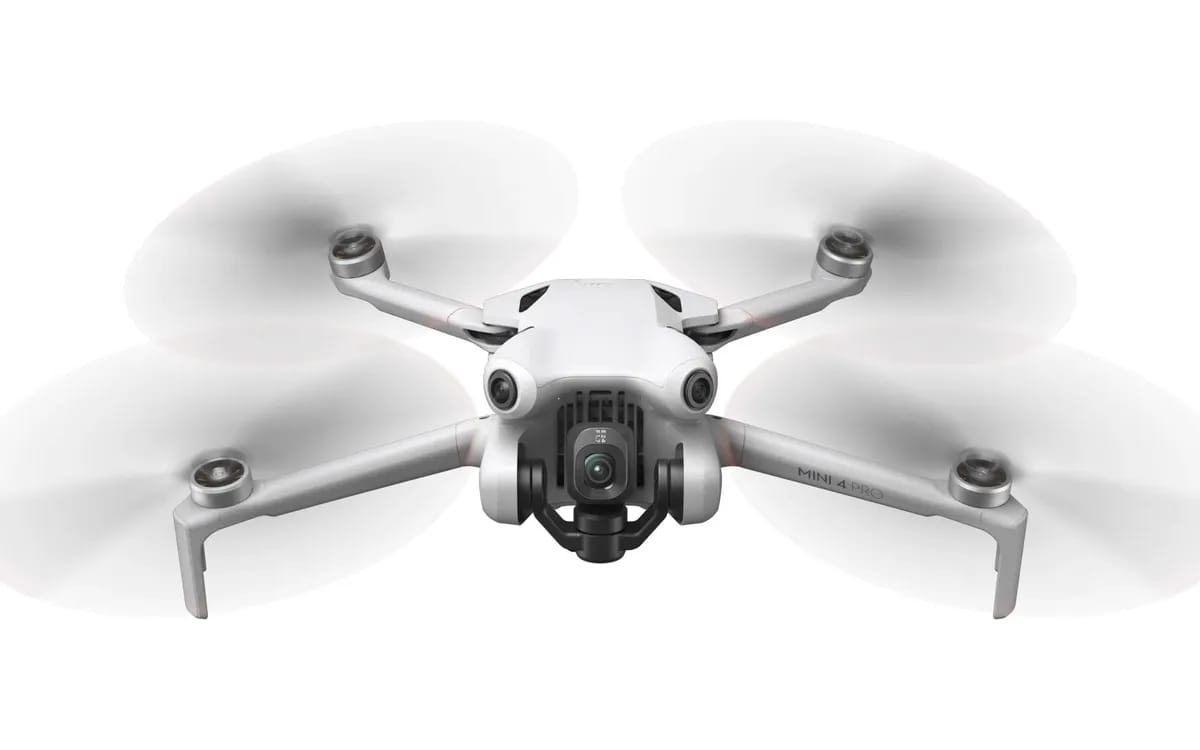
At the airport, it is rarely the drone that raises questions. What stops the agent at the scanner is what is inside it: lithium batteries. The rules that govern them come from a framework shared by airlines, and they boil down to one figure: the battery's energy, in watt-hours.
This guide gives that framework, the calculation for the two drones in our drone rental, then what four airlines say. Each may be stricter than the common framework. Always re-read its page before you leave.
The common framework: 100 Wh, 160 Wh, cabin
IATA, in its "Passengers Travelling with Lithium Batteries" sheet revised on 31 March 2026, sets three tiers for spare batteries:
- 100 Wh or less: cabin only, never in the hold, 20 at most per person.
- From 100 to 160 Wh: prior approval from the airline, and two spare batteries at most.
- More than 160 Wh: prohibited in passenger baggage. They travel only as cargo.
In every case, the terminals must be protected one by one: tape over the contacts, an individual case or bag. Above all, remember this: a spare battery never goes in the hold.
LiPo or Li-ion: the same rule
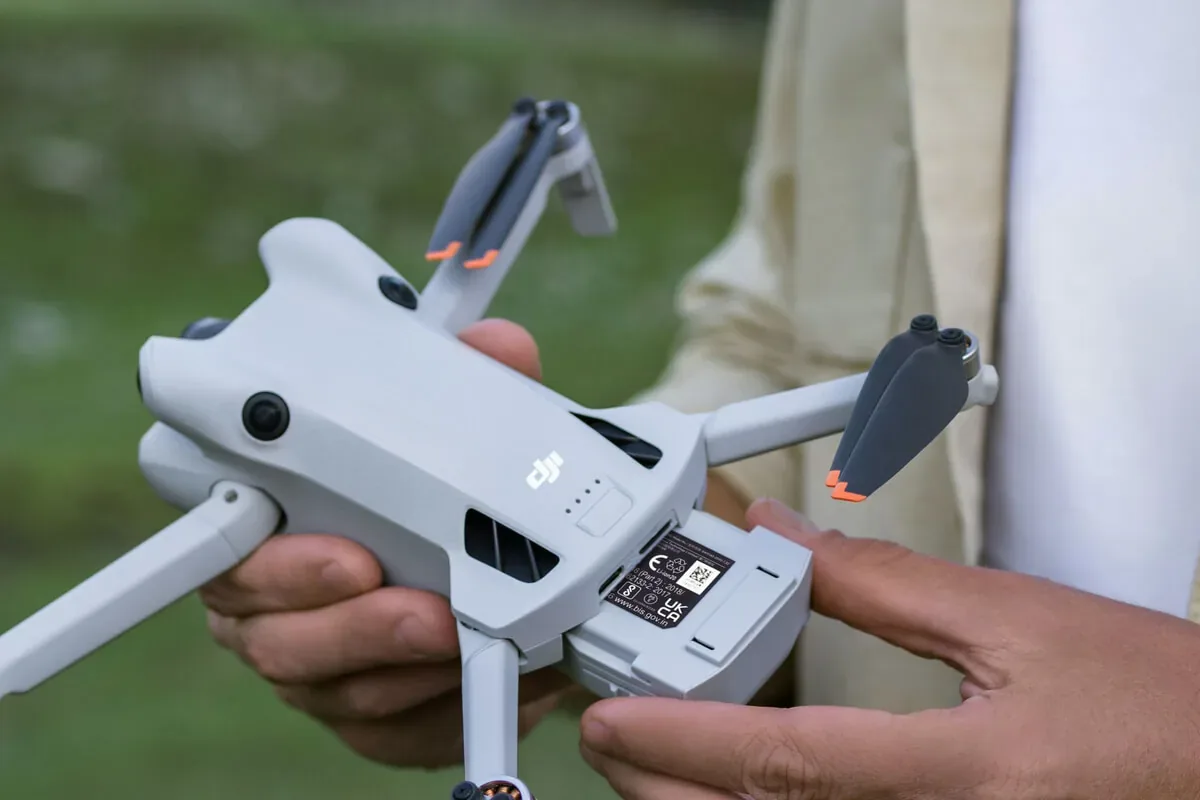
People often talk about LiPo batteries for drones. The batteries of DJI Minis are actually Li-ion. That changes nothing at the check: aviation rules cover all lithium-ion batteries, LiPo included. A drone battery, whatever its chemistry, follows the table above.
Calculating the Wh of your battery
If the value is not printed on the battery, it can be calculated: capacity in mAh × voltage in volts ÷ 1,000. Here are the values published by DJI.
- The DJI Mini 4 Pro: standard battery of 2,590 mAh at 7.32 V, or 18.96 Wh.
- The DJI Mini 5 Pro: standard battery of 2,788 mAh at 7 V, or 19.52 Wh.
- The high-capacity (Plus) battery of the Mini 4 Pro, the one in our "XXL Batteries" option: 3,850 mAh at 7.38 V, or 28.4 Wh.
The standard batteries represent about a fifth of the 100 Wh threshold. The XXL battery also stays under that threshold. In terms of energy, you are therefore in the simplest case, with either drone.
The rented pack contains three flight batteries. One stays in the drone, two travel as spares. This calculation matters for what follows.
The rules airline by airline
easyJet: two spare batteries at most
easyJet's "dangerous goods" page, read on 6 October 2026, accepts spare lithium-ion batteries up to 160 Wh. It sets "a maximum of two spare batteries in hand baggage". They must be individually protected and never go in the hold. The page does not mention drones by name.
With the pack of three batteries, the count works: one in the drone, two spares. You stay within the limit. With one more battery, you would exceed easyJet's limit: in that case, choose another airline or travel with only three batteries.
Air France: the airline's page
As of 6 October 2026, Air France's page on electronic devices, batteries and spare batteries states that drones count among battery-powered devices for personal use. For batteries of 100 Wh or less, the device is accepted in the cabin as well as in the hold. The passenger may carry up to 15 devices and 20 spare batteries, and spare batteries stay in the cabin. Batteries of more than 160 Wh are prohibited.
The airline may change these rules at any time: re-read its page before the flight.
Transavia: the size of the drone and Morocco
As of 6 October 2026, Transavia's help page on drones states that the drone goes as cabin baggage if it does not exceed 40 × 30 × 20 cm. Its lithium batteries travel in the cabin, under the seat, even if the drone is in the hold. It also specifies that drones are prohibited on flights to Morocco and are confiscated there.
Here again, re-read the airline's page before the flight.
Ryanair, in addition
According to Ryanair's help page, updated on 21 August 2026, drones are prohibited in the hold. They are accepted in the cabin if the battery does not exceed 100 Wh. The airline allows up to 20 spare batteries of 100 Wh or less, and two power banks at most.
Power banks: two at most, no charging on board
Since 27 March 2026, ICAO limits power banks to two per passenger. Charging them on board is prohibited. The organisation also recommends not using them to charge a device during the flight. easyJet and Air France in fact prohibit using them on board. So do not count on charging your remote controller during the flight: charge everything the day before.
What to do the day before
- Take all batteries out of the hold suitcase, including those of the remote controller if they are removable.
- Protect the terminals of each battery with tape or an individual case.
- Put the batteries in the bag that stays with you. If you are asked to let your cabin bag go into the hold at the boarding gate, take the batteries out before handing it over.
- Check the dimensions if your airline sets a maximum cabin size: folded, the Mini 5 Pro measures 157 × 95 × 68 mm, and the pack's bag fits in a backpack.
- Re-read the airline's page, and keep a copy on your phone.
To know how many batteries to plan for on site, read our guide on flight time. For the rest of the luggage, see the ten commandments of rental equipment on holiday.
On arrival: the country matters more than the battery
A compliant battery is not enough. Each country sets its own rules for drones, and some ban them or make them subject to authorisation. Consult the country's civil aviation authority before booking. We have gathered the common cases in our guide to the rules country by country.
A drone with a camera also requires operator registration in your country of residence, even under 250 g. It is all in the 2026 regulations guide. Carry your ID document and the registration certificate.
More in this section
 Travel
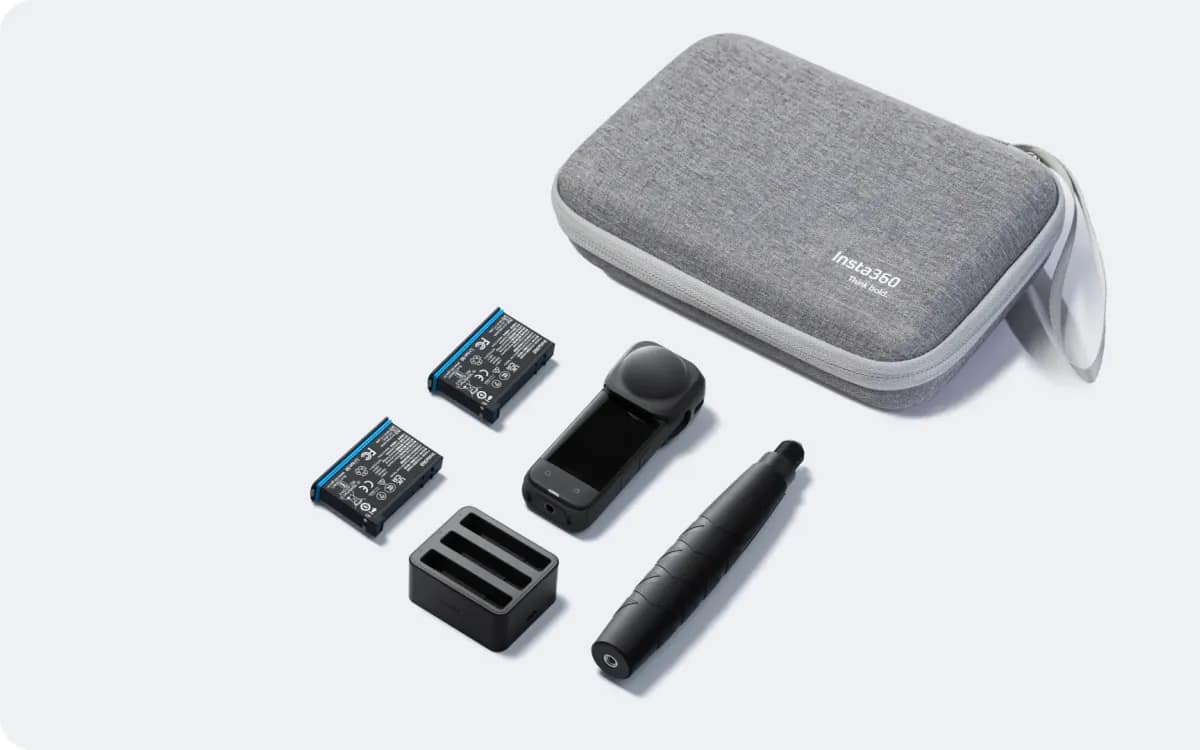
Insta360 X6 when traveling: the minimum kit
A 360 travel camera fits in its case. The real trap is elsewhere: the spare batteries and the 100 Wh limit in the cabin.
4 min read Travel
Is your phone enough when traveling?
A recent smartphone covers the essentials of a trip without complaint. The subject is the moments where it stands out: water, movement, sand and shots where you are alone.
4 min read Travel
Drone abroad: rules country by country
In Europe, your remote pilot papers follow you. Elsewhere, the same suitcase can cost you your drone at customs. Here's how to decide before you leave.
5 min read