
Services
Weather: what gets postponed, what gets shot anyway
There are two kinds of dates. The ones that cannot move: a wedding happens, an opening happens, a party happens, and the camera works with whatever sky it is given. And the ones that can move: a property to photograph, a facade, a company’s exterior. For the second kind, weather is not an imposed constraint, it is a choice — provided you make it in time.
A date that can move must move early
The decision is taken twice: late the previous afternoon, then on the morning itself around seven. No earlier, for a simple reason: a five-day forecast says nothing useful about a two-hour window. It gives a trend, not a decision. At twenty-four hours, though, the timing of showers becomes usable, and that is exactly the information that decides whether to shoot or to move. Deciding the evening before leaves time to let everyone know; deciding on arrival wastes a journey.
What rain actually prevents
Fewer things than people think, and not the ones they think. It is not the water that gets in the way, it is the sky: a uniform ceiling flattens a facade, dulls a garden and turns windows into grey rectangles. A drone, for its part, flies neither in rain nor in sustained wind — and even in fine weather, the feasibility of a flight is checked place by place, never in general.
Wind is heard before it is seen
On a picture, thirty kilometres an hour is barely visible. On the soundtrack it saturates everything: a roar that covers the voices and that no edit removes. Wind also weighs on the stability of a stand, on battery life — how many batteries to plan for covers that — and on everybody’s patience. It is, very concretely, the weather parameter that does the most damage for the least visibility.
| The weather | What gets shot anyway | What gets postponed |
|---|---|---|
| Overcast, no rain | Everything indoors, the details, the spoken parts | Nothing, except the wide facade shot if it has to sell |
| Intermittent showers | Everything indoors; the exteriors during the lulls | The shots that need sun, and the flight |
| Continuous rain | Indoors only, if the access is covered end to end | All exteriors, without exception |
| Sustained wind | Indoors, and outdoors if nobody speaks | Any speaking outdoors, and the flight |
That table reads one way and one way only: it says what you save, never what you sacrifice gladly. An entirely rainy day still brings back a complete interior, and that is often half of what was asked for. So the morning question is not “do we shoot or not”, but “is the remaining half worth the journey”. For a home, the answer is almost always yes; for a facade alone, almost always no.
A white sky is not bad news
An overcast sky is a giant diffuser: no hard shadow on faces, no unmanageable contrast between a dark room and a blazing window, and colours that hold from shot to shot. Interiors film better on such a day than under a midday sun, and a flat viewing almost always gains from being done in grey weather. You lose the facade and the garden; you gain everything else. It is a trade, not a loss.
Cold, heat and condensation
- Cold breaks nothing, it shortens. A battery rated for thirty minutes lasts twenty at four degrees, and it recovers its capacity once back in the warm: not a fault, just a forecast to revise.
- Heat, on the other hand, stops things. A body left in full summer sun cuts out mid-take, and it does not restart faster because you are in a hurry. The fix is dull: shade, and a second card while it cools.
- Condensation is the shoulder-season trap. A lens moving from a cold car into a heated interior fogs for ten minutes, and those ten minutes always fall on the first shot of the day. Take the gear out on arrival, let it acclimatise, and start with something else.
Who decides, and what it changes
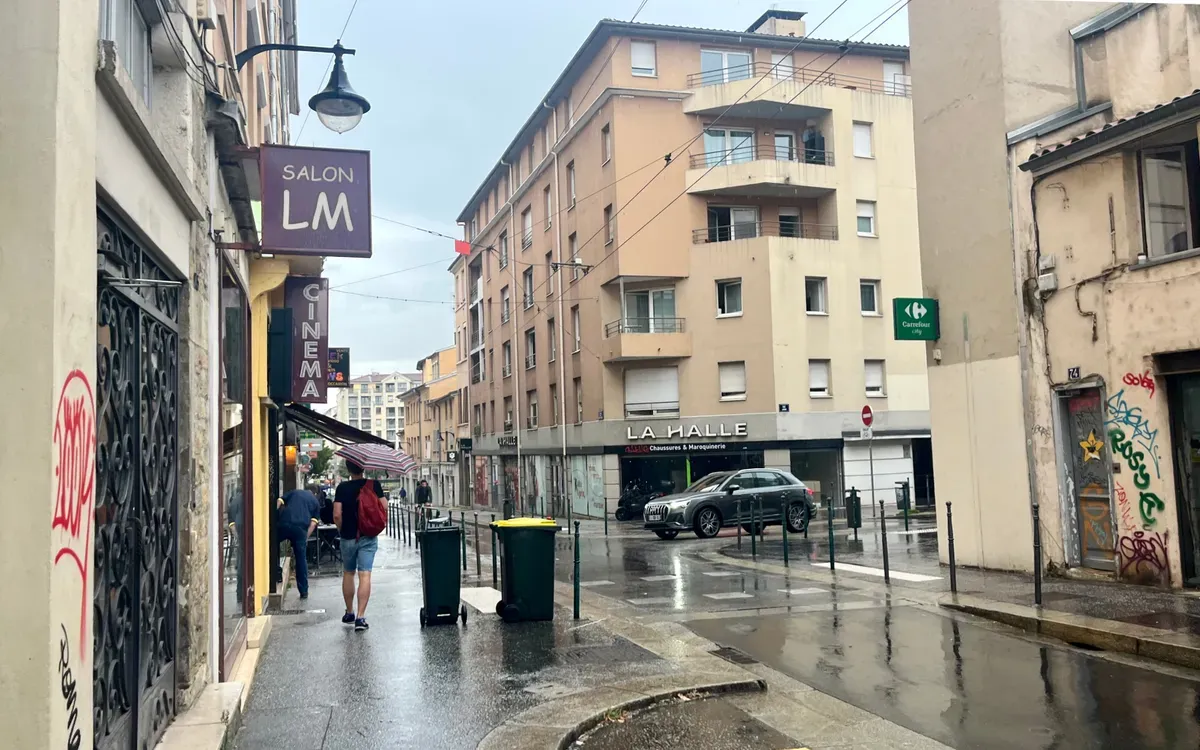
I propose, you decide. My job is to say what the day will actually give — not to promise sunshine, and not to cancel out of caution either. Yours is to know whether the date can move: a property on the market rarely waits three weeks, but it often waits three days. And in Lyon a shower rarely lasts all day: more often than you would think, we shift by two hours rather than two weeks, and that is enough. The real risk is not the postponement; it is a set of images that will have to be done again because nobody wanted to wait.
One last note, valid all year round: water and salt do not damage gear in the same way, and what salt actually damages is worth reading before a seaside shoot, as is filming the coast for anything flying above the shoreline. And if your date can move because it is a property to be shown, tell me the window you have rather than one precise day: a request for a property shoot settles far better on “the week of the 12th” than on “Tuesday the 13th”.
More in this section
 Services
One hour, two hours, a day: what changes on site
The right question is never how long, but how many shots. What fits into each duration, and the time that does no filming at all.
5 min read Services
360 tour or photo gallery: what the buyer sees
A gallery shows twelve chosen moments. An immersive tour shows a home. The difference is not the quality of the photos, but what they leave out.
2 min read Services
Access to the venue: what stalls a shoot on the day
When a shooting day goes wrong, the camera is almost never the cause. A door is. Here are the five that close, and the six lines that open them.
5 min read