
Guides
Filming in an occupied space: offices, shops, shared buildings
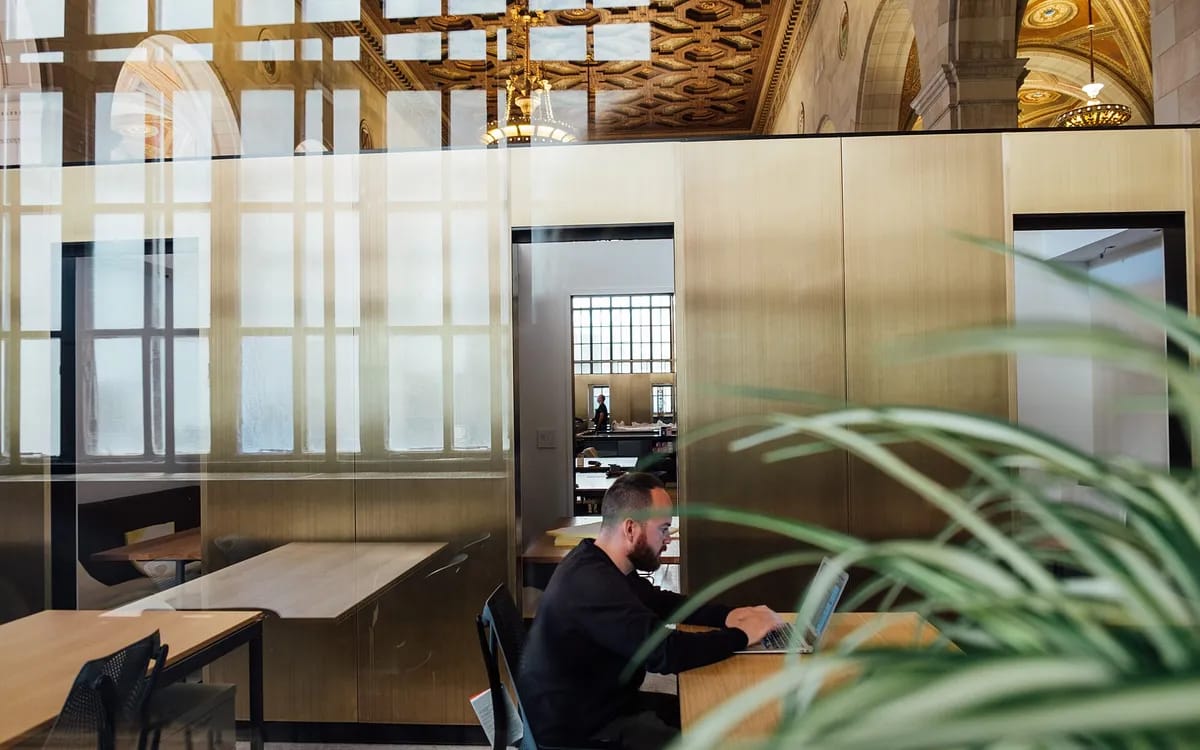
An empty place is filmed. An occupied one is crossed. The difference is not technical: same camera, same light, same settings. What changes is that you no longer set the pace on your own. People are working, customers come in, a lift goes up and down, and the video has to happen without any of that stopping. It is an exercise in discretion before it is an exercise in imagery.
Give notice, and do it twice
The day before, a message to whoever runs the place. On the morning itself, a notice at the entrance. The second does not replace the first: the email warns the management, the notice warns the people. Three lines are enough — who is filming, what is being filmed, and who to speak to if you would rather not appear. That third line matters most, and it is almost always the one left out.
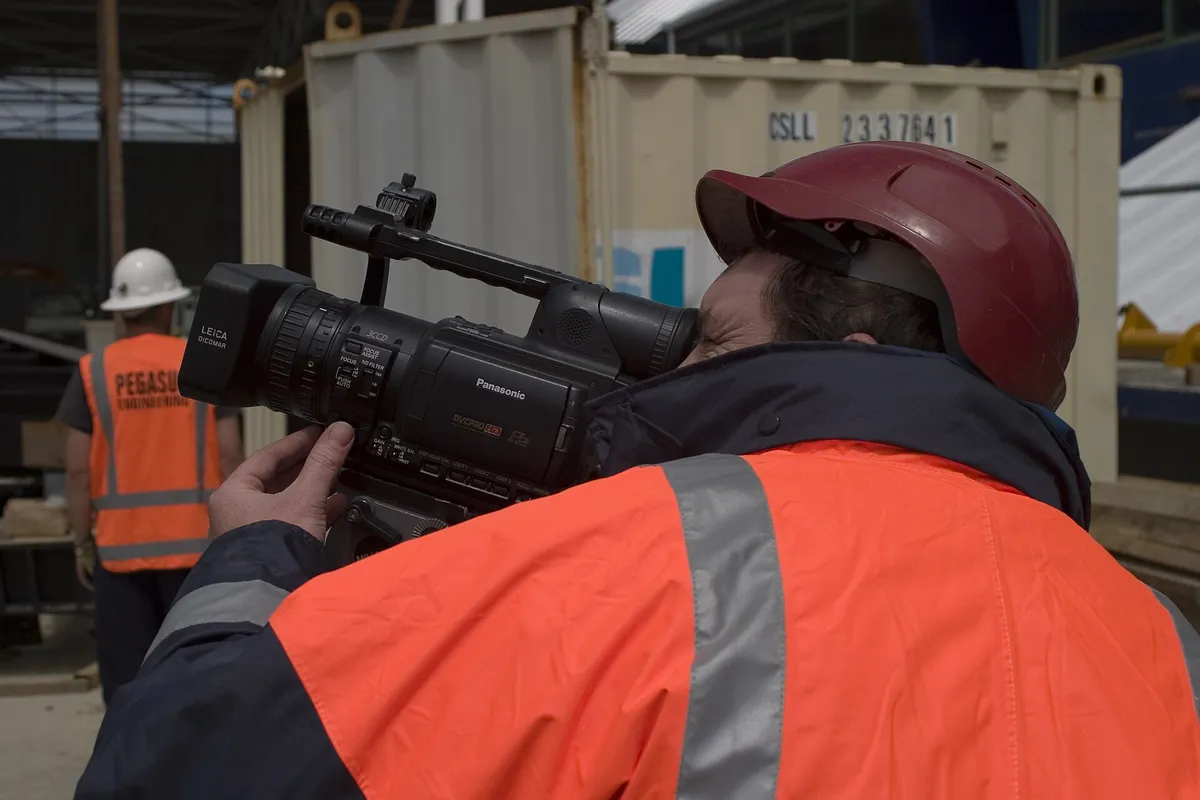
The shop: never block the way
In a shop, three spots are off limits to a tripod: the door, the till and the main aisle. These are not manners, they are the three points where a customer gives up. The rest is shot in the quiet hours, early in the morning or just after the lunchtime rush, and above all without ever going again while someone is waiting to be served. A second take is worth less than a customer walking out.
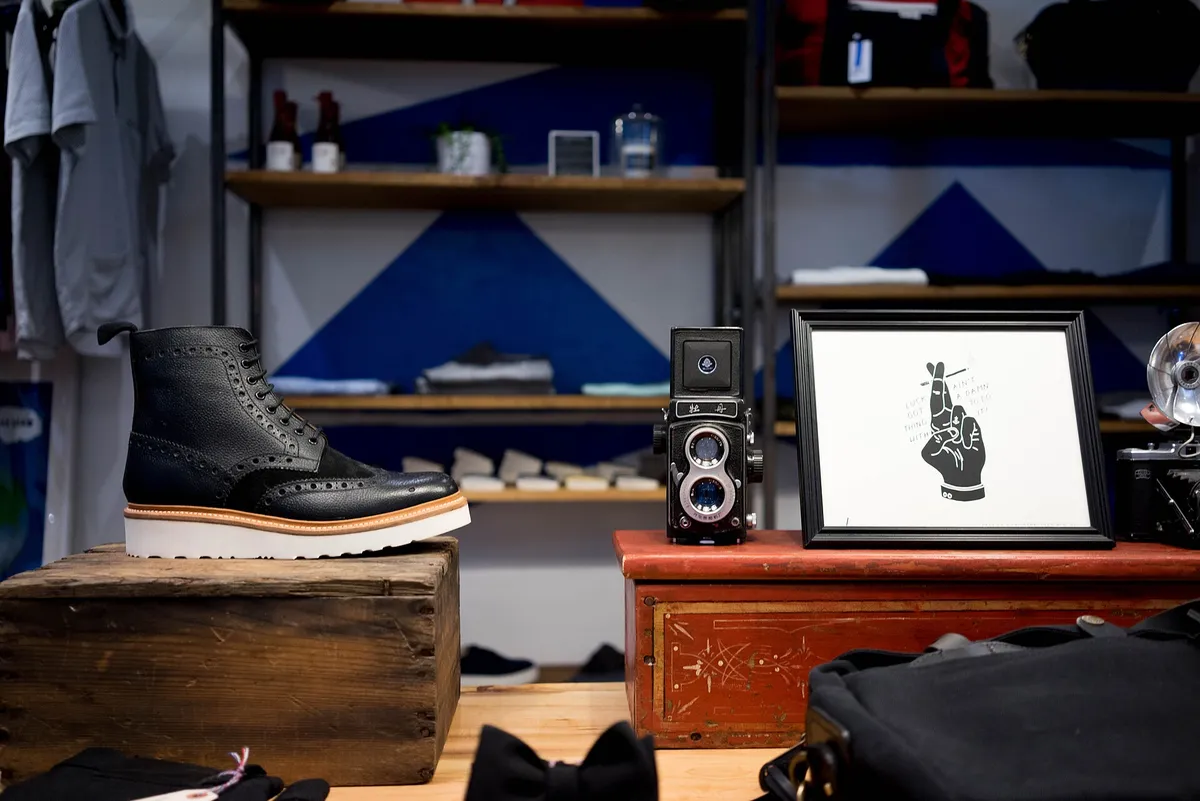
A shop, in fact, films very well with very little gear: a camera that fits in the hand goes everywhere a tripod is in the way. That is exactly the point of filming your shop in Lyon with a pocket camera, and the reasoning holds whether someone films for you or you rent the kit.
The quiet hour is not the same everywhere
- A high-street shop: just after opening, and mid-afternoon. Never on a Saturday.
- An office: between nine and ten, and between two and three. Neither lunchtime nor the end of the day.
- A residential building: mid-morning on a weekday. The common parts are deserted then, which they are neither in the evening nor at the weekend.
Those windows are no trade secret: they are the ones you already know, because you live the place every day. The only work is telling me before the date is set, not after. A job booked at the wrong hour cannot be salvaged: it has to be done again.
The shared building: the common parts belong to no one
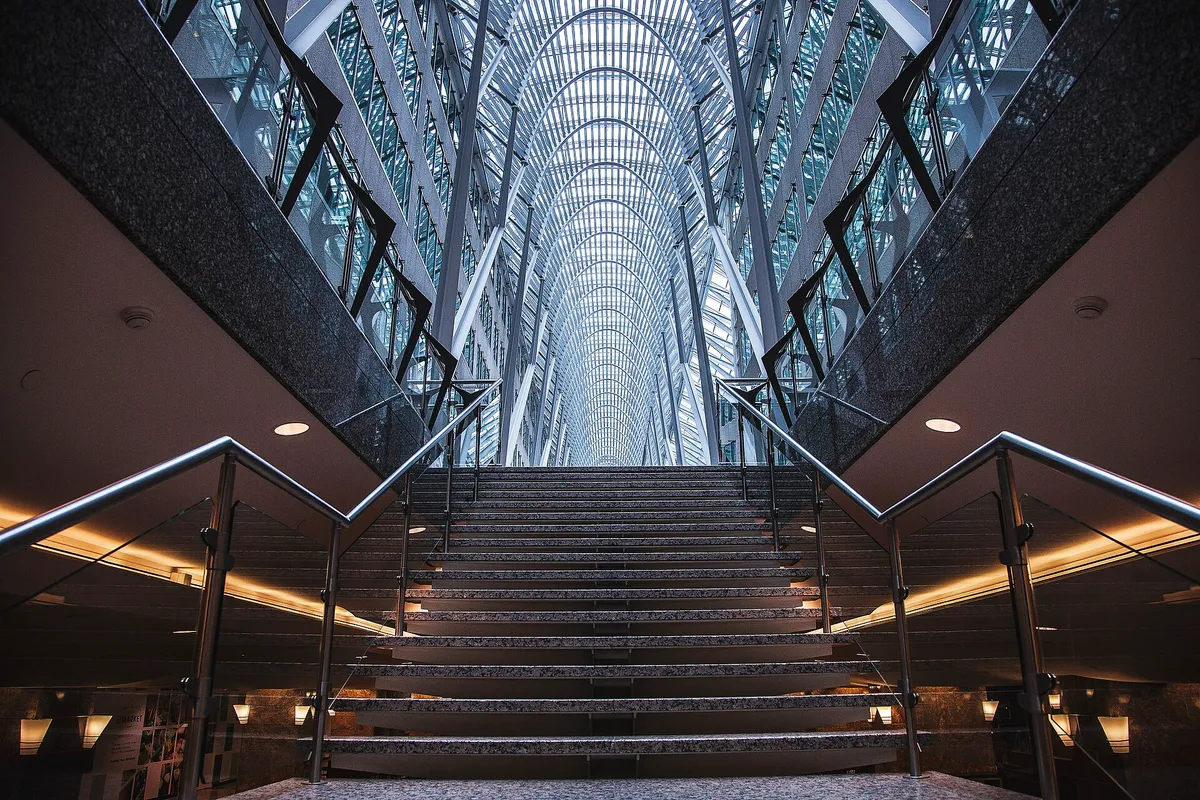
The lobby, the stairwell, the courtyard, the bin store, the roof terrace: these are common parts, and the occupant of a flat has no standing to authorise filming there. In practice you go through the managing agent or the residents’ committee, and you do it early: a committee does not meet within the week. A verbal nod from the caretaker does not bind the building — it merely makes the day possible, which is not the same thing.
The people in shot
A silhouette from behind at the end of a corridor and a sharp face in the foreground do not raise the same question. The governing principle is the same as for any image, and what the law says about filming people sets it out clearly: it does not change according to whether the camera flies or sits in a hand. On a shoot, good practice is not to settle the problem afterwards, it is not to have it: frame higher, wait ten seconds, move the legs a metre. Ten seconds cost less than a conversation.
Six habits that make you invisible
- Arrive already sorted: bags open in a corner, not in the middle of the floor.
- One stand down at a time: two tripods in a corridor is a closed corridor.
- No cable across a walkway: it runs along a wall, or it stays in the bag.
- One added light, not three: in a working space, the existing lighting does half the job.
- Never ask anyone to do again what they just did, unless they offered.
- Pack down before the stated time: leaving five minutes early is worth every thank-you.
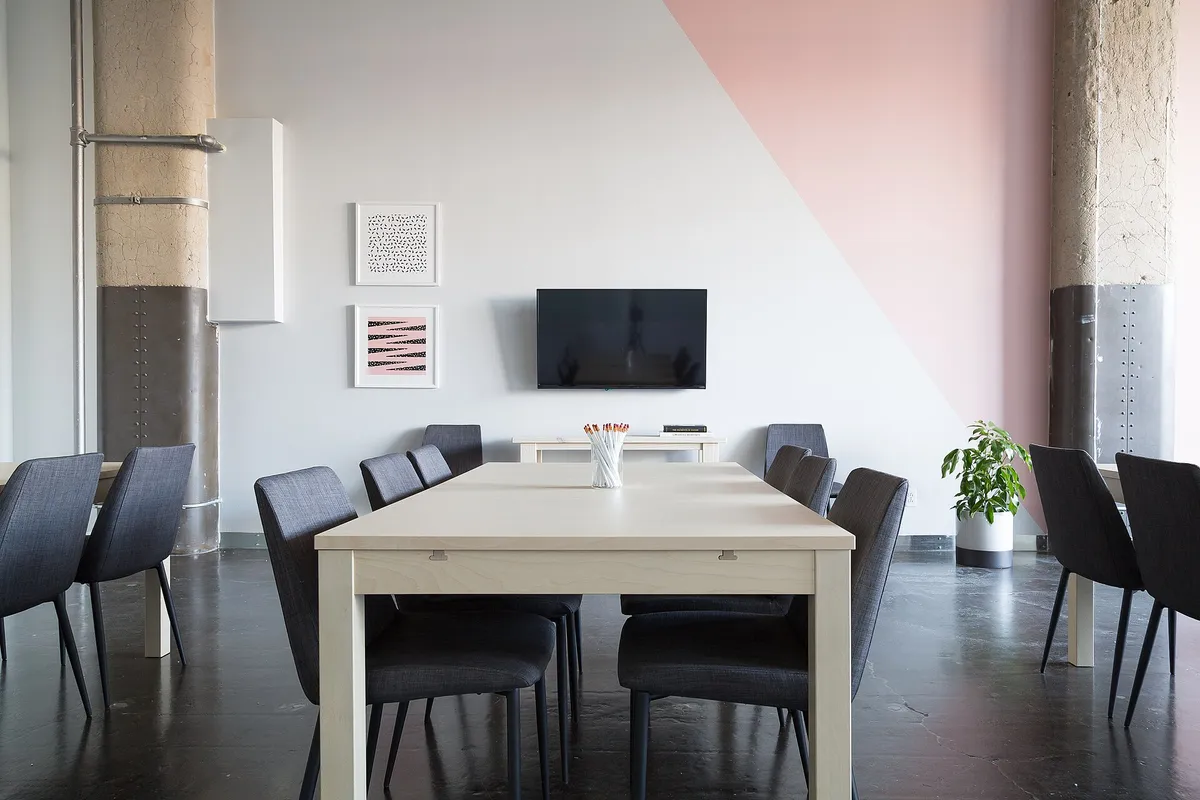
That leaves the fallback room, and it is the only luxury I genuinely ask for. A closed room, however small, to put the bags down, swap a battery and record someone speaking away from the floor’s ventilation. In an office, a meeting room booked for an hour is enough. Without it you still shoot, but the sound of footsteps on carpet ends up being heard.
What an occupied space gives back
All those constraints come with a payoff, and a big one: a living place cannot be acted. Hands at work, a customer hesitating in front of a shelf, a meeting getting under way — no staging manufactures that. The coldest corporate videos are the ones shot on a Sunday, in immaculate empty offices. Filming on a Tuesday morning costs more attention and returns images you cannot get any other way.
If the place to film is yours and it keeps running while we work in it, describe it plainly — the activity, the quiet hours, what cannot stop — in a request for your premises. And if you would rather film it yourself, audiovisual gear for a company event lists what to plan for, under the same discretion constraint.
More in this section
 Guides
A renovation projection is not a quote
What a quote contains that an image does not, who answers for what between the image maker, the designer and the builder, and how to present a view of intent honestly.
5 min read Guides
The photo that makes a renovation preview possible
Frontal exposure, entire room, flat lighting, reasonable focal length: the four decisions made on site that make an image usable — or definitively unusable.
5 min read Guides
Which device for which plan: the 2026 table
Five devices facing around ten current plans, with what each does better than the others and the pitfall of each. Choose the plan first, the device second.
4 min read