
DJ & sound system
Sound System Hire for a Private Concert: the Guide for Individuals

Contents
For a private concert, hire one or two RCF ART 912-A active speakers, the RCF SUB 15-AX subwoofer if a bass or electronic drums are playing, and up to two Shure SM58 mics for vocals; XLR and RCA cables are included. Fox Rider does not hire out a mixing desk: beyond two sources, a voice and a guitar for example, the band brings its own. What follows covers speaker placement, feedback and the sound check.
This article is for the private individual who has never done the sound for a concert. It says what you can hire, what you will not find at Fox Rider, and how to go about it. For private sound system hire, all the equipment is presented on the page hire a sound system.
See also: Shure SM58 microphone hire or two-speaker sound pack.
Hiring a sound system without a DJ: the most common case
At Fox Rider, hiring a sound system without a DJ is the normal case: for a band, a singer with a guitar, a pianist, a choir. Nobody needs turntables to play in front of friends. Our article on hiring a sound system without a DJ covers the basics; this one focuses on the concert.
What you hire to amplify musicians comes down to a few items:
- The RCF ART 912-A, an active speaker: it has its own amplifier and plugs into an ordinary socket, with no amp to arrange. You take it singly or as a pair.
- The RCF SUB 15-AX subwoofer, optional, for a bass or an electronic drum kit that need some body. Only one unit exists.
- Up to two wired Shure SM58 microphones, as an option with an RCF ART 912-A speaker or the XDJ-RX3, XLR cable supplied and mic stand free.
Every hire includes the XLR and RCA cables. To know which to plug in where, see our article on XLR, jack and RCA cables, and to understand why an active speaker simplifies everything, active or passive speaker.

The point to know: no mixing desk
Fox Rider does not hire out a mixing desk. That is the main limit for a concert, and it is better to know it before booking. For a sound system hire for an evening with a simple playlist, the question does not arise; for a concert, everything depends on the number of sources to plug in.
A solo musician, or a duo with a voice and a guitar, can go through the inputs of the Pioneer XDJ-RX3, a standalone DJ console that is hired with its RCA and XLR cables. The microphone plugs into it, and the console sends everything to the speakers. It is not its primary use, but for two simple sources, it works.
A band with several instruments and several voices needs its own mixing desk. Many bands have one, or can borrow one. The RCF speakers plug straight into it through their inputs: the desk sends the sound, the speakers amplify it. In that case, the hire covers only the speakers, the subwoofer if needed, and the cables.
Before choosing, make a list of what has to be plugged in: every microphone, every electric instrument, every keyboard. Beyond two sources, the desk becomes essential.
Placing the speakers and avoiding feedback
Feedback is the whistle that arises when the microphone picks up what the speakers are playing, sends it back, and the signal runs away. It is prevented mainly by placement: the speakers go in front of the microphones, level with the musicians or slightly forward, never behind them. The microphones must not point at the speakers.
Mount the speakers on stands, at the ear height of a standing listener or a little higher, on either side of the makeshift stage. The detail of the orientation is in the article on the height and angle of two speakers on stands. The speakers have their backs to the musicians, who therefore hear themselves less well than the audience: warn them, and sort this out during the soundcheck rather than by turning the volume up for everyone.
A microphone used well is held close to the source: the singer's mouth a few centimetres away; for an acoustic guitar, the microphone points at the neck, near the body, rather than at the sound hole, which gives too bass-heavy a sound. The further away you go, the more you have to raise the level, and the more feedback lurks.
The soundcheck before the audience arrives
The soundcheck is the setting of levels between the voices and the instruments. It is done before the audience arrives, with the musicians really playing, not just a “one, two” into the microphone. Ask each of them to play a phrase at normal volume, then adjust: the voice should stand out without crushing the guitar, and the other way round.
A simple rule: set the level lower than you think necessary. An audience that has come to listen accepts a moderate level, and there is always time to go up a notch after the first song. If the concert is acoustic, the sound system only serves to give a little presence, not to fill the room.

Neighbours and practical organisation
A concert at home can be heard outside, especially in mild weather with the windows open. Warn the neighbours a few days beforehand, tell them the finishing time, and end with the quietest pieces. For a garden or a barn, the article on sound equipment for an outdoor event covers these situations. Noise that disturbs the neighbourhood can be penalised by day as well as by night, and the precise rules vary by municipality and venue: find out beforehand.
As for collection, everything takes place in Lyon 3, by appointment, every day from 9 am to 8 pm, with the original of an identity document. The equipment is plugged in and checked with you, then you set it up. Each RCF speaker weighs 19.5 kg and the subwoofer 31.4 kg: come by car. The hire runs from 1 to 8 days, collection day and return day included, longer on quote, and the dates can be changed from the account up to 72 h before the start.
If you would rather not transport or set up the equipment, a sound system delivered to the venue can be requested on quote, with or without set-up and take-down; travel is never included. For a concert with a stage and lighting, stage, sound and lighting with our partner VLK Events can also be requested on quote. If you are unsure about the combination, the sound packs put together by use give a starting point, and the page speakers to hire details each model. Dates and availability for hiring a sound system can be checked online.
See also: rent a Shure SM58 mic or pair of RCF speakers to rent.
More in this section
 CC0 · Wikimedia CommonsDJ & sound system
The basics of beatmatching on vinyl turntables
Beatmatching is the founding gesture of the vinyl DJ: manually synchronizing the tempo of two tracks to create a […]
6 min read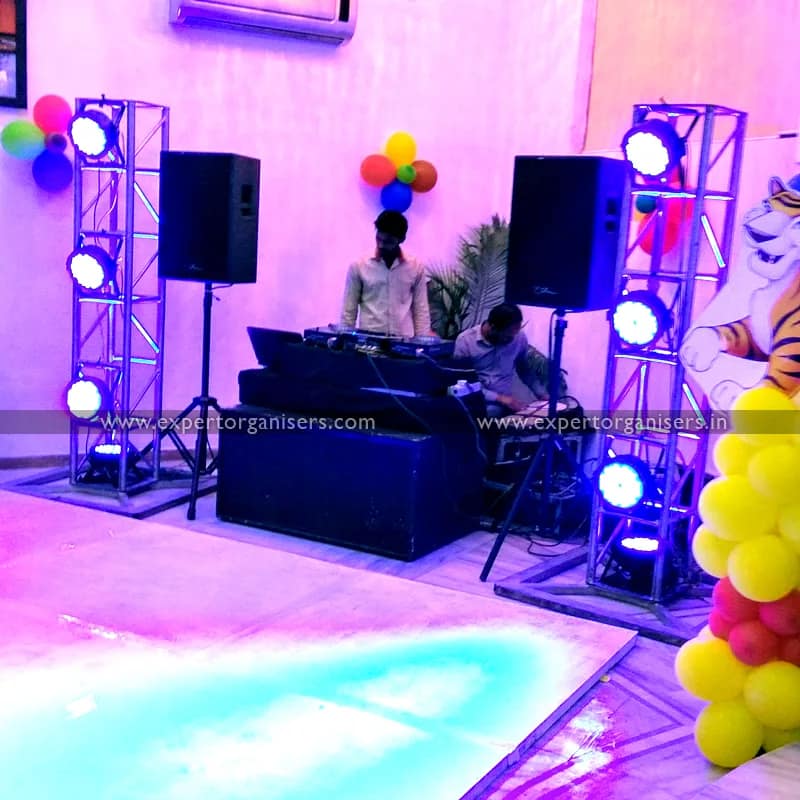 CC0 · Wikimedia CommonsDJ & sound system
Birthday sound system: what equipment for the party?
Flat, village hall or garden: the venue decides the sound system for a birthday. Which speakers, which subwoofer, which microphone, and how to set it all up.
5 min read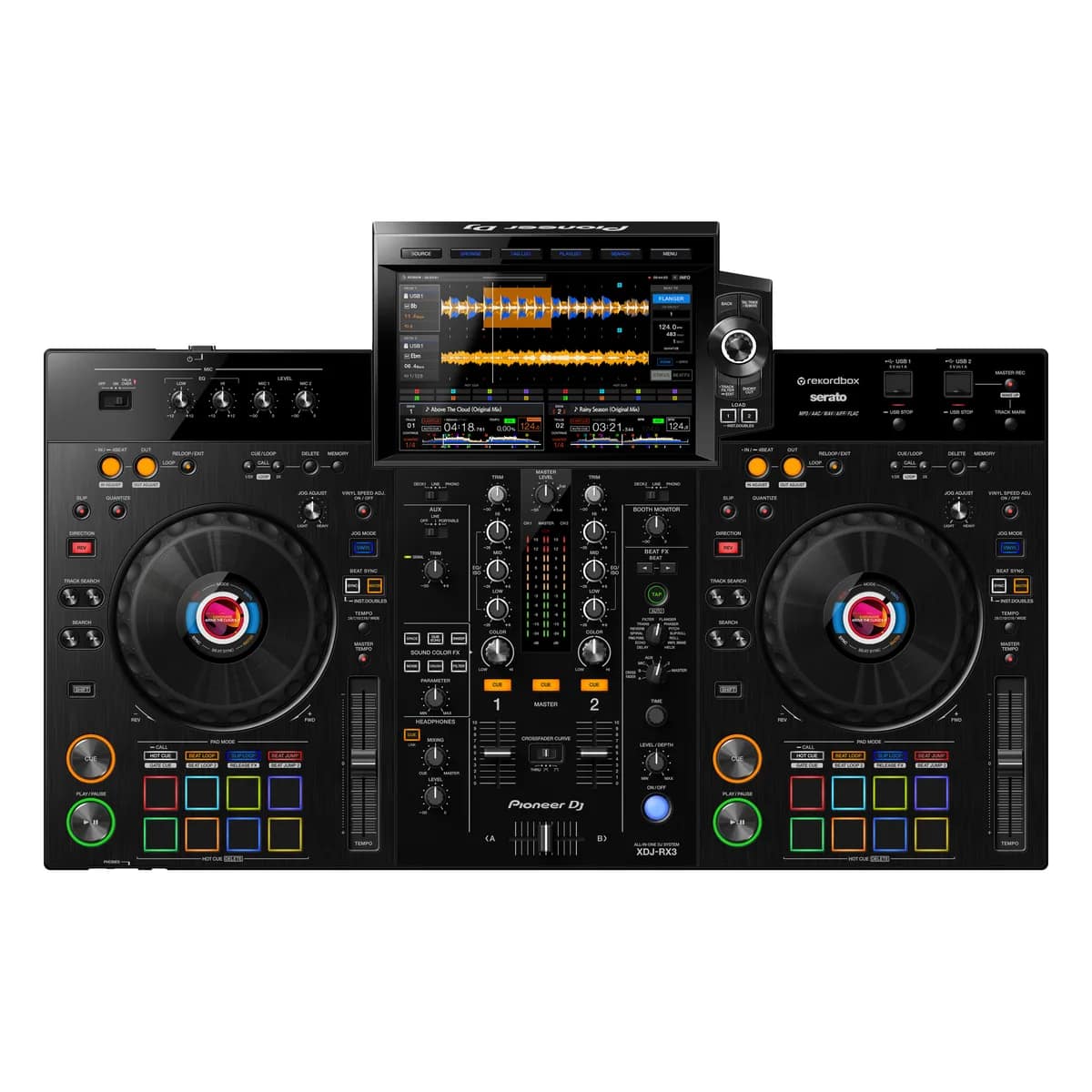 CC0 · Wikimedia CommonsDJ & sound system
Pioneer XDJ-RX3: quick guide for beginners
The Pioneer XDJ-RX3 is one of those pieces of equipment that democratizes DJ mixing: a single box brings together two turntables, […]
5 min read